

 Chronicle Editor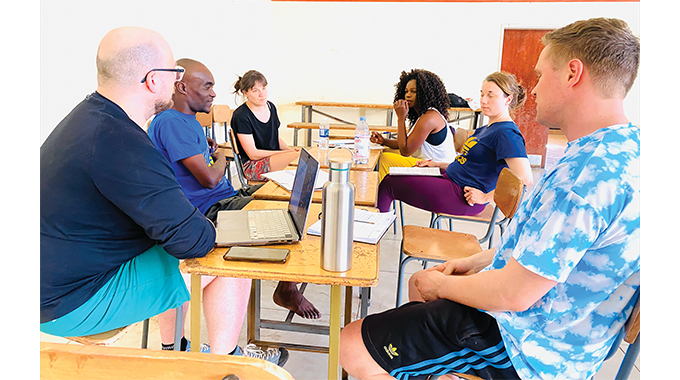
Mbulelo Mpofu, [email protected]
TWO is better than one is how one would summarise the cultural exchange partnership between Zimbabwe’s Inkululeko Yabatsha School of Arts (Iyasa) and Germany’s Theatre Strahl.
The pair has partnered for a project dubbed: “How is the Weather/Wie Das Wetter?” which highlights climate change. From this week, the project will be presented in Zimbabwe up to June.
Lately, Unicef Zimbabwe has been outlining the problems posed by climate change, something that necessitated the showcasing of this project.
“The current and projected warming trend and reduction in rainfall, coupled with the increasing frequency and intensity of floods, tropical cyclones, droughts, and heatwaves, threaten children’s lives and destroy schools, water supply and infrastructure, health care facilities and children’s play spaces,” said the humanitarian aid agency.
In a statement, Iyasa outlined the gist of the partnership and the play.
“This innovative and thought-provoking play delves into the urgent issue of climate change, offering a powerful and artistic account of its impact on the world.
The production is a work in progress that will culminate into a greater theatre performance with input from different backgrounds, ending in Germany at Theatre Strahl.
“How is the Weather” has no prepared script as it was informed by input from young people in schools from workshops held in Zimbabwe and Germany.
“The cast also brings their own experiences and research to the project,” read part of the statement.
The joint project features four cast members from Iyasa and Theatre Strahl including Natascha Manthe (Theatre Strahl), Nqobizitha Ncube (Iyasa), Justus Verdenhalven (Theatre Strahl), and Dorcas Ngwenya (Iyasa).
“This quartet brings to life a range of characters from diverse backgrounds, each with their unique perspective on the climate crisis.”
For this production, Iyasa’s director, Nkululeko Dube and Anna Vera Kelle from Germany joined forces as co-artistic directors to create a genuinely international performance that transcends national boundaries.
“The production’s costume and stage designs are being done by Andreas A Straßer and assistant Mercy Kayumba.”
Dube promised something different for theatre lovers.
“Audiences can expect something different, yet uniquely created. Theatre enthusiasts will enjoy the piece that uses entirely different techniques to combine elements from Germany and Zimbabwe that vary and yet converge into a worthy piece of art,” he said.
His counterpart, Kelle said the play will be a family affair.
“‘How is the Weather?’ is a deeply immersive and multidimensional theatre experience that tackles the complexities and repercussions of climate change. Combining dynamic storytelling, music, and dance, this production captures the attention of audiences of all ages and backgrounds, taking them on a thrilling journey to explore the climate change crisis and its impact in our interconnected world.
“The production aims to raise awareness of the climate change issue, foster understanding of different perspectives, and spark conversation on how we can address this crucial matter,” said Kelle.
The production was showcased for free in Gwanda at Charles Klein Hall (St Christopher Primary School) yesterday. This will be followed by its premiere at Little Theatre in Hwange on Thursday, and Theatre in the Park in Harare on Wednesday next week.
Those in Bulawayo can catch a glimpse of it on Monday next week at the Zimbabwe Academy of Music. The next stop will be Berlin’s Theatre Strahl Ostkreuz on a date yet to be announced.
This is Iyasa and Theatre Strahl’s second collaborative work with the first in 2016 being “Black & White Ain’t No Colours”, a production that demystified myths and cliches about Africa and Europe.
Dube reiterated Iyasa’s commitment to staying relevant in the ever-changing creative sphere.
“We continue to strive to be relevant from generation to generation. We always want to challenge ourselves with new projects and explore new territories.
We want to keep on growing. It’s crucial to one’s creativity and open-mindedness to engage in these international and inter-cultural exchanges.
“You see the world differently and learn that audiences differ, styles of art vary and that’s so important if you are to create work with a global appeal. There’s strength in diversity as there are international and inter-cultural exchanges,” he said. – @MbuleloMpofu



 Blessing Chizhande
 Online Reporter