Online Reporter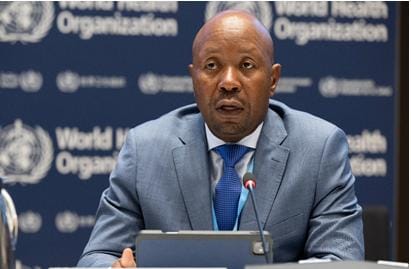
Trust Freddy
Herald Correspondent
Government has hailed the transformative impact of the Zimbabwe-Japan partnership in the health sector, noting significant improvements in patient care and hospital efficiency following the successful implementation of a Quality Assurance and Patient Safety project.
The project is titled: “The Project for Quality Improvement of Health Services through 5S-Kaizen-TQM Approach” (ZIM-QIPS).
Speaking during the official opening of a three-day project close-out meeting in Harare on Wednesday, the Permanent Secretary in the Ministry of Health and Child Care, Dr Aspect Maunganidze, said the initiative, supported by the People’s Republic of Japan through the Japan International Cooperation Agency (JICA), had become a “game changer” for the nation’s medical framework.
Implemented in 14 central and provincial hospitals, the project was anchored on the 5S-KAIZEN-TQM philosophy—a Japanese management system that focuses on workplace organisation, continuous improvement and total quality management.
“Wherever the project was implemented across our provincial medical directorates, as well as Provincial and Central hospitals, service provision has improved,” he said in speech read on his behalf by Chitungwiza Central Hospital Chief Medical Officer (CMO) Dr Raphael Makota.
“As a ministry and country, we are delighted to have been selected to receive this support. All stakeholders gathered here agree that the journey was an eye-opener.”
The 5S approach—comprising Sorting, Setting, Shining, Standardising, and Sustaining—has been credited with decluttering health facilities and ensuring that medical equipment is well-maintained.
He said that the “Shining” aspect of the programme was particularly vital for equipment longevity.
“This makes provisions for checking moving elements on equipment to reduce the chances of them coming off. In many instances, wheels come off trolleys or wheelchairs because of poor maintenance. This project has addressed that,” the Secretary said.
Through the KAIZEN (continuous improvement) step, healthcare staff gained critical problem-solving skills and a more proactive attitude toward patient needs.
Dr Maunganidze also revealed that the implementation was not merely an academic exercise but yielded data-driven results.
Notable improvements were recorded in the reduction of average patient waiting times and the functionality of Quality Improvement Teams (QIT), with many facilities scoring above 70 percent.
Despite the project coming to a formal close, the Government has committed to sustaining and expanding the gains.
“Key discussions should not only be on sustaining the project, but how to expand it, leveraging on the ‘old hands’ we have. This project taught us even how to generate and conserve resources gained,” they added.
The meeting was attended by senior Ministry officials, representatives from JICA led by JICA Resident Representative Mr Shigeki Furuta, Provincial Health Executives and heads of various central and provincial hospitals.