

 Online Reporter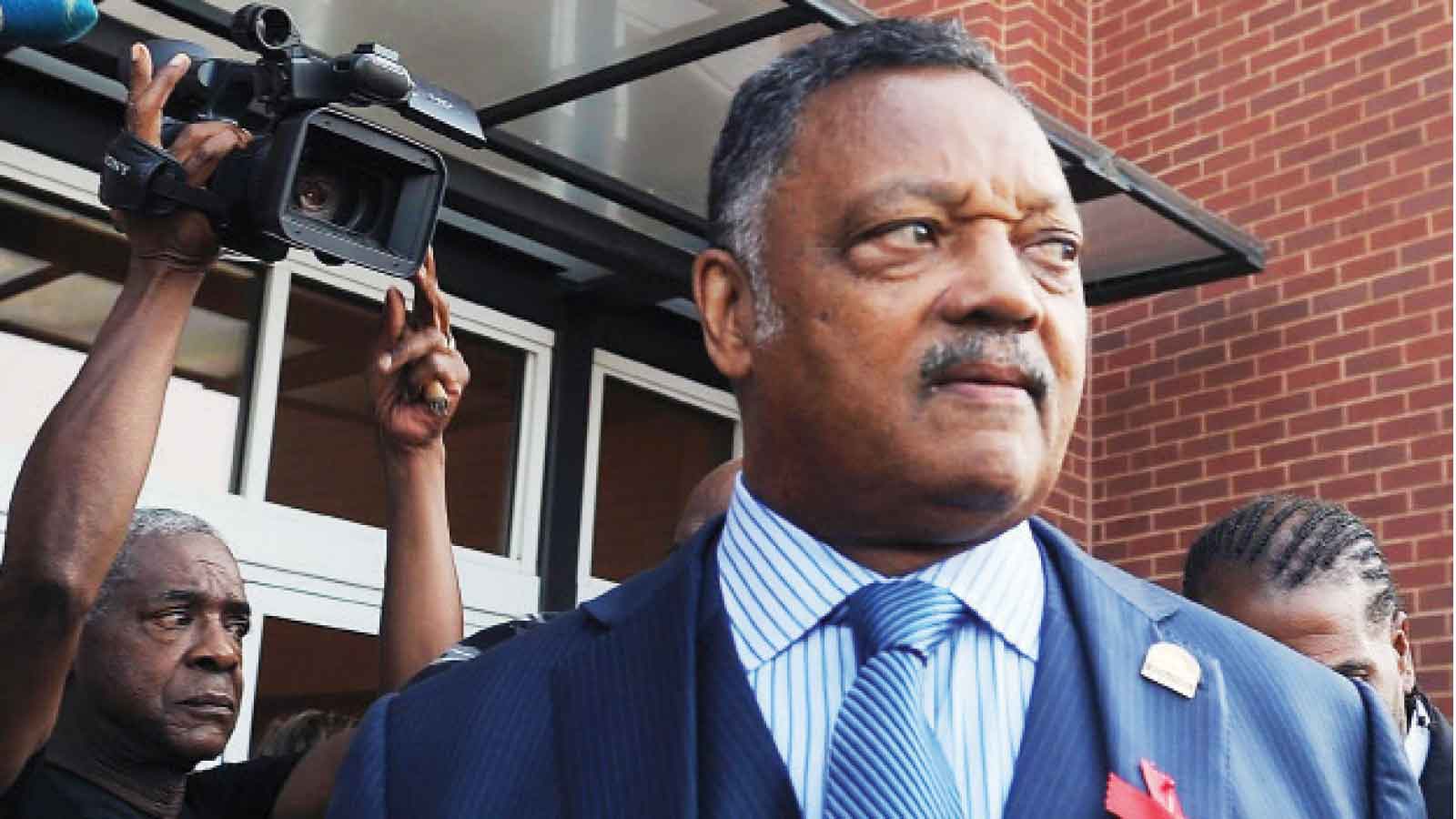
Richard Muponde-Zimpapers Politics Hub
THE death of Reverend Jesse Jackson at the age of 84 on Tuesday marked the end of an era in the long struggle for black emancipation in America and the broader Global South.
Rev Jackson was more than a civil rights activist; he was a living bridge between the moral thunder of the 1960s freedom movement and the political breakthroughs of the 21st century.
His life embodied resistance, hope, and the relentless pursuit of dignity for oppressed peoples worldwide.
Rev Jackson’s links to Zimbabwe are rooted in a shared history of anti-apartheid struggle, but he is best known locally for his vocal support of the land reform programme.
During a 2013 visit, he backed the programme by highlighting that Western pledges to fund land redistribution after independence were never honoured, calling this failure a “source of struggle.”
He further commended President Mugabe in 2012 for championing empowerment policies, arguing that equitable distribution of resources is fundamental to addressing poverty. His stance provided significant international validation for Zimbabwe’s land reform.
From the segregated streets of South Carolina to the global stage, Rev Jackson’s activism reflected a conviction that the struggle of African Americans was inseparable from the quest for justice in Africa, the Caribbean, and other developing regions long marginalised by the Global North.
His voice carried both the urgency of protest and the patience of strategic political organising, making him one of the most consequential black leaders of the modern era.
Born in Greenville, South Carolina, in 1941, Rev Jackson came of age under the brutal architecture of Jim Crow segregation. Walking miles past white-only schools to attend a segregated one etched into his consciousness the structural inequalities that would define his life’s mission.
His first arrest during the 1960 Greenville library “read-in” was not merely a youthful act of defiance. It was the opening chapter in a lifetime of disciplined confrontation with injustice. Unlike many contemporaries, Rev Jackson fused grassroots protest with economic empowerment strategies, recognising early that civil rights without economic justice would remain incomplete.
These formative experiences produced a leader who understood both the psychological and material dimensions of racial oppression.
Rev Jackson’s political and moral formation was deeply shaped by his association with the later civil rights Icon, Martin Luther King Jr As a young organiser in the Southern Christian Leadership Conference, Rev Jackson rose quickly, earning King’s trust through his energy, discipline and boldness.
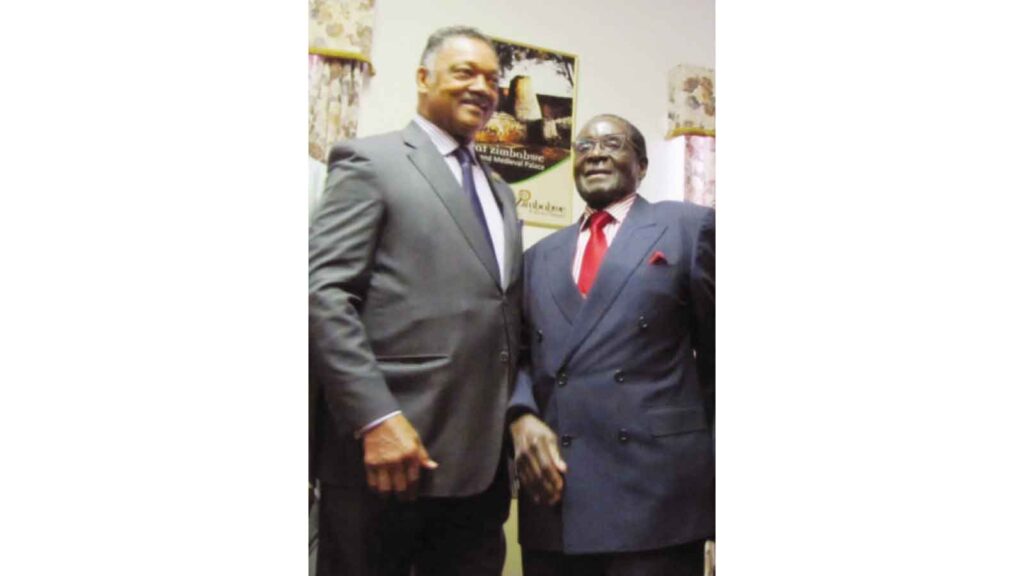
Rev Jesse Jackson meets then President Robert Mugabe in Harare in 2013.
He was present in Memphis on April 4, 1968, when the Icon King was assassinated, a traumatic moment that would haunt and propel him for decades.
The tragedy forced a generational transition within the movement. Rev Jackson emerged as one of the figures determined to carry forward King’s unfinished mission.
Where King represented moral prophecy rooted in non-violent witness, Rev Jackson increasingly embodied political mobilisation and institutional pressure. Together, their legacies illustrate the evolution of the civil rights struggle from desegregation toward full political and economic empowerment.
The reverend’s founding of Operation PUSH (People United to Serve Humanity) in 1971 marked a strategic shift in black activism. Rather than relying solely on protest marches, PUSH targeted corporate America through boycotts, negotiations and public pressure campaigns.
The organisation successfully compelled major corporations to reconsider discriminatory practices, demonstrating Rev Jackson’s belief that economic leverage was essential to Black advancement.
His famous self-description as “a tree shaker, not a jam maker” captured both his dynamism and the criticisms often directed at his leadership style.
Even critics acknowledged that PUSH helped institutionalise the principle that civil rights must include access to jobs, contracts, and capital. This framework would later influence diversity and inclusion strategies across corporate America.
Rev Jackson’s most ambitious political vision emerged with the creation of the National Rainbow Coalition in the 1980s. The coalition sought to unite African Americans, Latinos, labour groups, women, among others into a broad progressive alliance.
This vision was transformative. At a time when American politics was increasingly fragmented, Rev Jackson argued that marginalised communities shared common economic and social interests. His message resonated strongly during his presidential campaigns, particularly in his celebrated call to “Keep Hope Alive.”
Although he did not secure the Democratic nomination, his campaigns expanded Black voter registration and demonstrated the viability of a multiracial progressive coalition. In many respects, the coalition politics that shape contemporary American progressivism bear Rev Jackson’s imprint.
The late civil rights defender’s rhetorical gifts were central to his national influence. His speeches blended the cadence of the Black Church with sharp political messaging and poetic rhythm. He possessed the rare ability to translate structural injustice into emotionally compelling language that mobilised ordinary citizens.
Among his most enduring remarks was his observation that civil rights asked where people could eat and live, while social justice asked whether they would eat or live at all. This formulation revealed his expanding focus from formal equality toward substantive economic justice.
His famous refrain, “Keep hope alive,” became both a campaign slogan and a philosophical orientation for millions who saw in his voice a reflection of their own struggles and aspirations.
During the 1990s, Rev Jackson intensified his focus on educational access and corporate accountability. Through Rainbow PUSH, he negotiated scholarship opportunities for disadvantaged youth and pressed corporations to diversify hiring pipelines.
Beyond the public spotlight, he also engaged in quiet diplomatic interventions, including mediation efforts in international disputes.
These activities reinforced his image as a global advocate for oppressed peoples, particularly within the developing world, the Global South.
While his critics sometimes questioned the breadth of his engagements, supporters viewed these efforts as evidence of a leader who understood the interconnected nature of racial and economic injustice across national boundaries.
Rev Jackson’s life reached a powerful symbolic moment with the election of President Barack Obama in 2008. The widely circulated image of the civil rights activist weeping in Chicago’s Grant Park, captured the emotional weight of that historic breakthrough.
Though he had earlier expressed reservations about President Obama’s political posture, the tears revealed something deeper than personal politics. Rev Jackson understood that his own presidential bids in the 1980s had helped normalise the idea of Black national leadership.
Seeing President Obama and Michelle Obama ascend to the White House represented partial fulfilment of a dream Rev Jackson had pursued for decades. It was a moment where personal struggle, collective sacrifice, and historical progress converged.
Although he was in some occasions followed by occasional controversies which complicated at times affected his standing within the civil rights community, his strategic impact is undeniable.
Rev Jackson helped expand Black political participation, pressured corporations toward inclusion, and advanced the idea of broad progressive coalitions. Many contemporary social justice frameworks reflect pathways he helped pioneer.
History often judges movement figures not by their imperfections but by the structural changes they help set in motion. By that measure, Rev Jackson stands among the most consequential Black political organisers of the late twentieth century and today.
By the time of his passing this week, Rev Jesse Jackson had witnessed milestones once considered unreachable, including the election of America’s first Black president and the rise of a more diverse progressive political class.
Yet profound inequalities remain both within the United States and across the Global South.
He died having seen meaningful progress but also understanding that the struggle for full equality is unfinished. His life offers both inspiration and instruction.
For black youth in America, the Caribbean, and Africa, the message is clear. The path of justice requires courage, coalition-building, economic advocacy, and moral clarity. To honour him is to continue the work he advanced for more than half a century.
His voice may now be silent, but the charge he left behind still echoes with urgency: keep hope alive, organise the marginalised, and press forward until the promise of dignity and equality becomes reality for all.



