admin
admin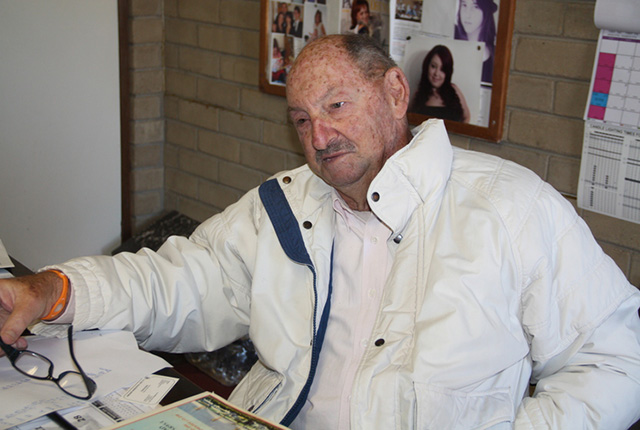
Attendance of Jewish services is dwindling as young members of the community leave Zimbabwe in search of better economic prospects abroad.At present, less than 100 congregants attend services at the two Jewish temples in Harare.
Harare Hebrew Congregation secretary and treasurer Mr Bennie Wine said, “Ancestors of members of our other church come from Mediterranean countries, Rhodes Island and others. Our ancestors come from Lithuania, Russia and Poland. So we have about 40 members here and the other church has about 50,” he said.
Mr Wine said this had a negative effect on their services as Jewish tradition requires ten men to conduct them.
“What we need to conduct services and certain prayers is 10 Jewish men over the age of 13. Combined as two congregations, we have about 90 members but of the people that really come to our, synagogue we battle to get 10 men every Friday night and Saturday morning.
“So the majority that come are practising but aren’t religious, we see them maybe once a year. Because we are so few in numbers and people are not really into the religion, we combine services with the other church on our Sabbath, which falls on Friday night and Saturday morning,” said Mr Wine, who is convinced there is a significant local Jewish that keeps to itself.
With few children being born in the local congregation, the great celebration of Bar Mitzvah — when a boy is initiated into manhood at age 13 — is no longer a common feature, while weddings have become so scarce that Mr Wine can barely remember when the last one was. Celebration of festivals is held in high esteem.
“There are various holidays during the year which we observe. We celebrate the First Fruits of the year, which originates from Israel when they start picking the first fruits.
“We have another in April, the Passover. There we eat just like in the old days they had unleavened bread after 40 years in the desert; we eat a kind of biscuit which is brought from South Africa. Then there is a kosher wine which can’t be used for anything else but the Passover,” he said.
Mr Wine said while their New Year was normally in September, this time around it would be on October 3.
“On the evening of October 2 we start our prayers. Then our New Year is on 3 and 4 October. Ten days later we have the Day of Atonement where we fast for about 27 hours and pray for forgiveness of all sins we might have committed. We also spend the whole day in the synagogue.”
Every week, Mr Wine sends notices to congregants informing them on times services commenced on Fridays, lighting of candles on special Saturdays, scriptures to be read as well as the end of Sabbath.
A strict diet of kosher meat is followed, with pork products and other items considered unclean.
For burials, space is reserved at Warren Hills Cemetery in Harare and everything is conducted by a special committee that prepares the body for interment.
From three months to a year after the burial, a tombstone is laid on the grave. While in some cultures expensive funerals are valued, it is not so with the local Jewish community.
“When it comes to burial, unlike other religious people who have fancy coffins, it’s plain wood for us. When they prepare the body, they ensure the hands of the deceased are open because that is the way you come into the world and that is the way you should go.
“For deceased males, they are dressed in a suit made from sheeting while women are wrapped in a shawl. We celebrate the person who has died every year on the Hebrew day their death date falls under. On the day, we hold a ceremony where we light a candle which last 24 hours.”
He said the community continued to take pride in taking care of the sick and the poor.



 Online Reporter