Chronicle Editor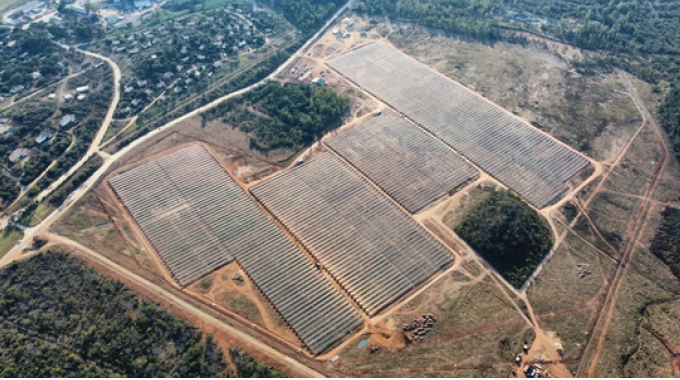
Sukulwenkosi Dube-Matutu, [email protected]
A TOTAL of 45 young women and girls graduated with certificates in different vocational skills on Tuesday after completing a three-month training programme at the Joshua Mqabuko Nkomo Polytechnic in Gwanda, Matabeleland South province.
The training sessions covered career development fields that were previously dominated by males such as clothing manufacturing, metal fabrication, fence making, solar installation and motor vehicle mechanics.
Done in partnership between the tertiary institution and the Zimbabwe Health Intervention (ZHI) under the Determined, Resilient, Empowered, AIDS-free, Mentored and Safe programme (DREAMS), the programme seeks to empower adolescent girls and young women to help reduce HIV risk through youth-friendly reproductive health care and social asset building.
Its successful implementation was aided by funding support from the USAid, which also mobilises communities for change with school and community-based HIV and violence prevention.
One of the graduates, Ms Maria Mucheto (19) who received training in metal fabrication said she always thought that her line of work was a man’s job.
“When I started the course, I was really afraid to operate a welding machine as I saw it as a very dangerous tool. I also thought that I wouldn’t be able to twist and bend the rods as I’m a woman and I’m still young,” she said.
“The training was really difficult at first but our lecturers always told us that we could do it and we just have to believe in ourselves.
“I now know how to weld different products in different designs. I now know the different names of iron rods. During our training we also went to the industrial sites and we got a chance to use heavy machinery.
“We also got demonstrations on how to manufacture a number of products,” said Ms Mucheto.
She said she will use the knowledge and skills she acquired to earn a living as the training had become a huge empowerment window.
Ms Ntando Sibanda (21) who received training in motor vehicle mechanics said she is glad to have penetrated a sector that has been previously dominated by males.
“When I started the course, I was clueless about cars but after three months of training I now know different parts of a car and how to diagnose various problems,” she said. “I also know different kinds of cars. We went for attachment at the garages and I got to experience the real world of being a mechanic.
“I’m eager to join the industry and put my skills to good use. I might be a woman but I know that I have what it takes to do a splendid job.”
Solar installation graduate, Ms Shelter Ndlovu (23) said her course requires bravery as it calls for one to work from the rooftop but said the ladies were up to the task. She said they visited the Blanket Mine solar plant, which helped to give them exposure.
Ms Nothando Sibanda (27) who studied clothing manufacturing said now that she has finished her training, she will immediately start working in order to fend for her five-year-old child. She said she will also undergo further training in order to further develop her skills.
Joshua Mqabuko Nkomo Polytechnic acting principal, Mrs Concelia Mswela, said their partnership with ZHI has helped the institution to fulfil its mandate of developing human capital.
“This is an exciting moment as we are celebrating the empowerment of the girl child. As a polytechnic we are very proud to showcase our work and we so much cherish the partnership that has been established between JM Polytechnic and ZHI,” she said.
“This partnership has yielded good fruits and it will go a long way in having an impact on our lives. The polytechnic has been mandated to develop human capital and as such as we partner with ZHI we are in pursuit of that agenda. We are glad to have imparted skills with the graduates in various areas of expertise,” she said.
Mrs Mswela urged the graduates to fully utilise the skills and embrace opportunities that come with the skills. She said going forward the graduates must mainstream industry in order to become productive and put their skills to use.
“This graduation ceremony marks the first step in the right direction for you. Do your research, network and identify opportunities that you can utilise,” she said.
“The training you have received is very relevant to our world today because it requires people with problem solving skills and people who can be innovative and produce. You have acquired crucial skills for sustenance.”
Mrs Mswela also advised the graduates to form consortiums in order to start their own business ventures saying young women must to continue developing their skills in order to remain relevant to the market.



 Online Reporter