Online Reporter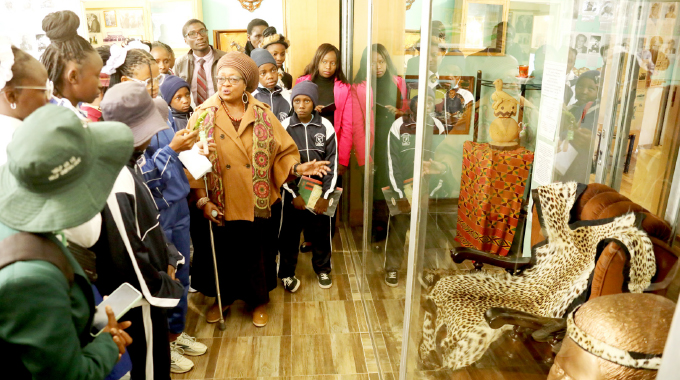
Raymond Jaravaza, [email protected]
FOR the 70 children drawn from seven primary and secondary schools in Bulawayo, walking into the Joshua Nkomo Museum in Matsheumhlophe on Tuesday must have felt like stepping into a living adventure.
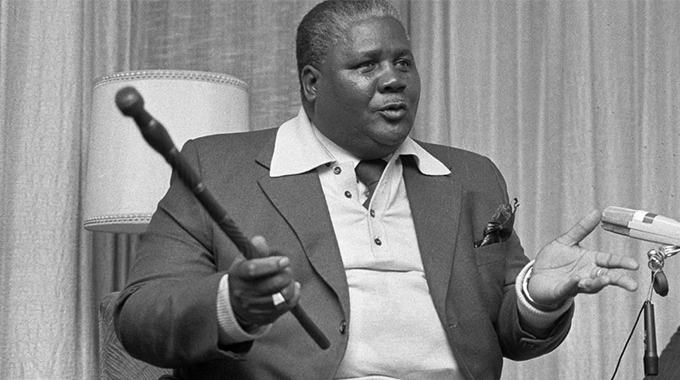
It was a rare opportunity to experience the trials, triumphs, fears, and successes of the late Father Zimbabwe, Dr Joshua Mqabuko Nyongolo Nkomo.
The children were captivated by neatly arranged portraits, newspaper clippings, handwritten letters, photographs, clothing, tools, gifts from world leaders, kitchen utensils, and other personal items used by Dr Nkomo and his wife, the late Johanna “MaFuyana” Nkomo. The couple’s bedroom is also on display, although visitors are not permitted to enter.
From the moment they stepped onto the verandah — where a bulletproof navy blue Mercedes-Benz once used by Dr Nkomo is parked — their curiosity kept tour guides on their toes, with questions about the fascinating artefacts they encountered.
They were joined by members of the Nkomo family, members of the public, church leaders, and teachers, all gathered to commemorate the 26th anniversary of Dr Nkomo’s passing on 1 July 1999, at the age of 82.
To honour his legacy, the Joshua Nkomo Restoration Project Trust and the Joshua Nkomo Foundation opened the museum for free public viewing. On regular days, an entry fee is charged. The schoolchildren came from JT Mthimkhulu Primary, Light House College, Sizani High, Zenit College, Foundation College, Beacon of Life Institute, and Riverdale Academy.
Beacon of Life Institute head boy, Thando Ncube, said the photographs in the museum revealed a man who embraced people of all races.
“Some of the pictures taken during the war show him with young and old people, women, and important figures from other countries. From those photographs, I learnt that he was a man of the people,” said Thando.
“I saw many photographs of him with white people and Indians, which shows that even during the war he fostered unity among people of all races.”
From the tour guides’ presentations, Thando said he came to understand Dr Nkomo as a man who loved peace, despite fiercely opposing white oppression.
“I wasn’t even born when Dr Nkomo died in 1999, but now I know that a street in Bulawayo and our airport are named after a man who loved peace and harmony.”
14-year-old Kimberley Nhemadondo from Riverdale Academy said she was struck by how long it took Dr Nkomo and other freedom fighters to liberate the country.
“Dr Nkomo was very patient. It took him and others a long time to free Zimbabwe from colonialism. The lesson I learnt today is that patience is important when fighting for something you truly believe in.”
Young Ishmael Mpofu, a primary school pupil, was amazed to learn that Dr Nkomo used a bulletproof vehicle.
“I didn’t know their lives were in danger and that Dr Nkomo had to use a bulletproof car. I’ve only seen those in movies — I didn’t know people like him used them many years ago.”
Among the notable artefacts in the museum is a love letter Dr Nkomo wrote to MaFuyana on February 2, 1977, expressing his undying love and informing her that he had bought her a car to mark their 23rd wedding anniversary.
The schoolchildren concluded their tour with a deeper appreciation of Dr Nkomo’s life, as the artefacts on display powerfully conveyed his story.
The visit aimed to instil Dr Nkomo’s values of equality and non-tribalism in the younger generation, as explained by Mr Tyson Chipikwa, Programmes Director of the Joshua Nkomo Trust, who emphasised the importance of “catching them young.”
Speaking at the event, Dr Nkomo’s eldest daughter, Mrs Thandiwe Nkomo-Ebrahim, said her father continued to preach national cohesion even on his deathbed.
“He called mother on his deathbed, held her hand and said, ‘MaFuyana, make sure that the people of Zimbabwe stay united, for unity is the only thing that will make Zimbabwe a prosperous nation.’”
Mrs Nkomo-Ebrahim said her father’s journey to bring the country together began during his time working for Rhodesian Railways.
“He travelled across the country preaching the gospel of solidarity because he understood that a fragmented nation could not win the struggle against white suppression.
“Today we see roads, a statue, and an airport named after Dr Nkomo, and that is the result of a lot of work behind the scenes between the Nkomo family and Government officials.”
Dr Nkomo’s commitment to peace and common purpose was most powerfully demonstrated when he signed the historic Unity Accord on December 22, 1987, choosing to work alongside the late President Robert Mugabe for the sake of national cohesion.
His leadership extended across political and trade union movements, including the Railways Workers Union, African National Congress, National Democratic Party, and Zapu, through which he tirelessly advocated for Zimbabwe’s independence.
He was a key participant in the 1979 Lancaster House negotiations, which ultimately led to Zimbabwe’s independence.
Born on June 19, 1917 in Matobo, Matabeleland, Dr Nkomo’s early life saw him study carpentry at Tsholotsho Government Industrial School after completing primary school. He later worked as a driver, ventured into animal husbandry, and taught carpentry at Manyame School in Kezi.