

 Chronicle Editor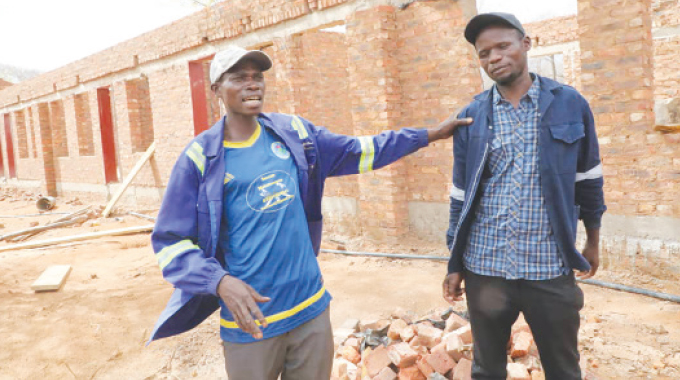
Raymond Jaravaza , [email protected]
FACED with a decades-long problem of wild animals invading communities and forcing schoolchildren to stay away from class resulting in higher dropout margins, a community in Jotsholo has joined hands with a local church to build a secondary school.
Learners from villages such as Masenyane, Jabatshaba and Menyezwa in Jotsholo, Matabeleland North, walk more than 14 kilometres to the nearest educational institutions — Mlamuli Secondary and Jotsholo High School.
The rate of school dropouts has over the years continued to skyrocket because learners walk long distances, and encounter wild animals along the way, in the early morning and late evenings when going and returning from school, according to Chief Mabhikwa.
He applauded the partnership between the local communities and Zimbabwe Assemblies of God Africa (Zaoga) for working together to build a secondary school that will cut the travelling distances by half.

The new school is situated about a kilometre-and-a-half from Cross Jotsholo Business Centre. The school will be known as Zaoga Secondary School in Jotsholo. The project started about a month-and-a-half ago and so far four classrooms and four offices are already at roofing level.
“It’s a community and church-driven project that we are so happy about. The area has so many wild animals roaming around at night and in the early mornings and that makes life very difficult for school children who have to walk long distances to go to school,” said Chief Mabhikwa.
He said the community contributes towards the project by providing river sand and manual labour.
Menyezwa village head Mr Busani Moyo narrated how in the last two months, villagers have been attacked by hyenas, heightening fears by parents to allow their children to walk long distances through thick forests to school.
“We can’t wait for the new school to be completed and start enrolling our children. The nearest schools are more than 14 kilometres away and our children have to walk long distances through a forest where wild animals roam around,” said Mr Moyo.
“Our kids now refuse to go to school because of cases of people being attacked by wild animals. In the last two months, four people have been attacked by hyenas.”
He said the community is happy with the progress of the new school.
“It’s only been a month-and-a-half since the construction of the school started and we already see tangible progress. My daughter is starting Form One next year and I hope she will enrol at the new school,” said Mr Moyo.
Project contractor, Mr Cletos Manjengwa, said, all things equal, the school will be completed in April and start enrolment for the next term.
“The classroom blocks and offices will be completed by the end of the year. The next phase will be the construction of the staff quarters and ablution facilities and we should be done by next year around April,” said Mr Manjengwa.
The new school, upon completion, will be a boarding and day schooling facility.
“We hired seven locals to clear the land before construction started and we also enlisted the services of villagers to supply us with river sand,” he said.
A local villager, Mrs Ntombi Mhlanga, said the construction of the new school came at the right time when wildlife and human conflict cases are on the rise.
“Wild animals are encroaching into our villages and the situation is getting worse. Our kids have been dropping out of school because of the long distances that they walk and the wild animals they encounter,” said Mrs Mhlanga.
Earlier this week, the Chronicle reported how two villagers from Masenyane were separately attacked by a lone hyena while herding cattle. The two men are recovering at Mpilo Central Hospital in Bulawayo.


 Bongani Ndlovu
 Online Reporter