Online Reporter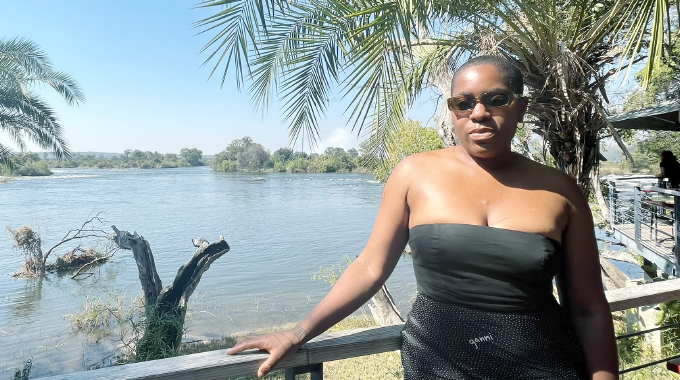
Mbulelo Mpofu, [email protected]
ACCLAIMED British-Nigerian artist, filmmaker and researcher Onyeka Igwe recently visited Zimbabwe, a feat she described as more than an artistic residency but a journey of discovery, cultural exchange and personal connection with a country whose histories, landscapes and creative expressions left a lasting impression.
The internationally recognised visual artist spent a fortnight in Bulawayo as a resident artist at the National Gallery of Zimbabwe (NGZ), where she presented her acclaimed film exhibition, “A Radical Duet”.
The exhibition marked a significant cultural milestone for the city, introducing local audiences to Igwe’s thought-provoking artistic practice, which explores the relationship between cinema, archives, memory and African knowledge systems.
For Igwe, the Zimbabwean experience was particularly meaningful as it represented her first-ever visit to Southern Africa, offering an opportunity to engage with a region she had previously encountered largely through research, history and artistic conversations.
“It has been such a wonderful experience being in Zimbabwe, particularly in Bulawayo. I have really enjoyed my stay here. The people are warm and welcoming, and the weather has also been great. Someone told me it was winter, but it has been much warmer than I expected,” she said.
Based in London, Igwe has established herself as one of the leading voices in contemporary experimental film and visual arts. Her multidisciplinary practice spans filmmaking, installation, performance and archival research, often interrogating colonial histories and examining how Africa and African people have been represented through moving images.
Through her work, she challenges dominant historical narratives while creating space for alternative perspectives, forgotten memories and indigenous ways of understanding the world.
Her exhibition at NGZ Bulawayo provided local audiences with an opportunity to encounter an artist whose work sits at the intersection of history, politics, identity and storytelling. “A Radical Duet” continues Igwe’s exploration of archives and colonial legacies, using film as a medium to question whose stories are preserved, whose voices are amplified and how history is constructed.
The exhibition also created an important platform for dialogue between Zimbabwean audiences and global contemporary art practices.
The residency was made possible through a chain of creative connections, with Igwe crediting anthropologist and interdisciplinary researcher Dr Lennon Mhishi, based in Canada, for helping facilitate her Zimbabwean journey.
Dr Mhishi, whose work explores African and diasporic music, social life and creative expression, connected Igwe with Silenkosi Moyo, the NGZ Bulawayo regional manager, paving the way for the artist’s residency and exhibition.
For Igwe, the opportunity demonstrated the importance of networks that connect artists, researchers and cultural institutions across continents.
Beyond the gallery space, her stay allowed her to immerse herself in Bulawayo’s cultural and historical landscape.
Her temporary home at Studio 8 became a base from which she explored the city, its visual artists, and experienced some of its most significant cultural landmarks. Among the places she visited were the historic Bulawayo Theatre, the scenic Centenary Park and the Natural History Museum of Zimbabwe, where she engaged with the city’s rich heritage and historical narratives.
One of the highlights of her Zimbabwean adventure was her visit to the world-renowned Victoria Falls, where she marvelled at one of the planet’s greatest natural wonders. The cascading waters of Mosi-oa-Tunya left a deep impression on the artist, who described the experience as unforgettable. During her time at the falls, she enjoyed a boat cruise and visited The Big Tree, one of Victoria Falls’ most famous landmarks. The trip offered a different perspective from her gallery-based work, allowing her to connect with Zimbabwe’s natural heritage and appreciate the country beyond its artistic and historical narratives.
However, like many visitors experiencing Zimbabwe for the first time, Igwe also encountered moments of cultural adjustment. One of the surprises during her stay was the country’s cuisine, which she described as noticeably “meat-heavy” compared to the food traditions she is familiar with from both Britain and Nigeria. Despite noticing the differences, Igwe found familiarity in one of Zimbabwe’s staple foods – isitshwala. She noted similarities between isitshwala and fufu, a popular West African dish made from starchy ingredients.
Food became another form of cultural storytelling for Igwe, revealing both differences and shared histories between African communities.
Although she managed to experience several of Bulawayo’s attractions, there remained one destination she did not get the opportunity to visit – the Matobo National Park. Rather than viewing it as a missed opportunity, Igwe sees it as a reason to return.
“I didn’t manage to go to Matobo, so that is reason enough for me to come back,” she said.
For the NGZ in Bulawayo, hosting Igwe’s residency and exhibition further strengthened its role as a space where local and international artistic conversations intersect. The exhibition expanded opportunities for audiences to engage with global contemporary art while positioning Bulawayo as an important destination for cultural exchange.
Igwe’s visit also highlighted the value of artist residencies in creating meaningful relationships between creators and communities. Rather than simply presenting finished works, residencies allow artists to experience places, meet people and develop deeper understandings that often influence future creative work. – Follow on X @MbuleloMpofu.