Chronicle Editor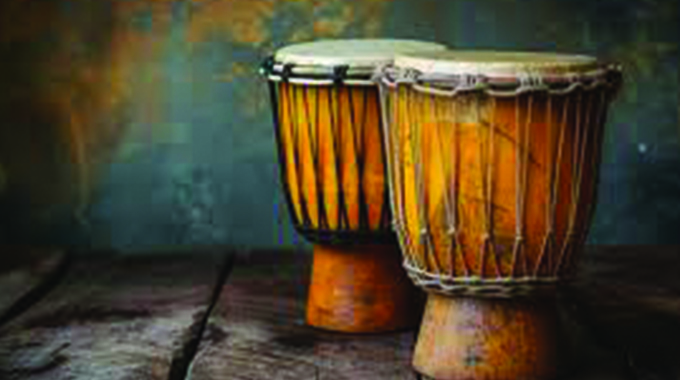
THE song and its rhythms remain the same. The lyrics too remain constant. However, the instruments that produce the music have changed. Guitars and other Western musical instruments have replaced the famed pan-African drums.
The music appeals even to the young, not so much in terms of underlying meaning and historical and spiritual significance.
Though Western musical instruments have been used, the music is still very much identifiable as wosana music associated with fertility/rain rituals that take place at the Njelele Hill, Zimbabwe’s pre-eminent rain or fertility shrine located within the Matobo Hills, since declared a World Heritage Site (WHS).

The site is sometimes referred to as kuMatombo or kuMabweadziva (the rock pools). The music referred to above is attributed to Gogo Ngwabi who is now late. Her wosana music was revolutionary and appealed to the modern generation. The beat is captivating. My interest though does not lie in the quality or otherwise of her music. The lyrics are conveyed through powerful music.
Hole, hole kayikhale baba,
Nyakana wendlala,
Ngizodl’ abantwabami.
Let the music play,
In the drought year,
I will eat my children.
It is the eating of one’s children that is of particular interest to me. Whereas Africans did not write in the Western sense of the concept, they did record events and life experiences happening around them. I strongly believe that through numerous art genres, Africans did document their experiences and those of their neighbours.
This was more so when we observed that the San, a hunter-gatherer community did, through its visual art traditions, capture what they saw happen around them. Of interest to me were well-executed scenes that depict the process of enslavement.
We learn that San rock art was not an overnight artistic rendition. Instead, it happened over a long period, ranging from the Neolithic Age to the Iron Age when the Bantu arrived, bringing with them advanced developments in metallurgy, agriculture and warfare, inter alia. All this and a lot more is well documented in their ages-old rock art.
A careful, empathetic and objective analysis and interpretation of their visual art traditions will reveal changing cosmologies and cultural practices ranging from belief in the equivalent of the Egyptian God Anubis to the introduction of plantain bananas imported into the region by new Bantu arrivals in their third phase of migrations from the Niger River delta.

Cuisine traditions underwent some changes. Plantain bananas were brought in from the Muslim coastline where the Bantu had adopted them alongside yams and other crops. Whenever new food crops are adopted, they enter the social, cultural, political and spiritual repertoire of the adopting community. The culinary arts or gastronomy, become an expression of a community’s culture.
It is no longer just about nutrition and sustenance. Within gastronomy, culture is expressed. It was for this reason that some years back I wrote a book titled, Beyond Nutrition: Food as a Cultural Expression. I had realised back then that careful scrutiny of the intricacies of gastronomic traditions opens wide vistas to a better understanding of a community’s cultural traditions and the forces at work to intervene in new perceptions of recently adopted foods and crops.
It is hoped therefore, that when Sadc delegates arrive in Zimbabwe, they are appropriately exposed to the more relevant aspects of Zimbabwean gastronomy. We eat Zimbabwean food, but more importantly, the food and related aspects are pointers to the diverse cultures of Zimbabwean people.
Our commonness as Africans lies so much, not in what we eat, but in how we attach cultural meanings to the growing of crops, storage and processing of grain and the attached gender issues to food production and consumption. Why do Africans eat communally? I have argued that it was not the result of shortage of plates, or the wood that is used to carve wooden plates. When we eat, we express our cultures, particularly with regard to celestially or cosmologically induced and copied social, political and cultural traits.
Individualism was never an African virtue. Expressions of this African ideal abound. Africans used to wear and eat their culture. That may not entirely be the case now. The whole world has been defined to them in all spheres of life. The question is, what are we going to show our visitors? Perhaps the shiny silverware. The world that has been defined to Africans, it has created common ideas and expressions of culinary expressions.
What I see, are not circular wooden bowls. The ingredients themselves, including the preparation traditions, are what have been defined to all Africans. What the BaTswana do is exactly what the Namibians do. This is to be expected and it is what we are showing each other. We could do better surely. All that we require and need are liberated minds.
What value is added when we show each other what the same colonial master showed to each one of us? No pretences bagaesu. From food back to food. Gogo Ngwabi’s lyrics of a rain-inducing wosana song refers to the fact that during a drought year she will eat her children. That is cannibalism and, in this instance, a well-calculated survival strategy. My view is that it is a well thought out stratagem in the circumstances.
The choice is between preserving parents or their children. It all depends on ages. If the parents are within childbearing ages while the children are incapable of economic survival, it makes sense to eat those children and, with full stomachs, proceed to make more babies. Otherwise, when the children are allowed to survive without the means to sustain themselves, it is the end of the family.
The emphasis here is that human flesh may be consumed depending on circumstances. More importantly, the practice is documented in one form or another. The arts do that more than any other form of documentation and communication. Now, I am convinced, my friend Nicholas Siziba was right when he said all African experiences regardless of how ancient they were, somehow they got preserved in one form or another, including the possibility of making use of the numerous arts genres.
After coming across rock art scenes depicting the enslaving process, I am persuaded to adopt the view that Siziba always held. If not archived through the arts, then it will be through cultural practices, folktales, folklore, myths and other cultural genres.
I gazed at the image-on-the-rock executed by the San people. At that stage, all I could deduce was that the image, accurately executed, was not of a tree that I was familiar with. Where I come from, which is south of Kezi, I know that there was no tree like that. In this natural landscape, there are no such species.
Was it not the attraction of the existence of fruit trees within the Matobo natural landscape that led to my great grandfather abandoning the Zhomba-Garanyemba area on the banks of the Tuli River that persuaded him (Tjinjika) to migrate to the Matobo Hills where there were fruit trees that gave sustenance in times of drought?
“Dombo lina tjilenga,” he and his relatives used to say. However, the profile of this tree was not familiar. Whose tree was it, anyway? Why was it brought here? Who brought it after all? My mind was set on running around to provide some answers. The San had documented the tree through their numerous rock sites in caves, rock boulders and rock shelters. Either the tree was brought to the Matobo natural landscape through new arrivals or some similar mischievous people such as enslavers.
My mind found rest when I thought the tree; because of its leaf structure and orientation was a banana. As the Amagugu team proceeded I asked photographers to capture the images of numerous trees in the Matobo natural landscape where bananas now proliferate. My initial thought, especially after seeing the enslaving scenes in some cases, was that slave drivers planted the curious tree species as a marker of the route to the sea where ships awaited the enslaved Africans to transport them, jam-packed like sardines to the Americas and the Caribbean islands.
It was only later that I began reading the Unesco history series on African history that I began to appreciate the impact of the arrival of the Bantu in countries such as Malawi, Mozambique and South Africa that I realised the impact of their arrival on lifestyles of the people that they found already living in Matobo.
The San still led a Stone Age life in Matobo. It was not just the San who were on the receiving end. The two groups interacted and it was not the weaker San hunters that adopted the ways of the new and more powerful Bantu. One of the new crops they introduced were plantain bananas that they had adopted along the Muslin coast. There, the Bantu interacted with various groups some of which came from Arabia, Persia and the Mediterranean area (occupied by the Phoenicians).
There were changes to cuisines along the Muslim Coastline. When the Bantu who had settled along the Muslim Coastline started migrating south, plantain bananas were among the food commodities that they introduced to the San communities who still were leading Stone Age lifestyles.
Consuming human flesh is equally documented through clan praises. The one clan that seems to have a praise line that depicts it, as having practiced cannibalism, were the Tshabangus. Poetry has the characteristic of carrying the bad and the good. There were instances when a king was told the raw truth and the poet enjoyed poetic licence. The king looked on powerlessly knowing tradition allowed that democratic scrutiny and commentary. It may not be quite so with some of our leaders who will not tolerate democratic scrutiny.
What emerges from the above exposure is that there are different cuisines for different classes of people. Royalty, for example, has its own dishes as do the queens, ordinary men, women, children and expecting mothers. There are other forms of classification that demand exclusive cuisines.
The cases in point relate to the ancestral spirits or just spirits in general. What they eat is not what we the material biological human beings eat. We do know that ancestral spirits and other deities get offerings and sacrifices from time to time in order for their supplicants to receive their blessings in turn.
Spirits do not possess the sort of mouths that we possess. So, they cannot eat what we eat, but because we are familiar with the worldly language and practices, we refer to them as eating what we give them. For example, bile, inyongo, is bitter, so bitter even a dog cannot countenance its bitterness.
As a way of bringing out their differences from us, inyongo is presented to the ancestral spirits when, for example, a daughter is getting married. Her relatives slaughter beasts and use their inyongo to apply on known body parts for the ancestral spirits to receive the messages that are accompanied by uttered or verbalised words.
Even the meat that is set aside for the consumption of ancestral spirits is placed emsamo, the sacred part in the rear section of the hut floor. The spirit and material worlds or realms of existence are different. Their citizens equally differ in tastes.



 Online Reporter