Chronicle Editor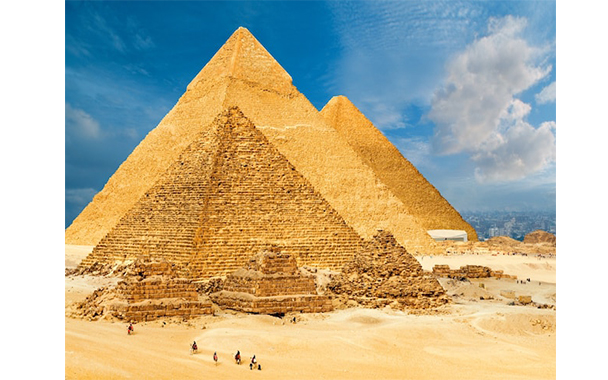
In the city of Cusco, in Peru, South America there is a world famous stone monument known as Machu Picchu which was built by the Incas. The stones, some of which weigh over 300 tonnes, are a mystery regarding their extraction, transportation, masonry and hitching high up at a time there were no cranes or ropes or pulley systems.
The last such stone monument survives after the others were destroyed by the Spaniards who, as Catholics, perceived them as paganistic.
The stones present twin challenges. The mechanical aspects are just mindboggling. How were the stones extracted? How were they transported to the site? Once at the site, how were they carved and polished? How were they lifted high at a time there were no cranes, no pulley systems and no strong ropes? Further, how were the stones trimmed so well that they tightly fitted like a jig-saw puzzle? Why were the stones hitched so high, was there something that the Incas feared on the ground?
These are questions that relate to the physical or material aspects. They are questions that relate to the imbued traits, attributes and characteristics of the stones that enable them to perform the functions they were intended for. The next question or sets of questions relate to that purpose or purposes. A tentative purpose, it is observed, is to do with astronomical observation. In particular, it was movement and subsequent alignment of the sun with the monument.
The sun, among the various stars, is one nearest to the earth and possibly the one that exerts the greatest influence on the earth and its inhabitants and natural and physical processes. Its energy, diminished or enhanced, results in changes that are monitored.
The answer furnished above only partially answers the questions posed. The question is astronomical observation for what? Similar purposes have been posited with regard to the Nabta Playa in southern Egypt. It does seem that the universal purposes for the ancient gigantic stone monuments was the same, namely solar observation and cultural roles emanating therefrom.
This relates to the observation of the movement and alignments of the sun to cultural monuments on specific locations and sites of these cultural stone structures. It is for that reason that we keep on referring to other monuments aside of Stonehenge so that we may discern commonalities among the community of stone monuments.
The sun’s movement was traced for some functional purpose and not just some intrinsic fun or pursuit.
In Peru there are other stone structures, notably the Thirteen Towers of Chunkillo. The monument, it is posited, used to measure positions of the sun throughout the year. By so doing, the ancients were tapping into the changing energy levels being received from the sun on the basis of different relative daily positions of the two bodies, the sun and earth. These energy variations differed from position to position on the planet. In essence therefore, what were different and varying were energy levels, regardless of the forms of energy.
As posited in an earlier article it is the varying energy levels that matter. The sun, therefore, was recognised for its role in causing variances in energy levels with resulting prospects for possible cultural functions such as rituals and ceremonies. Rituals very much depended on available energy in their facilitatory roles for the various natural and cultural roles, purposes and functions. To trace the movement of the sun on a daily basis is tantamount to measuring changing energy levels and identifying the time and day of year when to conduct rituals and ceremonies at a given location and site where the solar observatory is.
Given the importance and role of the sun in life on earth it comes as no wonder that the sun was worshipped. This adds the religious or spiritual dimension of a site on which the sun is tracked and monitored. There is a good example in Egypt where God Ra was worshipped. Surely, the movement of such a God was a matter to pursue vigorously through the use of astronomical watches or dials.
Solar movement has a bearing on the timing of the identification of seasons and figuring out when agriculture rituals and related activities commence. Fertility of the land is thus a very important natural phenomenon, and the sun has a critical role to play through its movement and observed alignments. Its movement thus is perceived as a matter of life and death. It is in God in which the fate of communities restas.
It has also been observed that there are instances where an arrangement of stone monuments on earth reflects and is in consonance with the arrangements of certain stellar bodies. Africans have always been alert to this and, as a result, coined an adage which aptly captures the reality: “As above, so below.”
This has been manifested in ideas relating to architecture, sculpture, design and ideas relating to aesthetics.
Heavens, it seems, have something to offer and copying them only makes sense and Africa has done precisely that. It is my well-considered view that ancients in other parts of the world were doing exactly the same.
A look at the Egyptian pyramids reveals similar ideas. The Great Pyramid of Giza is so arranged that it is in alignment with the constellation of Orion. What this means is that the construction of the pyramid was underpinned and informed by the reality and perceptions relating to the constellation in question. Whatever meanings and powers were associated with the constellation or individual stars within it, were being captured on earth, on the pyramids through replication.
Creativity, design and construction of earthly monuments or structures were thus related to, underpinned and informed by stellar reality whose one among several attributes was constant movement resulting in changing available energy at different locations and sites on earth as captured, monitored and tracked by created, designed and constructed gigantic stone monuments. Pyramids were constructed with impeccable mathematical precision.
They are aptly described as unique and a mysterious feat of constructions.
Recently there have been revisionist theories regarding the purpose of building the gigantic pyramids. This has been occasioned by the absence of extravagant artifacts in one or some of the pyramids.
It has also been realised that there is absence of ornate wall art, the absence of sealed entrances and the absence of tombs. Questions are being posed as to why go to all the lengths just to house and preserve some cadavers. So much knowledge, skill, time and innovation just to construct so meticulous and gigantic structures for the dead? How would the ancients build such mammoth monuments as resting places?
Driving and prompting these ideas has been the discovery in 1934 in Iraq of a 2000 year old Baghdad or Parthian battery. The artifact, shaped like a clay pot, had a copper cylinder, an iron rod and some asphaltum. Through the application of some acid the apparatus generated some electric current.
The working of the apparatus is akin to that of an acid battery. On the basis of these materials with a power to generate electricity, researchers are relooking at the materials used in constructing pyramids. They have identified limestone, granite and dolomite, all of which were finely polished as pyramid surfaces, both internal and external. These are substances known to possess qualities of generating electric currents from small volts.
It has also been figured out that there was a time when an earthquake led to the peeling off of the shiny limestone casing on the pyramid leading to disfigurement and prompting ultimately the removal of the entire external casing.
The pyramids we see today are without the casing which had openings through which the sun’s energy (rays) entered the pyramid. It is therefore being argued that the pyramids were not for mummified bodies of the pharaohs but gigantic electricity generating plants as would later be developed and demonstrated US engineer Tesla.
For now, I am not at all persuaded to buy into these new ideas, scientific as they may seem to be. My argument rests on the fact of limited understanding on the part of researchers on the phenomenon of spirituality as understood in Africa today and the ancients millennia ago.
There are also no concretely and definitively established links between the pyramids’ chemical composition of materials used in their construction. The Baghdad battery so happens to have the capacity, on the basis of materials used and their ability to produce electricity.
All along it has been established that these ancient monuments were located and sited on hubs or networks of energy, which energy may be electric, electromagnetic, and kinetic and, indeed, other forms of energy. What the investigations are doing, which in my view is positive, is to lend some scientific interpretation of the nature and operations of spirituality rather than negating and nullify it.
Next week we shall conclude this section on movements and alignments of cosmic bodies in relation to maximising energy capture/harvesting as part of enhancing ritual potency, power and efficacy. In the final analysis, it’s all about energy and how the various natural processes on earth utilise it to maintain and sustain and related physical processes.



 Online Reporter