Chronicle Editor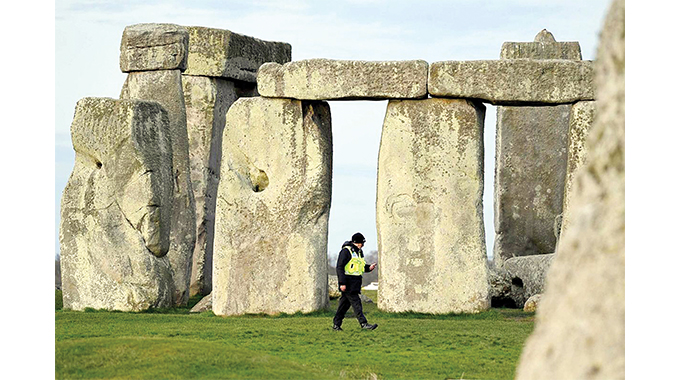
Pathisa Nyathi
WATER was there long before beer and wine. Which is more important, a water container or water in a container?
The relevance of the two above statements will become apparent as we continue to interrogate the presence of a parallel ditch (channel) and a bank (mound of earth). The two features continue to vex and perplex the minds of archaeologists and scientists doing research at Stonehenge. Some are of the opinion that the bank, sometimes three metres high, is the more important physical feature with cultural relevance. The earth to create the bank came from digging a ditch, a circular trench referred to as the ditch, which at the Darrington Walls was five metres deep.
For now, we are not going to pursue the matter any further. We shall certainly come back it. Research has been carried out whose results show that the ditch was not an empty dry feature. Evidence shows that there was water in the ditch. You may already get some hint regarding the questions posed at the beginning. It is the presence of water which provides some clue. Evidence at hand seems solid; the ditch contained water. The ditch was on the inside rather that the outside. This to say the ditch was nearer the outer sarsen stone wall at Stonehenge, with the bank on the outside.
There are scholars who argue that the two physical features were of equal importance. I shall show why I hold a different opinion on the basis of the fact that the ditch was more than five metres deep and contained water. In an earlier instalment I argued that a cultural landscape has to exhibit a common theme, possibly with sub-themes that feed into it. This is the same as saying a cultural landscape will not contradict itself. It should thus be seen as being holistic and a scintillating whole characterised by relatedness, connectedness and linkage of the various physico-cultural features.
Interpretation of Stonehenge will continue to elude us as long as we adopt a piecemeal separatist approach where we seek to understand and interpret individual features without relating one to all the others and all the others to the one. A holistic approach emerges where relatedness and a common theme are centred. Research-based evidence that the ditch was not empty but contained water persuades me to opt for the greater role played by water, in comparison to the bank which is no more than piled earth extracted from the process of creating the ditch with water. This, on the basis of my tentative interpretation finds scope, relevance and meaning. But we may pose the question, “why did the piled earth have to be placed so that it was parallel to the ditch?”
Perhaps at this juncture we may pinpoint the central theme that we seem to be coming up with right from the outset.
The following considerations worked in conjunction to create the theme: immortality (as symbolised in rock’s solidity, its chemical composition); continuity/endlessness/perpetuity (as symbolised in circularity); the presence of spirits (as testified to by Stonehenge as being a burial place); eternity (as symbolised by wooden posts in circular holes, the Aubrey holes). Sexuality and fertility are thus represented. All this, in my view, points in the direction of spirituality, thus making Stonehenge more a spiritual site than anything else. Other dimensions feed into spirituality.
It is to water that we must turn so as to see how it advances the spirituality of the site. Before we look at Stonehenge we need to begin where humanity began-in Africa. Do African communities link water with spirituality? The answer is a resounding yes! Connection between water and religion or spirituality has existed from time immemorial among the various communities of the world and in several faiths including Christianity, Islam, Judaism, Buddhism and many others. We turn to Africa with her African Spirituality.
We shall consider three areas where the link between spirituality and water is exhibited. The following shall be considered: water as symbol of life, water as a symbol of purification and cleansing, and water as a symbol of protection. Among the Ndebele when a mother with a newly born baby is asked by children where she got the baby, her answer is, “from a pool of water.” Whereas this should not be taken literally, there is some literal dimension to the metaphor. Usually, the pool is given as one that is fringed with water reeds, a pool that never dries up. Such allegories may be found within the context of totemism. The totem of the Siziba/Dziva people is a good example.
Sexuality, which lies at the centre of fertility, is implied. Discerning minds will have clearly seen the “reeds” that fringe the ever moist “pool.” A pool is a source of life. Symbolic language is resorted in order to traverse the treacherous terrain of vulgarity. Babies are conceived, grow and develop within a watery environment (the amniotic fluid) Indeed, babies are gotten from a pool and in their travel, after nine months of sojourn in a pool of water, they pass through the end of a pool that is fringed with reeds (pubic hair).
Some communities, particular the Sotho, refer to the marshy place which is the origin of humankind as Ntsuanatsatsi, where the sun rises. Once again, there is reference to water. Tribal fission derives its language from reeds. Ungowaluphi uhlanga? (Which branch of the reeds do you belong to?” I have argued elsewhere that the conception, growth and development of an individual captures millions of years of human development from a water environment.
Then follows emergence from water to land with concomitant physiological and anatomical adaptations to life on land filled with air. In a matter of a few years the story of human development over millions of years in played out right in front of our very eyes.
Importantly, water remains as the major component of human bodies and indeed other forms of life. Life requires water for sustenance. Water is life. In the absence of water life is unimaginable. As a result, there are numerous ceremonies and rituals that are held to induce rain to fall. Rain shrines proliferate on the continent where rain rituals are conducted for the continuity and perpetuity of life in its diversity. Nearer home we have the Njelele Rain Shrine where annually pilgrimages are conducted to plead with Mwali/God to be merciful and give rains. The shrines and other related sites are fertility shrines.
Being born is not enough to guarantee continuing life of an individual. Water’s fertility is required. As a result, there are numerous ceremonies and rituals that are held by various communities to ensure there is food to sustain lives of flora and fauna.



 Online Reporter