Chronicle Editor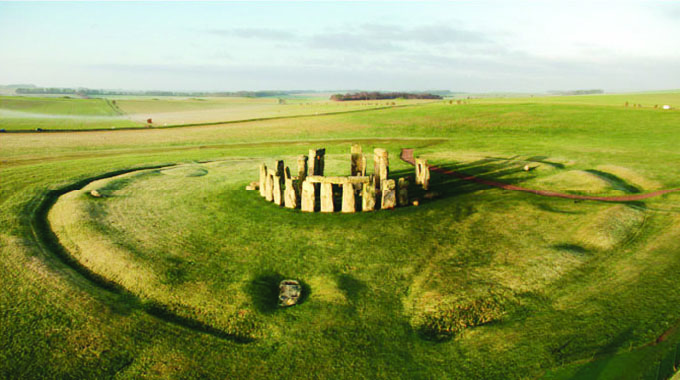
Pathisa Nyathi
SACREDNESS and or holiness are attached to a site because of various attributes. Some may be to do with the geological attributes of a given site such as when it is a hub of leylines. Such a place is special and is perceived and treated as such.
Sometimes a site may have a tree grove, a spring with holy water, special and symbolic rock formations and indeed, other natural but unique attributes. It is man who recognises and attaches holiness or sacredness to a site. Because of human agency, such places may be desecrated, once again, because of the defiling actions of humans.
Over time, a sacred place may lose its recognition as a sacred site when a different people settle on or around such a site. The new settlers may no longer recognise the sacredness of the site.
This may be the result of the new settlers holding different religious or spiritual ideas and beliefs.
Sacredness or holiness with regard to sites is never universally held. Spiritual ideas and beliefs vary from one community or society to the next. What may be holy to
community A is not necessarly so to community B.
What we observe is that there are communities that have a tendency of imposing their ideas and beliefs on others, especially when they perceive those people as inferior because of considerations such as race, ethnicity and creed.
A monument is sacred or holy to those who created, built and used it. Wars may break out where such views and attendant complexes exist.
We are writing within the context of Stonehenge that we find to be a spiritual site and therefore one that was perceived as holy or sacred. That Stonehenge was a holy spiritual landscape is not in doubt to some of us.
Spiritual beliefs seem to have resulted in the construction of megalithic structures. Where a site is perceived and recognised as such, there will inevitably be individuals who are spiritually endowed who communicate with spiritual beings and transmit what is revealed to them to the community members.
The community is important in its recognition of a sacred place. When confidence in the site’s sacredness is lost, the site loses spiritual relevance and faces spirit decadence, profligacy and decline.
Equally, the living spirit beings who officiate at the spiritual site have to win the confidence and support of the people if the site is to maintain its sanctity, holiness and sacredness.
Generally, most, if not all communities and societies acknowledge the qualifications of individuals who preside over the rituals on the ritual site.
This is where spiritual endowment comes in. Such individuals must be perceived as such by community members if credibility is not to be compromised. There are clear expectations that must be met by the individuals.
Individuals will go by different names such as the Druids, priests, shamans, traditional doctors, healers, soothsayers and a lot more.
The bottom line is that they are spiritual and communicate with spirit beings in another realm. They believe a human being has two components, material body and spirit.
Through their spiritual communication, they get to know medicines to heal a sick individual. Their medicines are targeted at the material body.
There are instances when medicines target the spiritual component. African doctors were good at differentiating between the two.
Spiritual healing is the more difficult to achieve. The methodologies applied may be different. Symbolism may also be resorted to.
The efficacy of medicines, so they believe, does not lie in their chemical composition. As a result, African healing is holistic in approach in order to take care of the material body and the soul.
However, we are keen to see whether at Stonehenge there is evidence of the presence of spiritual individuals, the equivalent of shamans and African traditional healers found on the African continent.
We shall argue that there was the presence of such spirit beings if we go by the finds that were excavated by archaeologists and scientists who worked under the River Valley Project.
We start with the urn, which has been identified at ancient sites not only at Stonehenge but also at sites in Asia.
The urn was made from fired pots. It is possible, if we are to take a leaf from Africa, that the sherds were derived from fired broken clay pots.
Various dry fortification plants were crushed and burnt in the urn. The process of smudging (ukuthunqisela) generates smoke that is used to drive evil spirits.
In Africa, the process is still very much in vogue. Wood is burnt until the hot embers are available. It is these that are placed in the urn, udengele/udengezi and the powdered medicine added. As the dry medicines burn, it attaches its particles to those that cause evil.
In Asia, an urn was excavated next to the bones of a wealthy woman (her dress was liberally festooned with beads) and a child. It is clear that the belief related to the journey of the spirit of the dead to the next realm. The departing spirit had to journey without the interference of evil conditions or spirits. These were gotten rid of by the burning incense.
Traditional doctors and shamans use this method to purify the environs of bodies of the dead.
The process is used in conjunction with holy water, which is sprinkled on the body of the dead. Old churches such as the Roman Catholic Church and the Anglican Church still practice purification of corpses and sites within the church. These are old practices dating back to the period before the advent of Christianity.
We can surmise that at Stonehenge the urn was used for similar purposes under similar beliefs. That, apparently was the preserve of the spiritual doctors, healers and soothsayers, all endowed with spirits.
We thus have no reason to doubt that at Stonehenge there were present the equivalent of African traditional doctors and shamans.
Similar spiritual/religious practices were informed by the common beliefs or practices that were similar. The beliefs and worldview of the ancients seem, at those times, to have been universally applicable. People who did not believe in the presence of evil would not have engaged in such practices calculated at driving out evil.
A common worldview would have resulted and informed common practices. What seems, in the scientific era, nonsensical, mythical and uncivilised, was not so perceived back then? The God of Science had not been created then and not strongly believed in.
The Inca, the Mayans, Africans and Europeans were not very different in terms of critical beliefs and thus the adoption of common spiritual and cultural practices.
In the next article, we shall look at more evidence from excavated finds to trace the presence of individuals who officiated during sacrifices and presentation of libations to the gods.
Africa that lagged behind and was slow to declare her allegiance to the God of Science shall remain our salvation when it comes to the interpretation of ancient cultural landscapes such as Stonehenge and many others.


 Online Reporter