Online Reporter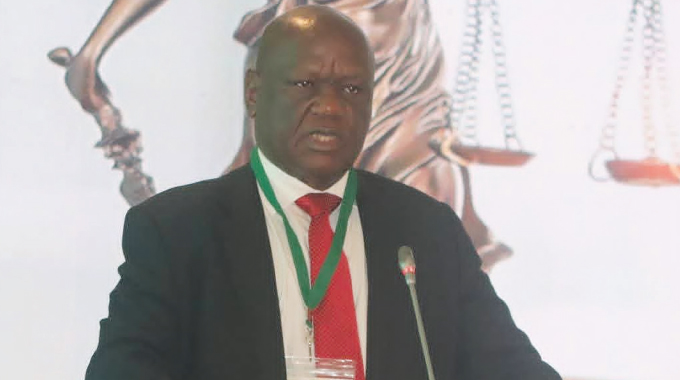
Rutendo Nyeve, [email protected]
CHIEF Justice Luke Malaba has called for the accelerated adoption of Artificial Intelligence to modernise court processes and reduce delays in the administration of justice.
Speaking during the End of First Term Judges’ Symposium in Victoria Falls yesterday, CJ Malaba said the time had come for Zimbabwe to stop watching others implement AI in their transformative systems and instead take decisive action.
The symposium is being held under the theme: “The Application of Artificial Intelligence Technology in the Processes and Proceedings of the Judicial Service.”
CJ Malaba emphasised that AI is no longer a futuristic concept but a present necessity for an efficient judiciary.
“The time has come when we can no longer afford to watch others discuss and implement in their transformative systems this very critical phenomenon,” he said.
The Chief Justice noted that AI has the potential to improve welfare, contribute to sustainable global economic activity, increase innovation and productivity, and help respond to key global challenges.
“These are the core features that obligate us as the administration of the judicial service, as well as the implementation of it from judge to ordinary staff members, to take note of,” he said.
However, CJ Malaba also cautioned on the risks of AI adoption, particularly regarding bias and the phenomenon of hallucination in generative AI systems.
“If a human is from a particular cultural environment and carries in his or her head the biases of that culture, those biases, willingly or not, will find their way into the program. But the machine will not distinguish. It has no capacity to do that,” he said.
CJ Malaba said while AI can assist in judicial work, human judgment must remain supreme.
“Human judgment is always the element of justice that cannot be taken over by a machine; we cannot do that. Whatever we do, we will leave the human judgment there because it is God-given. Justice is God-given. We cannot transfer it ourselves,” he said.

CJ Malaba cited practical applications where AI could immediately improve efficiency, particularly in court recording and transcription, drawing lessons from Ethiopia, where records are produced within minutes.
“The transcription, the record is out. The appeal record is ready in a day where it was taking months and months and months to get to the Supreme Court,” he said.
Judicial Service Commission secretary, Mr Walter Chikwana, outlined the progress already made in digitising the courts.
“We would appreciate that after the introduction of the Integrated Electronic Case Management System in the judiciary, all our superior courts are now digitised. They are now paperless,” Mr Chikwana said.
“We have now moved into the magistrate’s court, where half of the processes are under the digitisation programme, and we are expecting that by the end of the year, the entire magistrate’s court will be digitised.”
He said the next phase would focus on leveraging AI for legal research and improving the quality of work from judicial officers.
“This is also consistent with the Artificial Intelligence Policy, which was launched by our Minister of ICT and also in terms of our NDS2,” he said.
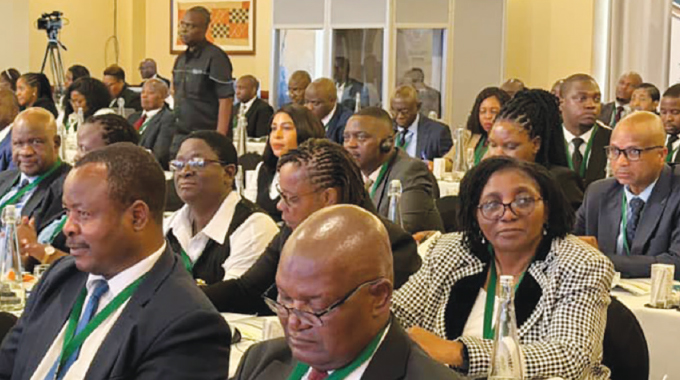
The symposium brought together judges from across the country, along with international presenters from Ethiopia, Singapore, Tanzania, Kazakhstan and the United States, reflecting the growing global focus on technology-driven judicial reform.