admin
admin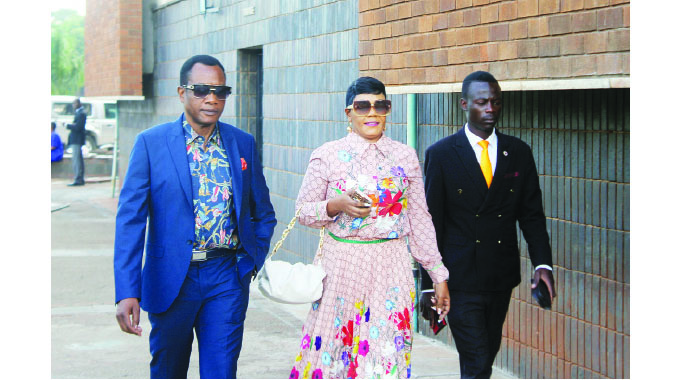
Yeukai Karengezeka
Court Correspondent
In a new development in the fraud case involving gospel musician Ivy Kombo and her husband Admire Andy Kasi, the court yesterday ruled in favour of an application made by the State to lead evidence from High Court judge Justice Sylvia Chirawu-Mugomba.
The couple are accused of fraudulently acquiring conversion certificates without writing examinations to practice law in Zimbabwe.
They are being jointly charged with the suspended Council for Legal Education official Huggins Hardwork Duri.
The ruling of the presiding magistrate was yesterday read on her behalf by regional magistrate Mr Taurai Manuwere.
“The accused persons will suffer no prejudice since they are the ones who introduced this document and cross-examined State witnesses on it.
“The author of the document should come and testify. The accused chose to withhold this document during investigations and only to ambush the State during trial,” he said.
The trial is expected to continue on June 6 and Justice Chirawu-Mugomba’s testimony might mark the end of the State case.
Justice Chirawu-Mugomba is the chairperson of Council for Legal Education who are alleged to have authored a letter authorising the couple to be exempted from writing the conversion examinations which consists of eight subjects.
Last month, the State made a similar application intending to summon the judge, but magistrate Mrs Feresi Chakanyuka dismissed it for lack of merit.
However, for the second time, the State made the same application and it was upheld.
Prosecutor Mr Anesu Chirenje was contending that the testimony of the judge will provide justice to the case.
He says if indeed Justice Chirawu-Mugomba confirms exemption of Kasi and Kombo, the State’s allegations will tumble immediately.
However, the defence lawyers from the onset of the application objected on the basis that it was unfair and was tantamount to persecution.
They also contend that the law does not allow an investigation and prosecution of the same case to run concurrently, hence the court should not treat the State as cousins of the court.
This is the third time that the magistrate has revisited her ruling.
There was a case of the email and that of the affidavit in which the magistrate reversed her decisions.


 Online Reporter