admin
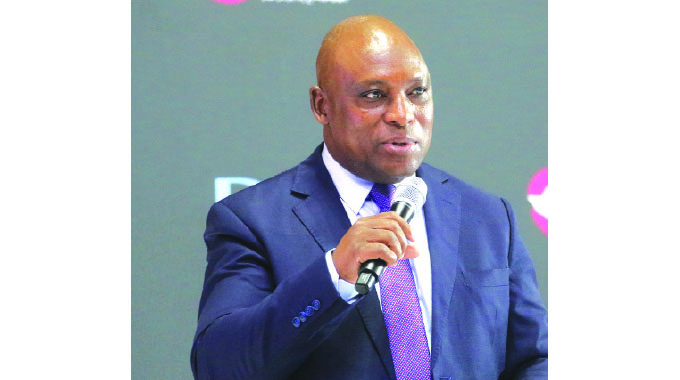
admincompanies seem to opting for judicial management to ensure continuity of operations. Herald Business (HB) this week spoke to a judicial management expert Mr Knowledge Hofisi (KH) to get his opinion on the judicial management in Zimbabwe. Mr Hofisi is the managing director of Aurifin Capital.
HB: Mr Hofisi, you have done some judicial management assignments before and you were recently appointed provisional judicial manager of Hamilton Properties. What is your opinion about this reconstruction process?
KH: Let me start by explaining what judicial management is. It is a process that ensures that the company will continue to operate as a going concern opposed to winding up operations. Accordingly, stakeholders such as workers will not lose their jobs on the basis that their contracts of employment will remain valid.
Ordinarily, pre-judicial management presupposes that creditors’ obligations are paid before the cancellation of the judicial management order, among other requirements. In terms of Section 209 of the Companies Act (Chapter 24:03), a company under judicial management enjoys immunity from prosecution.
HB: What does immunity from prosecution entail?
KH: Once an order is granted (for placement of the company under judicial management), the company gets a special dispensation that restores a semblance of normalcy as the judicial manager will have reasonable time to craft a rescue plan without being involved in litigation which may be costly and laborious.
Another advantage is that once the judicial management order has been granted, creditors will be put into two categories namely; pre-judicial management and judicial management creditors.
A moratorium on pre-judicial management debts will then be attained. As a result, the judicial manager will be able to ascertain the authenticity of creditors’ claims during the formulation of a reconstruction plan that could be presented to the creditors and members during their first meetings normally held some few days before the return day.
HB: What else does the judicial manager do?
KH: As soon as the judicial manager is appointed, he or she assumes management of the company. He/she formulates the rescue package through identifying challenges facing the company. He/she may raise funding through disposal of idle assets or non-core assets to fund operations. In some instances, the judicial manager can also look for partners prepared to invest. Once these issues are addressed, the judicial manager can hand over the company to shareholders.
HB: How transparent is this process? We have heard stories about judicial managers engaging in fights with shareholders, especially on matters to do with transparency of the process.
KH: The judicial management process is transparent as it is independently supervised by the Master of High Court through the Master. In fact, the first and second meetings of creditors and members are presided over by the Master, normally at the High Court. The judicial manager will be required to present a statutory report that will set out reasons precluding the company from being successful, prospects for raising capital, statement of company’s affairs, judicial manager’s opinion, etc. In order to ensure transparency and fairness, the body of directors as a collegial body is divested of its powers culminating in the judicial manager assuming that responsibility.
Although shareholders’ activism is not suspended as a result of judicial management, shareholders will forfeit the right to appoint directors. That process seeks to empower the judicial manager to institute investigations on the former directors’ level of culpability and financial haemorrhage, if any.
If allegations of misapplication of company assets are levelled against former directors or senior management, criminal and civil proceedings can be instituted, with emphasis on restitution. That phenomenon was common during the period when most local financial institutions went under.
HB: You have spoken much about advantages of the judicial management. But what are the drawbacks?
KH: Captains of the industry have argued that judicial management structures are not in line with the dictates of contemporary corporate governance practices as it tends to centralise the decision-making process.
Another school of thought is that in the event that debt equity is required, most financiers are invariably non-committal to extend credit lines. That inference is informed on the premises that judicial management process damages confidence.
HB: We have seen companies folding after reconstruction. What is your comment on that?
KH: It is true. In fact, the low rate of successful reconstruction of companies under judicial management has also been cited as worrisome by captains of industry. It has also been averred that judicial management, in most cases, tends to favour secured creditors and statutory bodies such as Zimbabwe Revenue Authority at the expense of the vulnerable unsecured creditors.
Other scholars subscribe to the view that judicial management is costly as judicial management fees receive prime consideration over other creditors, including those secured. But it is my opinion, after having considered the exigencies that may exist, that the judicial management is an effective management model for distressed companies.
HB: Are they any loopholes that you think need to be addressed?
KH: There is need to realign the legislative framework with contemporary business practices.


 Online Reporter