Online Reporter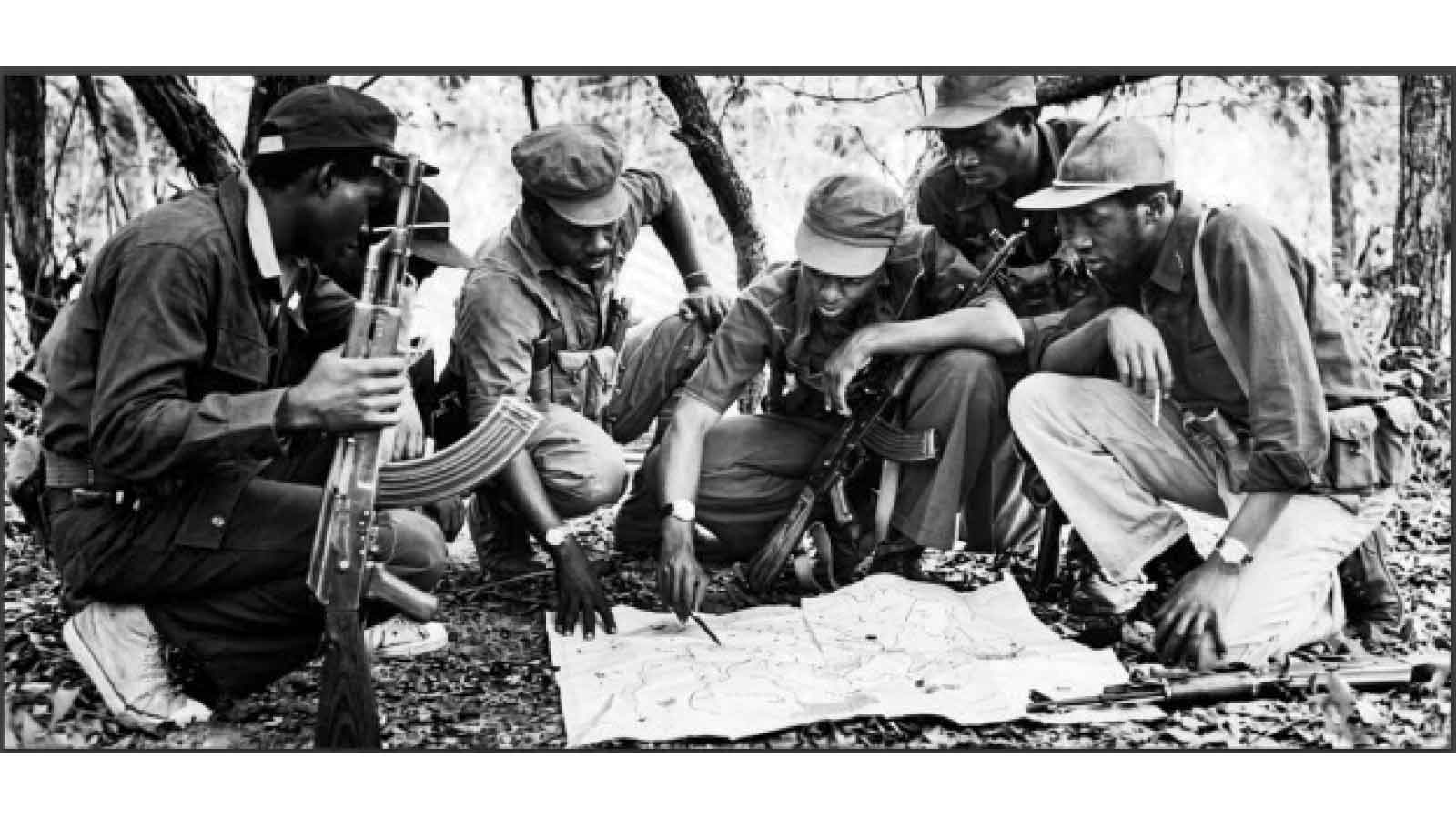
Communion with Bishop Lazarus
Getting sick in the village was always an invitation for trouble — bitter trouble, Bishop Lazi must say.
THERE was a time when our grandmothers were original chemists, and their pharmacy was the bush.
Their medicine was potent, powerful and tasted like the devil’s brew that had been concocted in a rusty pot.
It cured everything from a stubborn cough to a broken heart. Kikikiki.
The only problem? It came with a taste so bitter, so profoundly haunting that it could make a grown man weep for his mother.
The village’s miracle cure
Each time the young Bishop or his siblings got sick, grandma would typically wake up before the roosters.
With her eyes scanning the horizon, she would shuffle into the bush with a machete and a heart full of purpose.
She knew the exact leaf, the precise root, the specific bark that had the power to banish the demons of all our ailments.
But she also knew the secret to making you suffer for your healing. Kikikiki.
The process was a ceremony.
The ingredients were pounded in a wooden mortar with a rhythmic, ominous thud. Each beat was a drumroll announcing your doom. Then, she would add water to the noxious mix.
Not clean borehole water, no.
It had to be that muddy river water — with that forbidding scent of cattle urine to boot — for that extra terror. Then came the boil. The smell would fill the hut. It was a pungent, earthy smell that could peel the paint off a tractor.
It would seep into your clothes, your hair, your very soul. Then came the presentation.
A chipped, enamel mug.
The liquid inside was thick and brown, like the muddy water from a cattle dip.
And the surface . . . it shimmered with a weird, oily film, like a mirage of your own misery.
The old-timer would hold it out, her wrinkled face a mask of absolute seriousness. The first sip was a shock to the system.
It was like licking a battery that had been dipped in ash and despair.
Your tongue would instantly rebel, curling up in a futile attempt to escape.
The bitterness would hit the back of your throat, a chemical weapon disguised as herbal tea. It was the kind of bitter that made you question your entire existence.
Why are we here? What is the meaning of life? Is this the taste of my own mortality? Kikikiki.
And you had to drink the whole thing. No sipping. Your eyes would water. Your nose would run. You would start to sweat like a sinner in church. The whole time, grandma would be cheering you on: “Drink! Drink! It will flush out the poison! The bitterer it is, the stronger it works!” Eish! It was so strong you felt like your insides were being rearranged.
You could feel your taste buds staging a coup and throwing themselves off your tongue.
Every burp for the next week would taste like a bog of eternal stench. But you know what? The miraculous thing was, it worked. By the next morning, the fever would be gone.
The demons would be vanquished.
You would have been healed, alright, but that taste, comrades . . . oh, that awful taste!
It was a memory that lingered.
A souvenir from the wars of childhood.
To this day, Bishop Lazarus still gets a phantom shiver down his spine whenever he sees a bitter leaf.
Healing requires sacrifice
Well, the morale of the story is that healing requires sacrifice. Even modern medicine, with all its fancy laboratories and white coats, had arrived at exactly the same conclusion that village healers reached centuries ago: Medicine, by its very nature, must taste like punishment.
Has anyone ever taken pleasant-tasting medication? Not once. So, why does anything effective have to be an assault on your palate?
Perhaps it is nature’s way of ensuring we do not get addicted to medication.
Imagine if penicillin tasted like chocolate cake — we would be popping pills like candy.
The bitterness is a safety feature, like the warning label on cigarettes, except this one comes pre-installed by a higher power.
But that bitter taste on your tongue has been part of the prescription for salvation since the beginning. It turns out, the village healer and the pharmacist are just following a playbook that is thousands of years old — the one where bitter sacrifice is the price of sweet victory.
Consider Abraham, the father of three faiths (Christianity, Judaism and Islam).
He was told to sacrifice his son, Isaac, on Mount Moriah. Viewed with human eyes, it was a command that made zero sense.
Yet Abraham, with faith that sounds borderline insane to modern ears, got up early the next morning to do it. He showed he was willing to pay the ultimate price.
And just as the knife was about to fall, God stopped him. Abraham’s faith was confirmed.
Then there is the story of Job. He lost everything — children, livestock, health. Everything! The victory came only after the sacrifice of his pride, his comfort and his need for answers. In the end, God restored Job double.
But the ultimate bitter cup?
Jesus, the Son of God, in the Garden of Gethsemane, “overwhelmed with sorrow to the point of death”.
He accepted the bitterest sacrifice of all — the cross, where he “died for sins once for all”.
The Lamb’s blood was the weapon of victory.
Isaiah had prophesied it: “He was pierced for our transgressions . . . and by his wounds we are healed.” (Isaiah 53:5)
The pattern is clear: The path to victory is paved with sacrifice.
Victory is sweet. But somewhere along the line, someone had to taste the bitterness first.
Sweat taste of freedom
As a people who resisted colonial occupation since the late 1890s, culminating in independence on April 18, 1980, we know this bitter lesson all too well.
Bishop Lazi would like to draw your attention to a remarkable passage in Father Zimbabwe, Joshua Nkomo’s autobiography, “The Story of My Life”, which recounts a surreal event that reportedly took place sometime in the early 1950s, at the height of Zimbabwean nationalism.
Nkomo reportedly led a group of more than 20 others to a place called “Dula”, “the shrine where Mwali resides in the Matopos hills”.
After arriving at the shrine, as leader of the the group, he made an impassioned plea: “Babamkhulu, grandfather, we have come to ask you to give back this land (Zimbabwe) to your children, the people of this land, including the cousins against whom Lobengula fought.”
However, the mysterious and seemingly omniscient voice from the shrine eerily replied: “Yes, my children, I will give you back your land. It will be after 30 years, and it will be after a big war in which many will die . . . It cannot be given to you now, I say it will be given after 30 years, and after war . . . My children of Bechuanaland (now Botswana) will get back their land before you, because Sikhume Khama listened to my word and did not fight his cousins.”
Nkomo indicated in his book that while he could not explain this event, “it happened and the prophecy came true”.
After the bloody and protracted 14-year war of liberation — probably the longest and bitterest struggle on the continent — we won our independence, whose heroes we commemorate and celebrate tomorrow.
Fight for economic freedom
But it has not been an easy road.
The forces we fought yesterday have been determined to ensure we do not become economically independent.
But the Second Republic, under President ED, has been rewriting the script and we can now see the Promised Land. It all began with the bitter austerity package that came with Mthuli Ncube’s Transitional Stabilisation Programme in 2018, whose apt but haunting theme “Austerity for Prosperity” inspired dread.
But it was never meant to be glamorous.
It was the surgery that halted economic haemorrhage, the bitter pill that had to be swallowed. It was truly a belt-tightening period that tested the nation’s resolve. And the fruits?
They are there for everyone to see.
Today, Zimbabwe enjoys one of the most favourable macroeconomic environments in the region, with single-digit inflation for the first time in over three decades.
Foreign direct investment surged to US$965 million in 2025, the highest in decades.
Our roads are being restored — the Harare-Beitbridge highway is nearing completion.
The Mbudzi interchange stands as a symbol of transformation, and the Robert Gabriel Mugabe International Airport has been expanded. Industries are picking up, with mining growing at 10,4 percent in 2025 and gold production forecast to reach 55,6 tonnes this year. Agriculture has rebounded spectacularly, recording 27,9 percent growth, with maize production exceeding 2,6 million tonnes and wheat reaching self-sufficiency for the first time in modern memory.
All told, Zimbabwe is now a nation of surpluses, capable of feeding itself and extending a hand to neighbours.
Our departed heroes can rest in the knowledge that the country is in good hands.
However, we are not anywhere near where we want to be.
The journey to prosperity continues.
But the milestones are visible, the momentum is real and the foundation laid through sacrifice is now bearing fruit.
The bitter cup of austerity was drained. The prosperity is now beginning to flow.
As Scripture reminds us, “Weeping may stay for the night, but rejoicing comes in the morning” (Psalm 30:5). The morning has come.
And just as bitter medicine is nature’s way of making sure that we do not get addicted to it, the bitter and tortuous road to freedom is equally nature’s way to make sure we do not take it for granted.
Come rain, come thunder, we should always appreciate the sacrifices of those who were prepared to lay down their lives for our freedom and prosperity.
We, too, have a generational duty to achieve that which we aspire and deserve.
Never, never, macomrades, should we take our freedom for granted.
Bishop out!