dyton mupawaenda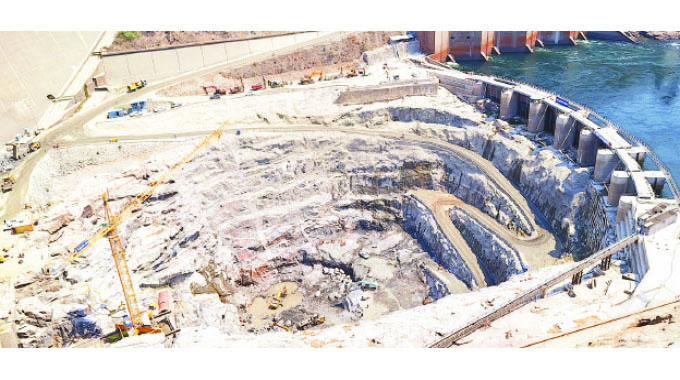
Conrad Mupesa-Mashonaland West Bureau
THE current Kariba Dam Rehabilitation Project, now 80 percent complete and involves reshaping of the Plunge Pool and refurbishments of the Spillway, is expected to increase the lifespan of the dam by 60 years.
The work on the US$294,2 million-project are progressing well to completion with Zambezi River Authority and major funding partner EU, optimistic of having it commissioned in 2025.
Constructed in the 1950s before its subsequent commissioning in 1960, the dam wall which regulates water levels in Lake Kariba was under threat from increased swirling after the identification of scouring and preferential erosion along the weak fault zone towards the dam foundations.
According to Zambezi River Authority, at least 500 000 people were at risk of losing their lives while over three million more were going to be economically incapacitated had the dam wall collapsed hence the need for rehabilitation works.
The dam provides at least 2000 megawatts of clean electricity power generation to Zimbabwe and Zambia which is the major benefit of the dam and, is also a source of livelihood to many families through fishing and tourism.
Speaking to media after the tour of the current rehabilitation works by a European Union delegation that included the EU Ambassador to Zimbabwe Jobst von Kirchmann, EU Ambassador to Zambia and Comesa Karolina Stasiak Zimbabwe’s Energy and Power Development Minister Edgar Moyo and ZRA board co-chairperson Dr Gloria Magombo.
Dr Magombo said 60 years would be added to the gigantic infrastructure and uninterrupted power generation after completion of the rehabilitation works which are being bankrolled by the EU.
Dr Magombo, who is Zimbabwe Energy Ministry’s permanent secretary, co-chairs the board together with her Zambian counterpart.
Zimbabwe and Zambia manage Lake Kariba water levels and the dam wall under the ZRA banner.
“The dam wall is a very critical infrastructure for energy development for Zimbabwe and Zambia. On either side of the dam, we have two power stations which have about a thousand megawatts each and are very critical to the energy security of our nations.
“The work which is being done as part of the rehabilitation is aimed at improving the safety of the dam and the plunge pool had been affected over the years by the spilling water,” she said.
ZRA’s director of projects and dam management services, Eng Sithembinkosi Mhlanga said the rehabilitation works the plunge pool involved the use of concrete to strengthen the bedrock.
“The works on the plunge pool involves the excavation of the rock around the pool’s walls.
“The 80-metre-long plunge pool is a hole that was dug by spilling water, and, during the works, we will put concrete to strengthen the bedrock that was affected by the spilling water,” he said.
Addressing delegates from Zimbabwe and Zambia, Ambassador von Kirchmann said EU institutions and EU Member States were going to jointly mobilise financial resources for sustainable and high-quality projects in Africa.
“Today we are standing here in Kariba, and we can see the result of this initiative. The rehabilitation of the Kariba dam is one flagship of the Global Gateway Initiatives.
“The EU’s commitment to this project is rooted in a shared understanding that sustainable development knows no borders,” he said.
Ambassador Karolina Stasiak said the rehabilitation project was one of the most important projects of the EU partnership with Zambia to secure access to clean, reliable, and affordable energy was scheduled to be completed in three years has taken longer than anticipated due to unforeseen challenges including the Covid-19 pandemic.
The two European officials said Europe was committed to financially supporting Zimbabwe and Zambia.
Minister Moyo commended the major works and urged contractor to increase the pace so that the project is completed soon. “I wish to encourage the contractors to diligently deliver quality works, on schedule to ensure that the Governments of Zambia and Zimbabwe as well as the corporate partners derive value for money on this project,” he said.
He said the two countries were keen on delivering on the Sustainable Development Goals on Clean Energy (SDG No 7) by constructing more dams along the shared section of the Zambezi River common to Zimbabwe and Zambia.
“We hope our cooperating partners here present, will favourably consider partnering with us again as we embark on other projects such as Batoka Gorge and Devils Gorge hydro-electric schemes,” he added.
Works are being done by Razel Bec (a French company) and GE Hydro France with Freyssinet International as the contractor through funding in the form of grants and loans availed to Zambia and Zimbabwe by the African Development Bank, the European Union, the Government of Sweden, and the World Bank.


 Online Reporter