


 Online Reporter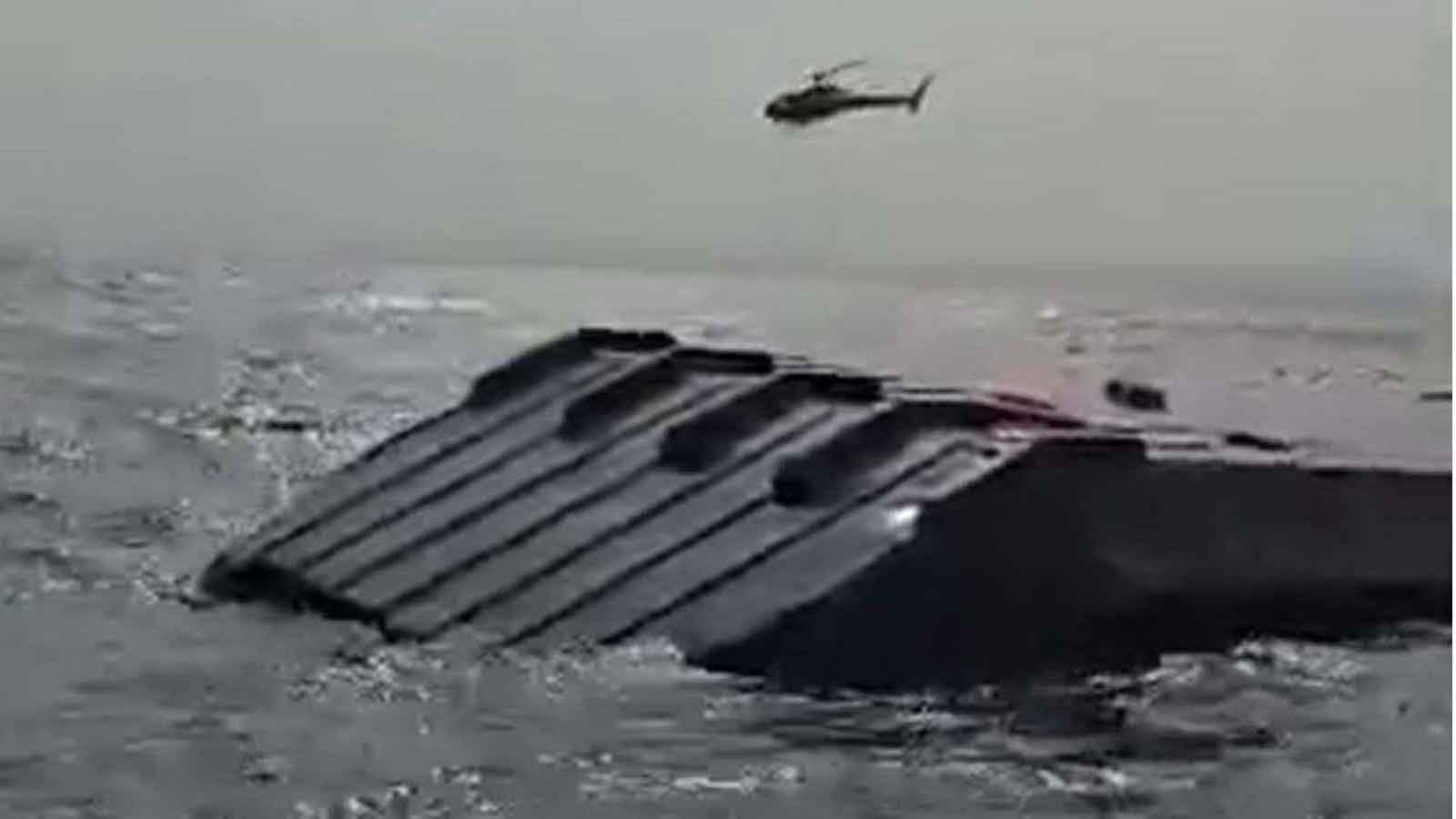
Walter Nyamukondiwa in KARIBA
The death toll from the Lake Kariba ferry disaster has risen to 73 after 27 more bodies were recovered yesterday, as preliminary investigations began pointing to a navigational error, possible overloading and failure to heed adverse weather warnings as factors that may have contributed to the tragedy.
The latest recovery brings the number of bodies retrieved from the lake to 73, five days after the passenger vessel capsized last Tuesday, with rescue teams continuing to search for more victims.
The disaster, which occurred when the overloaded vessel was hit by a strong wave and overturned, has been declared a National Disaster by President Mnangagwa.
A technical report on the accident is expected to be presented to Cabinet on Tuesday, as investigators race to establish the circumstances that led to one of the worst maritime disasters on Lake Kariba.
Lieutenant-Colonel Joseph Muchechesi, who is involved in the recovery operation, said by yesterday afternoon teams had recovered 22 bodies.
“So far today (yesterday afternoon) we have managed to retrieve 22 bodies and the rescue operation is still going on,” he said.
“Yes, this is the fifth day since the tragedy happened, but if you check the milestone that we have reached, it means we are confident that we will manage to retrieve all the bodies.”
By evening yesterday, five more bodies were recovered to move the day’s tally to 27.
Lt-Col Muchechesi said the cold conditions on the lake were affecting the rate at which bodies were surfacing.
“Normally, in hot weather, it takes the bodies about three days to float and ascend to the surface, but now that it is very cold it takes a bit longer,” he said.
“We are expecting that by the seventh day all the bodies will be floating on the surface. We are confident and I assure you that we will get all the bodies so that they can be accorded decent burials.”
While the recovery operation continues, investigators are piecing together evidence from the vessel, the weather conditions and communications between the captain and the Lake Navigation Centre.
Local Government and Public Works Minister Daniel Garwe told Government officials in Kariba last week that President Mnangagwa wanted a technical report ready for Tuesday’s Cabinet meeting.
Preliminary findings suggest that the vessel’s physical condition may not have been the cause of the accident.
Inland Waters Control director in the Ministry of Transport and Infrastructural Development Mr Lameck Chitenga said an assessment of the vessel showed that its hull remained intact.
“The hull is a 10mm plate, that is still very intact, with no dents or rust. It remains in the best condition, which suggests it was not damaged in any way to have caused the accident,” he said.
The finding has shifted attention towards operational factors, including the weather, the vessel’s loading and how it was being navigated when it encountered the strong wave.
According to evidence gathered so far by the authorities, the captain had been warned about deteriorating weather conditions by a controller at the Inland Waters Control Lake Navigation Centre.
The centre is strategically located at a high vantage point overlooking the lake and monitors weather and navigation conditions.
The controller, identified as Mrs Tadzembwa, reportedly advised Captain Sign Patsikadova that the weather was unstable and unsafe for navigation.
Investigators indicate that the captain responded that he would proceed slowly and seek somewhere to dock if conditions deteriorated further.
“We have gathered that he reportedly told the controller that he would move the vessel slowly and find somewhere to dock if conditions got worse,” Mr Chitenga said.
Kariba has an automatic weather station designed to provide early warnings and timely information on changing weather conditions.
Investigators are also examining possible overloading.
The vessel had a carrying capacity of 90 passengers and five crew members, with investigators examining whether the number of people and their distribution inside the vessel may have compromised its stability.
“While the vessel may be able to carry up to 20 tonnes, for passengers, having more people means that the extras have no seats, meaning they are prone to be thrown on one side, leading to people piling on each other,” Mr Chitenga said.
Such uneven distribution of weight could cause the vessel to list to one side, increasing its vulnerability when confronted by a large wave.
Mr Chitenga said investigators were looking at a possible navigational error in the way the vessel approached the wave.
He said the error may have resulted in water entering the vessel, initially affecting the engine compartment.
The findings remain preliminary, with technical teams continuing to consolidate evidence from the vessel and other sources before a final determination is made.
Experienced Lake Kariba captains say the lake’s unpredictable weather patterns make navigation particularly challenging.
Master Class 1 Captain Trymore Murenda said weather conditions could change dramatically across different sections of the vast lake.
“Kariba has complicated weather variability where someone could set off in perfect weather conditions, but they change upon entering another basin or section of the lake,” he said.
Captain Patsikadova, who was at the helm when the tragedy occurred, was described as an experienced mariner with about 26 years of experience navigating Lake Kariba.
Captain Murenda said experienced boat operators were expected to alter course or abandon a journey when weather conditions became dangerous.
“We always face difficult situations in Lake Kariba, some of which require you to change course or abandon the journey altogether until conditions permit,” he said.
“The standard procedure is when you encounter a wave, you seek somewhere to dock if conditions allow.”
The scale of the tragedy has also raised questions over emergency preparedness at the lake’s harbours.
Captain Murenda said every harbour should have a standby rescue boat capable of responding quickly to emergencies.
“One of the most basic interventions was to ensure that everyone on board a boat should have a life jacket,” he said.
He said having a speedboat on every large passenger vessel should also be made mandatory to facilitate rapid emergency intervention.
Captain Murenda further called for comprehensive passenger manifests, saying every traveller should complete an indemnity form so that all passengers on board, including children, are properly accounted for.




 Bongani Ndlovu
Investigations must cover all aspects of maritime transport industry including procedures for carrying passengers, loads and service history of the vessel. Looking at all factors coming into play now, it appears that the boat should not have been allowed to sail. But are there any procedures to be followed before water crafts sail off onto the lake? Were they followed? We see conditions like overloading being deliberately ignored even on our roads. One will wonder how an overloaded bus or kombi for instance, is allowed through several police check points from Beit Bridge to Harare. And when such tragedies occur we start running around to correct a disaster that will have occurred already. Suddenly we see big political and government figures; ministers, permanent secretaries, directors et al coming to the fore and making certain pronouncements. What does it help when disaster has already struck?