Online Reporter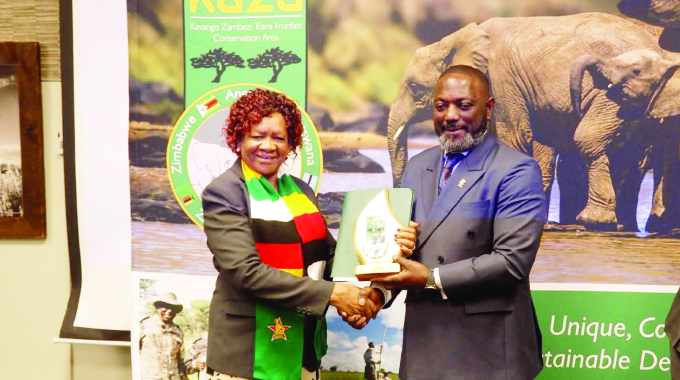
Rutendo Nyeve, Victoria Falls Reporter
THE Kavango Zambezi Transfrontier Conservation Area (KAZA TFCA) has endorsed several key strategies aimed at strengthening policy harmonisation across tourism, conservation, and community development within its five partner states: Angola, Botswana, Namibia, Zambia, and Zimbabwe.
This development follows Zimbabwe’s assumption of the KAZA TFCA chairmanship after successfully hosting the 15th Ministerial Committee Meeting in Livingstone, Zambia, last Friday.
In a joint communiqué released after the meeting, ministers announced the approval of four critical frameworks. These include an updated Elephant Action Plan, which incorporates findings from the 2022 KAZA Elephant Survey and the Elephant Movement and Connectivity policy brief; a comprehensive Trans-Boundary Human-Elephant Conflict (HEC) management framework for the Zambezi-Mosi Oa Tunya Wildlife Dispersal Area; a standardised sampling protocol for field veterinarians and assistants; and the establishment of a KAZA Carnivore Conservation Sub Working Group to align with existing policy harmonisation proposals.
“The Ministerial Committee approved four (4) of the following strategies and frameworks: the update of the Elephant Action Plan, which incorporates recommendations from the 2022 KAZA Elephant Survey and the Elephant Movement and Connectivity policy brief; the Zambezi-Mosi Oa Tunya Wildlife Dispersal Area (WDA) Trans-Boundary Human-Elephant Conflict (HEC) management framework — a comprehensive framework for addressing HEC through cross-border coordination, community engagement, and technical solutions,” the communiqué stated.
“Sampling protocol for field veterinarians and assistants — a practical resource that now becomes part of the suite of KAZA TFCA Standard Operating Procedures, protocols, and guidelines developed to facilitate harmonisation of policies, strategies, and practices. The establishment of a KAZA Carnivore Conservation Sub Working Group to align with the 2013 policy harmonisation proposals on species and other Conservation Sub Working Groups.”
Outgoing chairperson of the KAZA Ministerial Committee and Zambian Minister of Tourism, Rodney Sikumba, underscored the importance of regional cooperation in his opening remarks. He emphasised the need to expand initiatives such as the KAZA UniVisa to enable seamless travel across the region, secure sustainable financing for conservation and climate adaptation, and deepen engagement with local communities to ensure they become active partners and beneficiaries in conservation efforts.
“Let us focus on strengthening policy harmonisation for tourism, conservation, and community development; expanding initiatives such as the KAZA UniVisa to make travel seamless across our region; securing sustainable financing for conservation and climate adaptation; deepening our engagement with communities to ensure they are partners and beneficiaries of our shared conservation mission; and enhancing wildlife security and intelligence sharing to combat poaching and illegal trade,” said Minister Sikumba.
The meeting also acknowledged significant financial and administrative progress, including unqualified financial statements for 2023, the Phase III grant from KfW, and the ongoing recognition of KAZA TFCA as an international organisation in Botswana.
Ministers reaffirmed their commitment to contributing to the KAZA Fund to strengthen the Secretariat and support its operations.
Additional collaborations with international bodies such as the European Union, IUCN, WWF, and the Wild Bird Trust were recognised, with a €5 million grant from the EU earmarked to support priority interventions including conservation strategy development, updated integrated development plans, and sustainable finance solutions.
The Ministerial Committee congratulated Zimbabwe for successfully hosting the Ramsar COP15 and the SADC TFCAs International Conference and Summit, and commended Zambia for its exemplary tenure as the coordination country.
Zimbabwe now assumes the chairmanship, with high expectations for continued regional integration and conservation success.
The meeting also amplified calls for unity and common purpose in multilateral environmental agreements, reflecting the shared vision of the KAZA TFCA partner states to promote sustainable development, wildlife conservation, and community empowerment through strengthened regional cooperation.