Chronicle Editor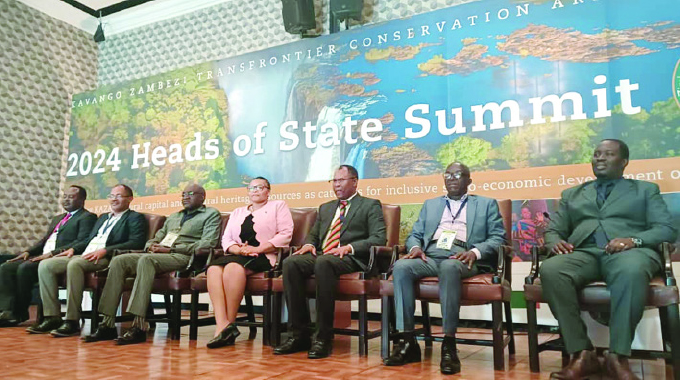
Leonard Ncube in Livingstone, Zambia
SOUTHERN African countries should invest in regular research on changing weather patterns to address the adverse effects of climate change on sustainable wildlife conservation.
With a growing wildlife population, especially elephants in the Kavango Zambezi Transfrontier Conservation Area (Kaza TFCA), member states face challenges of dwindling habitat, which results in massive wildlife migration, mortality and human-wildlife conflict as animals search for food.
While Zimbabwe has come up with strategies to provide water in national parks through solar-powered boreholes and partnerships, there are fears over depletion of the water table.
The Kaza TFCA is a conservation area, spanning five southern African countries Angola, Botswana, Namibia, Zambia and Zimbabwe with a population of three million people and 227 900 elephants centred around the Caprivi-Chobe-Victoria Falls corridor.
It has a total of 520 000 km2 and about 70 percent of land under conservation, with 103 wildlife management areas, 85 forest reserves and three world heritage sites.
Wildlife experts attending the ongoing 2024 Kaza Heads of State Summit in Livingstone, Zambia, said climate change was the biggest change for wildlife conservation hence the need for continuous research to be able to provide water to wildlife and people.
Zimbabwe Parks and Wildlife Management Authority senior regional manager, Mr Samson Chibaya, said there were about 150 boreholes within Hwange National Park alone.
“The biggest challenge is climate change. There are 150 boreholes that are used to supply water to animals in Hwange National Park and there is need for research to understand abstraction of water from underground sources,” he said.
“The human population is growing and we need to look at how best to promote safe passage for the animals,” said Mr Chibaya.
He said human-wildlife conflict was prevalent as animals stray into communities. Mr Chibaya said education is also key for communities to understand conservation management so that all interventions are informed by research and real issues on the ground.
He said Zimparks and partners such as International Fund for Animal Welfare have since embarked on research on movement of animals, especially elephants by collaring them to study their movement and corridors, which would guide artifical water provision during drought.
IFAW Landscape Conservation Director, Mr Phillip Kuvawoga, said research was critical as climate change impacts will be felt by wildlife species.
“What we advocate for is continuous research to understand climate change models, especially on expected rains, status of ground water and then design climate corridors, which are the most suitable habitats for elephants now and into the future and then plan accordingly so that we allow elephants to move to more preferable areas,” he said.
Mr Kuvaoga said there was a need to look into climate corridors and member states should plan with climate change in mind and knowing what the future holds.
He called for validation of past researches and corridors so as to inform programming around water provision. Participants concurred on the need for research for science-based programming within Kaza.
The summit is being held under the theme: “Leveraging Kaza’s natural capital and cultural heritage resources as catalysts for development of the eco-system.” — @ncubeleon


 Online Reporter