Online Reporter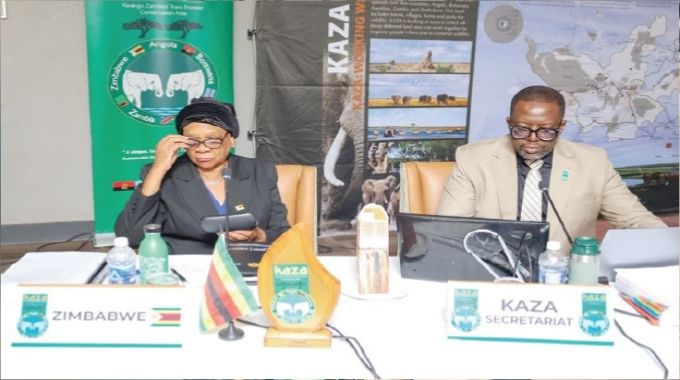
Rutendo Nyeve, [email protected]
THE Kavango Zambezi Transfrontier Conservation Area (KAZA TFCA) has intensified its tourism promotion drive, unlocking new opportunities for its five member states and positioning the region as a premier transboundary destination.
The renewed push, unveiled during the 16th KAZA Ministerial Committee meeting held in Victoria Falls on Friday, is already yielding tangible products, including the newly launched Kavango Zambezi Birding Route — a transboundary tourism offering aimed at attracting birding enthusiasts from across the globe.
In an interview with Zimpapers on the sidelines of the meeting, KAZA TFCA Executive Director Dr Nyambe Nyambe said the initiative was showcased earlier this year at ITB Berlin, the world’s largest tourism fair.
“Just early this year at ITB, which is the world’s largest tourism fair in Germany, we unveiled a transboundary tourism product, the Kavango Zambezi birding route, informed by our Kavango-Zambezi conservation bird strategy.
So, that is a major tourism offering for birding fans, those that love birds.
“It’s going to really help bring more, shine the spotlight on birding opportunities, and attract birding enthusiasts to the landscape. That is just one output. But there are other outputs, for example, the training of people that are going to facilitate this birding work. We also, of course, have been doing a lot of work in terms of our global online marketing campaign,” Dr Nyambe said
Dr Nyambe said the KAZA destination brand is owned by the partner states — Angola, Botswana, Namibia, Zambia and Zimbabwe — which collectively account for 25 percent of tourist arrivals in the region.
“We need to really capitalise on any opportunities that give us mileage, that give us traction to improve on our tourism offerings. The tourism destination brand is not for the KAZA secretariat. It belongs to the partner states. The KAZA secretariat is only a facilitator.”
The Ministerial Committee also commended Zimbabwe for successfully hosting the Zimbabwe Funders Roundtable and advancing a shared roadmap to strengthen the biodiversity economy through coordinated conservation, community stewardship and sustainable financing.
Zimbabwe’s Minister of Environment, Climate and Wildlife, Dr Evelyn Ndlovu, who chairs the KAZA Ministerial Committee, highlighted the bloc’s progress in wildlife conservation, noting its direct contribution to tourism growth.
“The KAZA TFCA has registered significant strides in conservation of wildlife, thereby boosting tourism across the landscape. Our collective efforts in transboundary law enforcement, human-wildlife coexistence, and coordinated planning are creating a secure and attractive destination for visitors from around the world,” Dr Ndlovu said.
The meeting — the first since Zimbabwe assumed the KAZA Coordinating Chairpersonship from Zambia in August 2025 — also recorded progress in developing the KAZA Conservation Strategy and Action Plan, the Integrated Development Plan and the rollout of the tourism destination brand.
With Germany committing €500 000 towards the establishment of permanent regional offices for the KAZA Secretariat, alongside a further €6 million over four years from 2027, the bloc is positioning itself as a model for transfrontier conservation and tourism-led growth in Africa.