admin
admin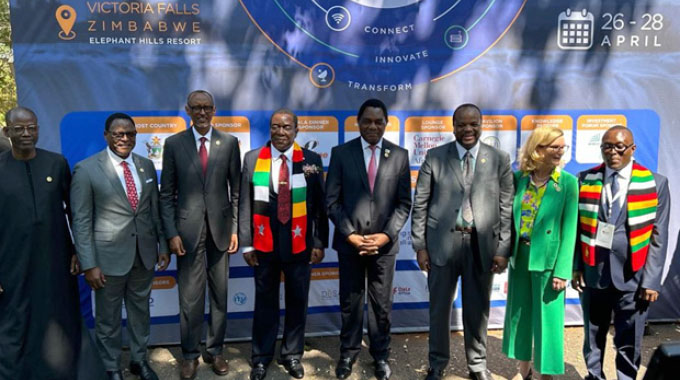
Herald Reporter
Since the world has become smarter, the Second Republic, under the stewardship of President Mnangagwa, and through the Ministry of Information Communication Technology, Postal and Courier Services led by Dr Jenfan Muswere, has become relentless in its pursuit of shifting drifts in technology to fulfil its mandate to the people of Zimbabwe.
The ministry’s milestones since 2018 are too glaring to be clogged, neither can they be overstressed.
Information is power, particularly in an era where knowledge-based innovation is in vogue globally, which has led to the formation of companies like Facebook, Microsoft, Apple, Amazon and Google among others.
Hence, to afford citizens a chance to become a part of the digital economy, the Second Republic committed itself to joining the pack in the superhighway.
The means of production in the Information Revolution is the Internet. It is the soul, just like land was to the Agricultural Revolution, and factories were to the Industrial Revolution. In such an epoch, information-driven innovation becomes the way to go.
Alive to how the global economy shapes livelihoods through, for example, the reduction of poverty and improved healthcare, through the Ministry of Information Communication Technology, Postal and Courier Services, the Government created opportunities for access to affordable and efficient ICT infrastructure across the country.
ICT is universal as it transcends economic sectors, social groupings and demographics, which makes the ministry key in the transformation of the country’s fortunes. A good ICT base makes for a strong launchpad for the long haul that takes every citizen on board.
To that end, the ministry has not been found wanting in the provision of enabling infrastructure beginning at the village and primary school levels. Indeed, in the Second Republic no one and no place should be left behind in the digital superhighway
Major highlights and projects
Many projects have been launched countrywide, with some still at the planning stage, while others are already being implemented in line with the National Development Strategy 1 blueprint in pursuit of Vision 2030 as enunciated by President Mnangagwa and enshrined in Africa Agenda 2063.
Legal instruments and policies
The Cyber and Data Protection Act was assented to by President Mnangagwa. The Act sought to consolidate the fight against cyber-related offences, and provide for data protection with due regard to the declaration of rights under the Constitution, establishment of a Computer Incident Response Centre and a Data Protection Authority.
Mobile Broadband Policy has been formulated, and seeks to regularise the role and use of broadband services in Zimbabwe.
E-Transaction Bill seeks to regularise, monitor and protect the transacting public using different online mobile money platforms. The Bill principles have been formulated.
Revision of the National ICT Policy was done and aligned the policy with new developments on the digital arena since the digital economy holds the future.
E-Waste Policy development is seeking to regularise the disposal of e-waste that has exponentially increased in our society. This policy is still work in progress.
A couple of MOUs were signed between Zimbabwe and countries, such as Rwanda, Iran, Russia, while others awaiting signing.
Programmes and projects
Smart Agriculture Continental (AgriTech) Blueprint and National e-Agriculture Strategy
Zimbabwe is a member of the Smart Africa Alliance and is leading on the smart agriculture pillar, which seeks to harness and utilise technology to enhance agricultural productivity in the country and on the continent.
An Agritech blueprint was launched at the 10th Smart Africa Board meeting of Heads of State and Government of the 26 member countries on November 10, 2021. The Zimbabwe Agritech Strategy was subsequently launched on November 29, 2021. This will be the guiding document to be adopted by Africa in the fight against hunger and poverty through smart agriculture principles and strategies.
The blueprint document is in place and awaits its launch by the President.
Transform Africa Summit
The Transform Africa Summit (TAS) is Africa’s leading annual forum that brings together global and regional leaders from government, business and international organisations to collaborate on new ways of shaping, accelerating and sustaining Africa’s on-going digital revolution. Following five successful editions, the sixth summit took place in Victoria Falls from April 26-28, 2023.
TAS aims to enable Member States to become more competitive, agile, and open and innovate smart economies with the most favourable business climates that attract large-scale investments, reward entrepreneurship and enable fast growth and exports through ICT innovation and development.
The 2023 Transform Africa Summit (TAS 23) runs under the theme: “Connect–Innovate–Transform.
Zimbabwe joined the Smart Africa Alliance as the 26th member on August 5, 2019 5. Smart Africa is a bold and innovative commitment from African Heads of State and Government to accelerate sustainable socio-economic development on the continent, ushering Africa into a knowledge economy through affordable access to broadband and usage of information communication technologies (ICTs).
Transform Africa Summit takeaways
Re-affirmation of the Africa digital agenda and creation of a single digital market by 2030,
Digital transformation of the continent across all sectors,
Accelerating sustainable socio-economic development on the continent and usher Africa into the knowledge economy through affordable access to broadband and the use of ICTs,
Promotion of tech savvy women and girls through the continental Miss Geek competitions. Zimbabwe’s Blessing Sibanda was one the of winners; six from Ghana, Benin, Zambia, Kenya, Rwanda and Niger,
Hosting the Transform Africa Summit significantly boosted Zimbabwe’s tourism industry. The event attracted more than 3 000 foreign delegates from over 100 countries. The influx of visitors generated demand for local services, such as accommodation, transport, restaurants, and entertainment.
PAPU conference
The PAPU (Pan-African Postal Union) Plenipotentiary Conference was held in Victoria Falls from June 21-25, 2021. This is an elective conference of postal authorities in Africa held once in four years to select the Secretariat executives.
The ministry played a pivotal role in the election of the ZimPost Postmaster-General, Mr Sifundo Chief Moyo, to the post of PAPU Secretary-General.
A local campaign team led by the Information Communication Technology, Postal and Courier Services Deputy Minister and Foreign Affairs and International Trade officials was tasked to champion the campaigns that resulted in Zimbabwe winning the PAPU Secretary-General post. Zimbabwe also assumed the Chairmanship of the PAPU Plenipotentiary and will lead the African continent for the coming four years, which will be handed over to the next host nation in 2025.
Cyber security conference
Cyber security awareness month and campaigns, which are now an annual occurrence, commenced in November 2021, culminating in the hosting of the Executive Cyber Security Conference at the Zimbabwe National Defence University on November 11, 2021.
PFMS kiosks
There are 63 operationalised PFMS kiosks in 63 administrative districts of the country. The kiosks are key in the devolution and decentralisation agenda as they enable financial and administrative processes to be done at the local level.
Each kiosk is equipped with eight computers, two printers, air-conditions and a 3kVA backup solar power.
The National Data Centre
It was commissioned by President Mnangagwa on February 24, 2021. A backup recovery data centre was set up in Bulawayo. This has enabled the Government to give impetus to the digitisation of Government content and customised databases.
A Government suite of smart solutions was also launched and has seen the wide use of virtual conferences and meetings in Government MDAs, such as the e-Cabinet and virtual Parliament.
Schools ICT laboratories
The project is aimed at providing connectivity to schools countrywide to enable Internet access and support e-learning initiatives. From 2018 to date, the following phases have been implemented.
The project was meant to provide wireless connectivity to 1 300 schools, and 800 institutions were successfully connected.
A total of 1 596 schools were connected to the Internet.
E- Learning ICT gadgets
The objective of the project is providing computers to schools in support of the new computer-based curriculum. Initially, schools were provided with gadgets depending on available resources and the school’s enrollment.
The thrust has been to equip schools with computer laboratories where each school would receive a minimum of 30 computers and in some cases furniture, printers and overhead projectors. A total of 14 239 computers have been distributed to 1 062 schools.
School biller codes
A total of 9 314 schools had OneMoney biller accounts created throughout the country. These enable parents/guardians to pay school fees from anywhere in the country.
Public Service training centres
Five ICT training labs were established, these include, among others, Chinhoyi, Murehwa, Toronto and Kariba. The training centre labs were equipped with at least 20 computers, printers, air-conditioned and solar back up power.
The training centres are hubs of the Government systems and capacity building in the ensuing digital world. Smart financial, administrative and technical skills will be espoused in these training centres across the public sector.
ICT capacity building
Training was held for the Judiciary Service Commission, and 45 judges of the superior courts were trained. The training was in preparation for the roll out of the Integrated Electronic Case Management System (IECMS) by the Ministry of Justice, Legal and Parliamentary Affairs.
Under this initiative, 446 teachers at the schools that received ICT labs and equipment were also trained.
Furthermore, 224 officials in the public service sector were also trained.
ZIMRA had 242 employees trained in upgrading their ICT skills in Excel, while a further 1 000 officials were trained on the use of virtual conferencing platforms.
ICTs for people with disabilities, special needs
The major objective of the project is to provide access to ICT services to people with disabilities and those with special needs, through the provision of customised computer hardware and software.
Various initiatives have been implemented as follows:
Provision of ICT gadgets to various institutions
Provision of specialised software jaws for use of computers by the visually impaired
Provision of audio verifit gadgets for the calibration of hearing aids
Provision of connectivity to institutions housing people with disabilities
Basic ICT training for people with disabilities
530 computers have been distributed to 43 institutions housing people with disabilities
99 JAWS licences have been distributed to five institutions
33 institutions have been provided with connectivity and one-year bandwidth subscriptions
30 persons with disabilities have been provided with basic ICT skills training.
Community information centres and community village information centres
Many CICs and CVICs were officially opened by Minister Muswere and the Deputy Minister across the country. Some were containerised, while others were housed in renovated buildings.
Notable achievements include:
One hundred and forty-six CICs at ZimPost Post offices were refurbished, and 145 operationalised.
24 CVICs were deployed in the eight provinces. Initially, 23 units were deployed countrywide with one unit serving as a model CVIC at POTRAZ headquarters. This unit was relocated in 2022 to Mapanzure Business Centre and is now ready for operationalisation.
The 32 brick and mortar CICs are under construction. To date, one has been operationalised and launched with 15 units expected to be launched in 2023.
The five sites were all refurbished. Work is in progress to get contractors for shop fitting. These sites are expected to be operationalised in 2023.
8 795 people were provided with basic ICT training.
The Raffingora CVIC, for example, is situated in a farming community, and is the focal point for online market access for the surrounding farmers.
In addition, farmers can now access weather updates and input suppliers online.
POTRAZ has offered free Internet services up to December 2021. Each CVIC is equipped with 20 laptops, a printer/fax and Wi-Fi connectivity.
Tower relocation project
The project, which aims to extend mobile networks to areas that previously did not have coverage, commenced in June 2021. Under this programme, Marula to Mapholisa and Mapinga to Cranham areas were covered.
Network coverage and financial services inclusivity
1 040 base stations were deployed as follows-:
522 x 4G base stations (nine in border areas) deployed in all the 10 provinces
432 x 3G base stations (12 in border areas) deployed in all the 10 provinces
86 x 2G base stations (11 in border areas) deployed in all the 10 provinces
72 x base stations solar system deployed in all the 10 provinces.
18 new sites (11 in border areas) are work in progress.
Binga Nachulwe NetOne base station
The Binga Nachulwe NetOne base station was commissioned by Vice President Dr Constantino Chiwenga on April 10, 2021 at Siansundu Rural Service Centre in Binga.
NetOne’s National Mobile Broadband Phase III Project
This project, which followed the successful completion of phases 1 and 11, is aimed at increasing mobile broadband network coverage and capacity in rural and urban areas through deployment of additional new passive infrastructure and infrastructure sharing to save on costs.
Under phase 111 Deployment of the following broadband base stations:
15 x 5G base stations,
304 x 4G base stations,
393 x 3G base stations,
89 x 2G base stations
OneMoney remit
This is a money transfer application that will enable the transacting public to send and receive money within and outside Zimbabwe. The product works in partnerships with established networks of financial service providers, like banks, bureaux de change, ZimPost, TelOne and many others.
High value clients experience centre
These are model client experience outlets that are being rolled out by State-owned mobile network operators, like NetOne and TelOne. The centres offer key services to clients, and have a high value client suite and self-service facility.
Wireless to the premises
There has been expansion of wireless to the premises (WTTP) and optic fibre communication networks to increase connectivity in the country.
This will cover Kanyemba, Tugwe-Mukosi, Maphisa, Bulawayo Kraal, Siakobvu, Binga, Maranda Palm Tree Project, Mbuya Nehanda in Mberengwa, Musikavanhu, Sabi Valley and Buhera. Wireless connectivity was also available to 41 out of 52 rural district centres.
Fibre deployment
Mashonaland North Ring Transmission Link Upgrade to 2x20Gbps
Harare-Masvingo-Beitbridge Link, Deployment of 100Gbps DWDM link, backbone upgrade–(Tejas) to 200G upgrade.
Bulawayo-Gwanda-Beitbridge, Deployment of 100Gbps DWDM link.
Bulawayo-Victoria Falls-Kazungula Backbone 587km ducted fibre construction.
Masvingo-Jerera-Chiredzi-Triangle, deployment of 300km overhead cable (10Gbps SDH)
Mazowe Data Centre: commissioning and upgrade of data centre facilities.
Harare Data Centre: commissioning and upgrade of data centre facilities.
Bulawayo Data Centre: commissioning of data centre facilities.
Deployment of an FTTH network for tens of thousands of homes passed across the country.
Smart Government solutions
Solutions such as the paperless Cabinet, e-Government solutions, and Smart Cities are being rolled out. The pilot traffic monitoring and surveillance system was commissioned on Jason Moyo Ave and Simon Muzenda Street intersection in March 2020. Also, more than 500 vehicles for various arms of the Government were installed with trackers.
ICT assembly and manufacturing plant
ZITCO
This is a plant that manufactures devices for use in schools, universities, enterprises and Government, in general. It has capacity to produce 2 000 kits annually, and was commissioned by President Mnangagwa in 2021.
Innovation
The ministry is leading in the innovation drive and has been hosting Hackathon annually. Participants are drawn from across the country’s 10 provinces.
International placements
The ministry, working closely with the Ministry of Foreign Affairs and International Trade, successfully campaigned for the placement of Dr Cosmas Zavazava as BDT director at the International Telecoms Union, thus taking Zimbabwe to the global arena.



 Online Reporter