Sikhulekelani Moyo [email protected]
KENYA has urged Common Market for Eastern and Southern Africa (COMESA) member states to move beyond policy declarations and mobilise bankable investments to drive green industrialisation and circular economy growth.
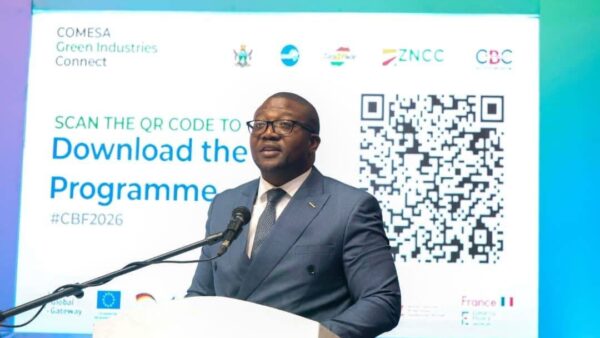
Speaking at the COMESA Green Industries Connect in Harare on Monday, Kenya’s Principal Secretary for Trade, Ms Regina Mbamba, who represented Cabinet Secretary Hon Lee Kinyanjui, said the region needed competitive enterprises and functioning regional value chains to translate commitments into economic gains.
She said the initiative built on the COMESA-EU Horticulture Connect and aligned with the 25th COMESA Summit theme, “One Market, One Future: Advancing Inclusive Industrialisation, Investment and Regional Integration in COMESA”.
Ms Mbamba said green industrialisation should be viewed not only as an environmental necessity but also as an opportunity to expand trade, create jobs and strengthen regional industries.
Highlighting the region’s leather industry potential, she said COMESA accounted for an estimated 30 percent of Africa’s livestock population.
“Under the COMESA Leather Regional Value Chain Strategy, the region has the capacity to produce up to 450 million pairs of shoes annually and create approximately 450 000 jobs, provided member states address challenges related to raw material quality, tannery capacity, environmental compliance, financing and market access,” she said.
On critical minerals, Ms Mbamba urged countries to move beyond exporting raw materials and invest in beneficiation, battery component manufacturing, repair and refurbishment industries, and the recovery of valuable materials from electronic waste.
She said achieving this would require deliberate industrial policies, investment in technology, reliable energy supplies, skills development, common standards and modern recycling infrastructure.
Ms Mbamba also outlined Kenya’s progress in renewable energy, saying that by June 2026, more than three-quarters of the country’s electricity was generated from renewable sources, with geothermal power contributing about 41 percent.
She cited Kenya’s regulatory measures supporting the circular economy, including the 2017 plastic carrier bag ban, the Sustainable Waste Management Act of 2022 and Extended Producer Responsibility regulations introduced in 2024.
The measures require producers to take responsibility for products at the end of their life cycle and, according to Ms Mbamba, are helping strengthen recycling systems, improve traceability and increase the supply of recyclable materials to industry.
She also highlighted the Kenya Leather Industrial Park in Machakos County as a model for developing industrial value chains.
“The park provides common facilities, including wastewater treatment and dedicated water supply, serving up to 36 manufacturers while linking producers, suppliers, designers and training institutions,” she said.
Ms Mbamba called on COMESA member states to accelerate the development of harmonised circular economy standards, invest in shared eco-industrial infrastructure, improve access to finance and promote practical business partnerships.
She urged delegates to use the forum to connect ideas with investment, innovation with industry, and enterprises with markets to build a greener, more productive and resilient regional economy.