

 admin
admin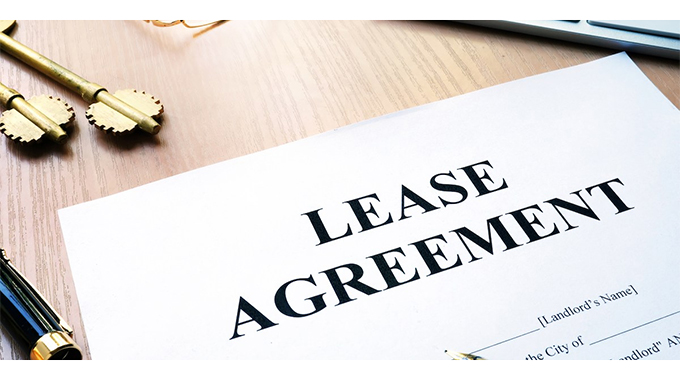
Godknows Hofisi Business Law
Introduction
Leasing of immovable properties, whether as the landlord or tenant is quite common.
This applies to different properties such as residential dwellings, commercial properties being offices, industrial properties like as factories, privately owned plots and farms and others.
Leasing also extends to movable assets. In this article I explain the key provisions that should be included in a lease agreement for an immovable property.
Key provisions
Some of the key provisions in such lease agreements include those explained below.
Parties
The parties to a lease agreement are the lessor commonly known as landlord and the lessee commonly known as the tenant.
Where parties are not natural persons, for example organisations, the representative including his or her representative capacity such as director or manager, should be disclosed, and that he or she is duly authorised to represent the organisation.
Property being leased
The property being leased should be clearly specified in the lease agreement.
It is usually the street address.
The property description may also include size, the improvements thereon such as number of rooms, offices, shared facilities, etc.
Purpose the leased property should be used for
To protect the property, avoid violating council by-laws or offending neighbours, it is common practice to state the purpose for which the property is being used, such as residential or business.
Deviation therefrom usually gives the lessor the right to call the lessee to order.
Depending on the circumstances at times that can be grounds for termination of the lease agreement, if not resolved.
Lease period or tenure
The lease period or tenure is one of the most important provisions. This may be stated in the form of years or months.
At times, it is also started that the lease agreement may be renewable subject to certain conditions or even at the sole discretion of the lessor.
Rent
In a lease agreement rent has to be stated clearly so that it is determinable. In most cases the currency and amount payable per month is specified, whether before or after tax such as Value Added Tax (“VAT”).
At times rent may be determined using a formula such as a proportion or percentage of revenue.
This clause may also include rent payment terms such as by a certain date during the month.
The frequency of rent reviews has to be included as well to avoid arbitrary reviews by the lessor or resistance to rent reviews by the lessee in case there are major changes, for example currency changes or the property is improved.
Security deposit
It is quite common for a lease agreement to include the provision that the lessee shall pay to the lessor a rent deposit, for example equal to one month’s rent, to cover damages or outstanding amounts when the tenant vacates the premises.
Outstanding amounts may include rent or utilities. The same clause should also state when the security deposit is refundable to the lessee.
Utilities
The lease agreement should include responsibilities over utilities.
The lessor may be responsible for rates and the lessee — water and electricity, etc.
In some situations the rent is all inclusive yet in others all the utilities may be paid by the lessee.
Repairs and maintenance
The provision on repairs and maintenance clarifies who is responsible for what.
It is common for the lessor to be responsible for the usual issues such as painting, plumbing, roof leaks, etc.
The lessee is usually responsible for things such as repairs due to damage caused by the lessee such as breaking a toilet seat, breaking a window, and many others.
Rights and obligations
The lease agreement should include rights and obligations of the parties.
This may include the lessor’s right to inspect the property at reasonable times, the obligation to ensure rates are paid, to repair the exterior of the property to the extent that any damage is not caused by the lessor.
The lessee’s rights may include peaceful occupation and obligations may include allowing the lessor access to the property at reasonable times for purposes of inspections, etc.
Restrictions
Restrictions may include limit on the number of occupants, what the property may not be used for, no structural changes or painting, installation of appliances, sub leasing, or many others.
Dispute resolution
Dispute resolution mechanisms are required in lease agreements.
Unfortunately, in my respectful view, the playing field is usually not level between the lessor and lessee especially for residential properties and disputes may arise especially on rent reviews or termination of the lease agreement.
The lease agreement should provide for resolving such disputes.
Termination
The termination clause is very important to avoid arbitrary termination by lessors or loss of rental income by the lessor when the lessee leaves without giving adequate notice.
Termination modalities may also be included such as surrender of keys, inspection and assessment of damages, refund of security deposit and other considerations.
Conclusion
Leasing of immovable properties affects most people, whether for residential properties or for business. This is an area people need to familiarise with, whether one owns a property or not.
Disclaimer
This simplified article is for general information purposes only and does not constitute the writer’s professional advice.
Godknows (GK) Hofisi, LLB(UNISA), B.Acc(UZ), CA(Z), MBA(EBS,UK) is a practising commercial lawyer and conveyancer, chartered accountant, corporate rescue practitioner, registered tax accountant, consultant in deal structuring and business valuer. He is also a director with Investacare International (Private) Limited. He writes in his personal capacity. He can be contacted on +263 772 246 900 or [email protected]



 Online Reporter