Chronicle Editor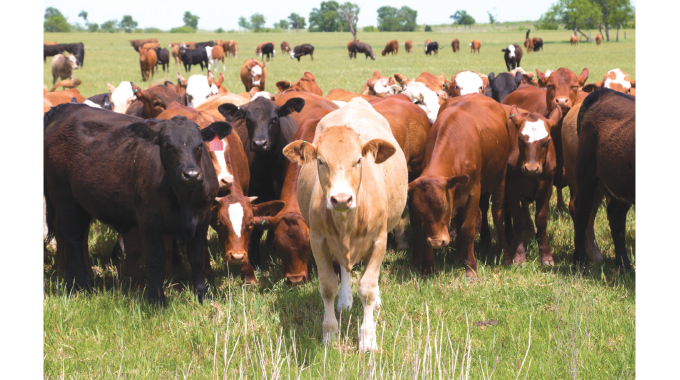
ONE common characteristic across communally managed rangelands is the lack of proper management practices or principles that are followed to the letter. Grazing is largely haphazard though guided by broad rotational cycles between grazing portions.
In most communal areas certain portions of the grazing area are closed off during certain times of the year and this is largely driven by the desire to protect cropping fields than it is by rotational grazing principles. Therefore, one area principally becomes summer grazing while the other is reserved for winter or dry season grazing.
The absence of proper rangeland management practices has seen most communal rangelands deteriorating into large pieces of unproductive grazing lands.
It is also important to mention that rehabilitating a degraded rangeland takes a lot of time, effort and resources compared to adopting correct management practices in the first place.
Recurrent droughts demand that a new paradigm be adopted with regards to management of rangelands. We need to manage our communal rangelands so that they not only halt degradation but also improve productivity. Improved productivity will also ensure that our rangelands can carry more animals for longer periods.
A few management principles need to be adopted when managing rangelands including communal ones. These include promoting ecosystem biodiversity. This helps keep all parts of the system (soil, plants, animals, humans) intact and functioning.
Having a diverse rangeland will lead to a diverse animal community. Ecosystem biodiversity is key to a rangeland function.
Having a diverse plants species will increase the availability of palatable forage, that more adequately meets livestock nutrient requirements throughout the season.
Human activity tend to affect equilibria of most ecosystem and at times the impact on livestock operations can be huge. A good example is where some communities are incurring huge losses due to predation especially in small stock.
One may be tempted to think that there is an exponential increase in predator population but an in depth analysis will reveal that excessive hunting of plain game which constitute the prey of choice, has seen predators shifting attention to second choice prey which is your goats and sheep.
The ecosystem was disturbed by excessive hunting and now the system has to find a new equilibrium! The other important principle of grazing land management is to create a rotational grazing plan.
A grazing plan or system is a guide to follow throughout the grazing season to ensure your rangeland is being properly grazed, that is at the right time, for the correct duration and with the proper number of animals.
Also that the grazing plan ensures that your rangeland receives adequate recovery period to promote regeneration especially of the native plant community.
A grazing plan should guide the utilisation of the veld such that animals move in a planned and systematic way between the available grazing land.
An important aspect in grazing management is to control the forage harvest to maintain forage in a relatively immature stage of growth. Immature forages are higher in crude protein and digestibility than those in more advanced stages of maturity.
A compromise is necessary to balance dry matter yield and an acceptable nutritive value. The other important rangeland management practice is adaptive management approach.
This means there is no one size fits all approach to all rangelands but specific actions need to be taken responding to specific conditions of a particular rangeland. Adaptive management means there has to be thorough monitoring and assessment of your rangeland so that you can see what needs to be rectified.
It could be bush encroachment that now needs to be controlled or proliferation of invasive species or unpalatable grasses that needs to be controlled. It may also be physical degradation due to poor agricultural practices or wrong stocking densities and adaptive management will then respond by instituting corrective action.
With any grazing plan, producers must be ready to implement adaptive management and make changes if necessary. A grazing plan should be changed from year to year to ensure different plants are being grazed at different times throughout the season.
An example of applying adaptive management in your operation is adjusting your stocking rate mid-grazing-season due to low forage production caused by drought. The other rangeland management principle is to leave enough residual forage on top of the soil to keep the system functioning properly. Residual forage is a critical part of the ecosystem, because it protects the soil from water and wind erosion. Residue also promotes water infiltration, reduces water loss from evaporation, maintains soil temperature, increases soil nutrients and helps sequester carbon dioxide in the soil.
Proper grazing management is the key element of successful livestock production and as farmers we need to adopt it as a matter of necessity. The most important aspect of grazing management is to use the proper stocking rate. Overgrazing results in a decline in desirable species coupled with an increase in weed infestation, and a reduction in both animal performance and carrying capacity of management units.
The net result of overgrazing is decreased profitability of the operation. If we are to survive climate change effects as farmers, we need to start being deliberate in how we use our rangelands and this entails adopting some if not all of the above discussed principles.
Uyabonga umntakaMaKhumalo.
Mhlupheki Dube is a livestock specialist and farmer. He writes in his own capacity. Feedback [email protected] cell 0772851275



 Online Reporter