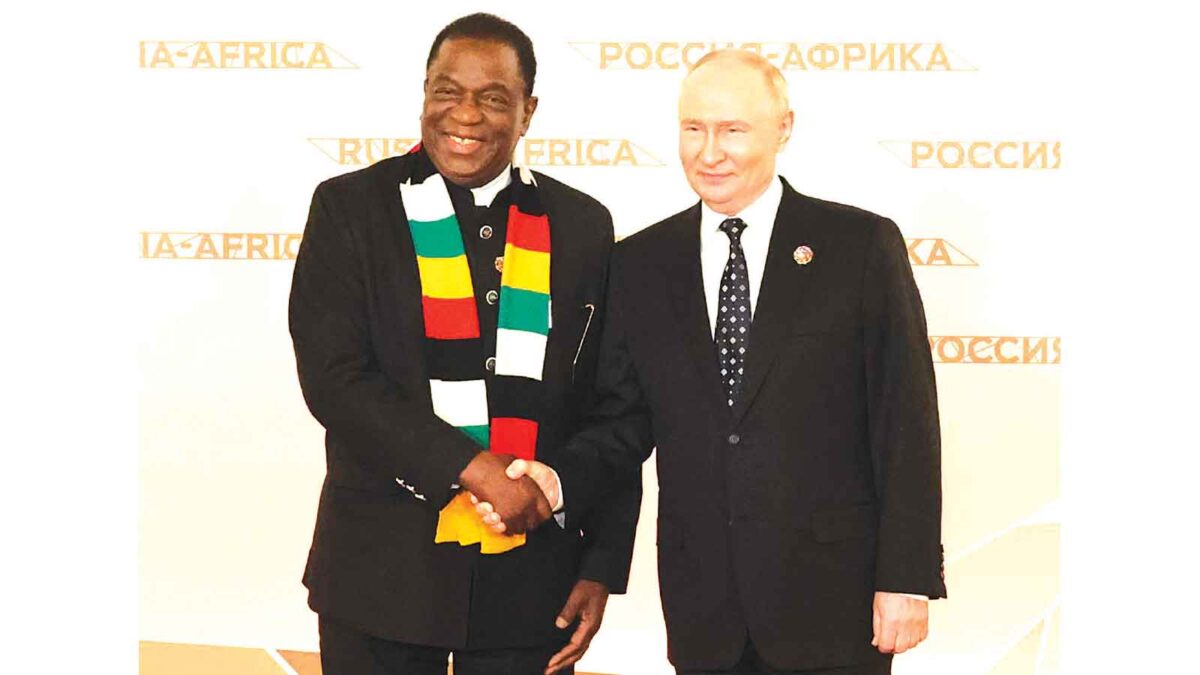
Russia and African countries have agreed to deepen economic cooperation, strengthen political coordination and push for reforms of global institutions, Russian President Vladimir Putin and African Union (AU) chairperson Evariste Ndayishimiye said in a joint press statement on Thursday.
Speaking at the conclusion of the Third Russia-Africa Summit in Moscow, the two leaders outlined the results of the October 28-29 gathering, which brought together senior delegations from 48 African countries, including 21 led by Heads of State.
The gathering resulted in the adoption of three documents: the Declaration of the Third Russia-Africa Summit, the Declaration of Cooperation in the Civilian Application of Artificial Intelligence (AI) Technologies and the Russia-Africa Partnership Forum Action Plan for 2027-2029.
Turning political solidarity into economic cooperation
President Ndayishimiye said African countries are seeking to diversify their international partnerships and strengthen their sovereignty, with Russia playing a role in accelerating economic development and regional integration.
Speaking about the summit’s three-year action plan, he said that the leaders “outlined priorities, financing mechanisms, implementation schedules and areas of responsibility, and set dates by which they expect to see results”.
The African Union chairperson called for greater Russian investment to help African countries create added value locally.
He also stressed that African youth expected tangible results, including more scholarships, reliable energy supplies and digital solutions.
Expanding trade and financial independence
President Putin said Russia-Africa trade currently stood at US$27 billion but remained well below its potential, and called to double it.
The Russian president noted national currencies, including the ruble, now accounted for 85 percent of settlements in commercial transactions between Russia and African countries.
Reducing technological dependence
President Ndayishimiye called for a reduction in Africa’s technological dependence. He stressed the summit had adopted a separate declaration on artificial intelligence, advocating equitable international cooperation with a central role for the United Nations.
Similarly, President Putin said Russia and African countries had signed agreements aimed at introducing Russian digital solutions, including AI-based technologies, in African economies and public administration.
Africa must choose its own partners
Asked whether Africa risked becoming an arena for competition between major powers, the Russian president rejected the suggestion that Moscow viewed African countries as objects of geopolitical rivalry.
“We have not pursued any colonial policies. It is the opposite: We helped them to liberate themselves from the neo-colonial yoke,” he stated.
The AU chairperson also stressed that African nations were no longer in a position where outside powers could determine their partnerships.
Reforming global institutions
President Putin backed permanent African representation on the United Nations (UN) Security Council.
“I am absolutely convinced that Africa must be represented there on a permanent basis, including in the Security Council,” he said.
Likewise, President Ndayishimiye reaffirmed Africa’s position on UN reform, while calling for greater representation in global financial institutions and closer cooperation with BRICS.
Strengthening security and humanitarian cooperation
President Putin said Russia would continue consultations with parties involved in African conflicts and expressed hope that Moscow’s diplomatic efforts could help prevent further escalation.
He also pledged to expand cooperation in healthcare and education, including medicine supplies, mobile laboratories and training for African students.
Russia’s epidemic-control assistance programme for African countries has been extended through 2029, Putin said, adding that African partners supported expanding Russian university branches and educational centres on the continent.
Moscow Declaration sets out common political positions
The 101-point declaration, adopted in Moscow on October 29, is divided into five sections covering political and legal cooperation, security, economic ties, humanitarian cooperation, and environmental protection and climate issues. Below are its key points.
Maritime security: Oppose the unjustified detention, seizure or arrest of civilian vessels, including African-flagged ships, in violation of international law. The document warns that such actions against commercial vessels turn maritime trade into “a tool of economic and political pressure”.
Sanctions: Oppose unilateral coercive measures that violate international law, including measures imposed outside the UN Security Council, and strengthen coordination to reduce their impact on trade, energy, healthcare and food security.
Sovereign assets: Oppose the freezing and attempted confiscation of sovereign assets, as well as political and economic coercion against sovereign states.
Colonial reparations: Pursue legal mechanisms to assess and compensate for damage inflicted on African countries during the colonial era, alongside efforts to complete the continent’s decolonisation.
International justice: Counter the politicisation and misuse of international criminal justice mechanisms, including their use to exert neocolonial pressure on African states, and strengthen cooperation to ensure the independence and impartiality of international courts.
UN reform: Work towards reforming the Security Council to increase African representation, taking into account the continent’s common position under the Ezulwini Consensus and the 2005 Sirte Declaration.
Counterterrorism: Strengthen cooperation against terrorist groups’ use of drones, encrypted platforms and digital finance, while also addressing terrorist financing, organised crime and maritime piracy.
Arms control: Oppose the politicisation of international arms control, disarmament and nuclear non-proliferation mechanisms, and support compliance with existing treaties governing nuclear, chemical and biological weapons.
International Monetary Fund (IMF) and World Bank: Push for reforms to give African countries greater representation in the leadership of both institutions and more influence over decision-making.
G20: Call for South Africa’s full and active participation in the group to be restored as soon as possible, while strengthening the voice of African countries and the wider Global South.
Cultural heritage: Support the return of cultural objects and historical artifacts removed from African countries during colonial rule, alongside efforts to protect cultural heritage from illicit trafficking.
Space cooperation: Expand cooperation in peaceful space exploration, satellite communications, Earth observation and joint research, including spacecraft technologies and equipment.
Trade and infrastructure: Expand cooperation in precious metals, strengthen industrial value chains and develop maritime, river, road, rail and aviation infrastructure. Remove trade barriers, increase African exports of value-added products and establish reliable financial settlement mechanisms to support trade and investment.
Energy cooperation: Expand cooperation across oil and gas, nuclear, hydropower, hydrogen and renewable energy to strengthen energy security and improve access to electricity.
Education and healthcare: Expand academic exchanges, Russian-language education and joint research, while strengthening healthcare systems through medical training, laboratory development and epidemic preparedness.
Media cooperation: Strengthen ties between the Russian and African media through the opening of representative offices, journalist training, information exchanges and joint media projects.
Climate policy: Oppose discriminatory protectionist measures introduced under the pretext of combating climate change, while expanding cooperation on climate adaptation and environmental projects that take national priorities into account.
Sovereignty: Counter neocolonial practices that undermine states’ independence, restrict their decision-making or facilitate the exploitation of natural resources, while upholding countries’ right to determine their own development paths.
Conflict resolution: Support African-led efforts to resolve and prevent conflicts on the continent, guided by the principle of “African solutions to African problems”. — RT