Online Reporter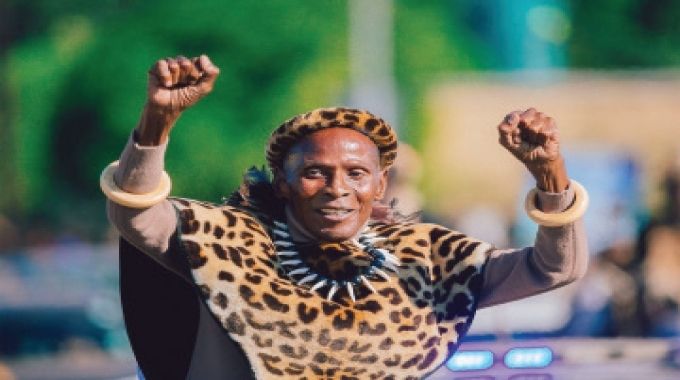
Langalakhe Mabena
The late King Mpezeni IV, born David Njengembaso Jere from Zambia, will be remembered as a devoted African leader who championed the preservation of indigenous traditions while playing a pivotal role in fostering unity among African communities across the continent.
The Ngoni monarch died on May 30, 2026, at the age of 75 after a short illness. He died at a hospital in Lusaka, Zambia, triggering an outpouring of grief across Southern Africa’s traditional leadership circles.
He will be buried today at the royal burial grounds in Feni, Chipata, Zambia.
The Ngoni Royal Establishment said the King was a baptised Catholic and has requested the Catholic Church to preside over the requiem mass ahead of his burial.
One of Africa’s longest-serving monarchs, King Mpezeni IV spent 44 years on the throne, earning widespread respect as a cultural custodian, peacemaker and unifier.
Among those mourning is Prince Peter Zwide Khumalo of the Ndebele royal family, who described the King’s death as a significant loss to Africa’s traditional leadership fraternity.
“The passing of King Mpezeni IV has left a huge void among Africa’s monarchs. He was charismatic, not necessarily because of his stature, but because of his royal presence,” said Khumalo.
He credited the late King with inspiring cultural exchanges in Bulawayo that ultimately contributed to the establishment of the now-renowned King Mzilikazi commemorations. He recalled meeting King Mpezeni IV on August 10, 2017, during the Umthetho ceremony in the Mzimba Kingdom of Malawi.
“King Mpezeni was a fountain of knowledge on Nguni culture. I remember sitting with him and other royals at the ceremony. When he spoke, everyone listened attentively. His contributions reflected wisdom, maturity and deep cultural understanding.
“Despite the immense respect he commanded among abaNgoni royals, he remained humble and approachable. He carried himself with remarkable grace and humility,” said Khumalo.
According to Khumalo, King Mpezeni’s stewardship of the annual Inxwala ceremony played a crucial role in preserving ancient Nguni customs and attracting thousands of cultural enthusiasts from across Africa.
“He left an indelible mark on the continent through his unwavering commitment to cultural sovereignty and African identity.
As recently as February 2026, he and his younger brother, King Mbelwa V of Malawi, led the singing and dancing during the Inxwala ceremony in Chipata. Through his actions, he demonstrated cultural accountability to his people and inspired younger generations of abaNgoni to embrace their heritage,” he said.
Historian Arnold Mayibongwe Nkala said King Mpezeni IV exemplified how culture could be used as a tool for community development and social cohesion.
“As someone involved in community development through culture, I was greatly inspired by King Mpezeni’s dedication to preserving and promoting our cultural values. As Africans, it’s difficult to come to terms with his death.
He has left a gap that will not be easy to fill,” said Nkala.
He described the King as a passionate advocate for peace, unity and African solidarity.
“The Inxwala ceremony became a shining example to other African nations of the importance of embracing the cultural practices that define us. It was during his reign that the ceremony, held annually, grew into one of the largest cultural gatherings on the continent.
“He regularly sent delegations to strengthen ties with communities across Africa and often visited fellow traditional leaders personally. He also attended the coronation of King Misuzulu kaZwelithini in South Africa, demonstrating the respect he had for fellow kingdoms and their traditions,” said Nkala.
Chief Mbusi Dakamela of Nkayi in Matabeleland North, who attended this year’s Inxwala ceremony, described King Mpezeni IV as a dedicated traditional leader whose influence transcended national borders.
“Through his stewardship of the Ngoni nation, King Mpezeni IV played an important role in safeguarding the rich cultural heritage passed down from our forefathers and strengthening the bonds that unite Nguni-descended peoples across Southern and Eastern Africa.
“As fellow custodians of our shared heritage, we recognise this as a profound loss not only to the Ngoni Kingdom, but also to the wider African traditional leadership fraternity. His passing marks the falling of a great tree whose roots run deep within the history, culture and identity of our people,” said Chief Dakamela.