Online Reporter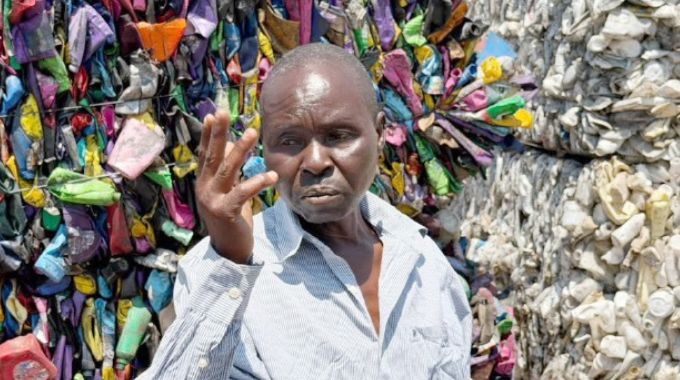
Bruce Ndlovu, Sunday Life Reporter
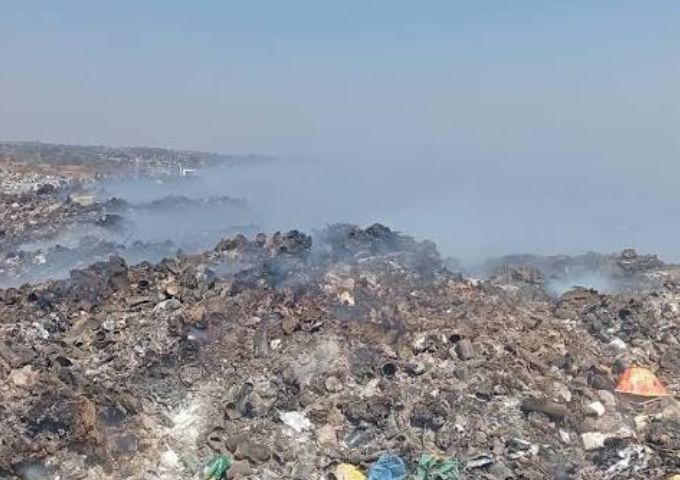
IF one were to approach any informal settler at Richmond Landfill and ask them to talk about life at the settlement popularly known as Ngozi Mine, they would probably remain silent and point a finger towards a shack in which Gideon Tshuma dwells.
To the people living within the over 450 households at Ngozi Mine, Tshuma is a figure of authority.
Here, amidst the shacks, the discarded waste and piles of rubbish that sometimes combust without warning, Tshuma is simply sobhuku, the village head.
To the average Bulawayo resident, Ngozi Mine is a festering scar, one that they would prefer to pretend does not exist.
For those living in neighbouring Cowdray Park, Luveve and Makhandeni, three suburbs that have borne the brunt of upheavals in Ngozi Mine, Tshuma reigns over a kingdom of rubble. To them, he lords over a mound that has come to symbolise the problems they face on a day-to-day basis.
He rules over the smoke, the flies and even the crime they believe visits them from time to time.
Of course, for those within Ngozi Mine, this could not be further from the truth. Here, Tshuma is a figure of authority and order, something he has tried to maintain since he arrived at the landfill as a destitute young man in 1994.
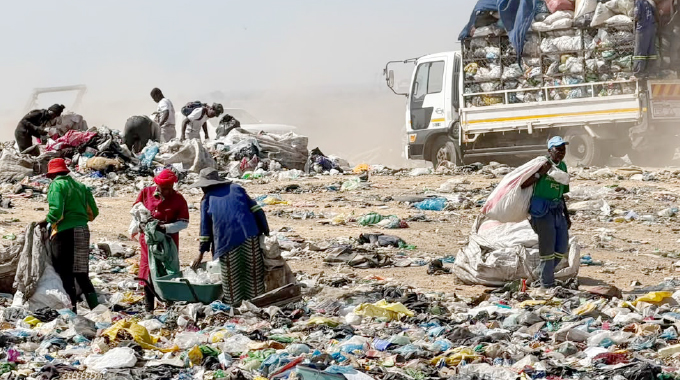
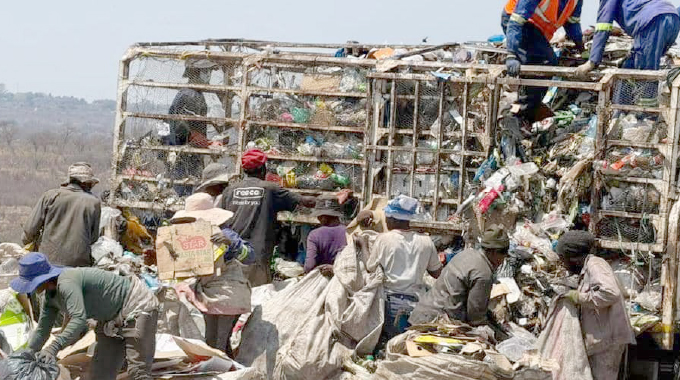
“I came here in 1994,” he told Sunday Life in an interview. “I came here out of a desire to find something to do to feed my family because I was not educated, and those who were getting employment were those who had the right qualifications. I then realised that by collecting waste, I could make some money and sustain myself.”
For Tshuma, however, Ngozi Mine was never meant to become a permanent home. Like many others who found themselves making a living from the sprawling landfill, he came in search of survival. Years later, the place has become something far more permanent.
Originally from Matobo, he says returning to his rural home was never really an option.
“Originally, I am from Matobo but I could not go back there because my father came to Bulawayo in the 1960s to work, and he never went back to his village. He had a place to rent and right until he died, he was living in that house so going back to the village was never an option for me. This is my home. I can’t afford to pay someone rent because the money that I earn from picking waste is only enough for me to feed and clothe my children,” he said.
In the years since his arrival, Tshuma has watched the economic landscape of Bulawayo change dramatically. There was a time when most of the city’s factories hummed with activity and the waste they produced offered people like him an unlikely livelihood.
“When Bulawayo’s industries were still booming, we had a lot of scrap to benefit from. We still had companies like Arenel, Greenburg, National Blankets and others. The scrap that they left here was very valuable. We had guys that made beds and they would come and pay you to get the material that they needed from these grounds,” he said.
While some of the factories of old may have fallen silent, the rubbish remains while Ngozi Mine itself has changed. What had once been a place where people came to sift through the city’s discarded material gradually became a settlement in its own right. It was around this time that Tshuma’s role changed too.
“I took up leadership of this place in 1999. I remember it well because it was right after the death of our father, Joshua Mqabuko Nkomo,” he said.
Tshuma’s rise to the position of sobhuku was not born out of ceremony or tradition. There was no bird or beast slaughtered to welcome his ascendency. It was, instead, forged in an environment where crime and survival often existed side by side.
“Back in those days, it was impossible for anyone to pass through Ngozi Mine. If anyone tried to walk through here, they always got mugged. So, whenever someone got mugged, they would run and seek shelter among us.”
“So, this meant that we would get raided time and again by the police because they thought we were responsible for these crimes. They would sometimes come here at 3AM and round us all up. So, in the end, they started vetting us and that is when they realised that the people living here were not criminals but people trying to make a living,” he said.
Tshuma revealed that it was out of this uneasy relationship with law enforcement that a system of order began to emerge.
“So, we formed a neighbourhood watch, in conjunction with Bulawayo Central police. We were later transferred to work with Sauerstown and eventually, we were put under the jurisdiction of Cowdray Park police. So, eventually the police asked us to form a committee so that everyone who lives here could be registered. This was done so that we don’t harbour criminals.
So my leadership role came about because of a desire to control the criminal element in this area,” he said.
Today, Tshuma believes anyone who arrives at Ngozi Mine has to go through a process that is intended to keep track of those living within the settlement.
“When a person comes here, it does not matter if they have a national identity document or not, they are taken to the police for clearance. If during vetting, it is discovered that you have a crime, you get taken to court and then to the correctional services.”
It is a system that Tshuma believes has helped draw a line between the people who live at Ngozi Mine and the criminal reputation that has followed the settlement for decades.
Tshuma said while he has spent years trying to maintain order among the adults, there is another battle taking place beyond the rubbish heaps and makeshift homes.
For the children of Ngozi Mine, the stigma attached to where they come from can follow them far beyond the boundaries of the settlement.
“It is not easy for us here and I think it is worse for the children because a child from Ngozi Mine is always harassed a lot when they go to school in Cowdray Park and other suburbs. They are marked out and harassed and in the end, most of them end up dropping out,” he said.
As change looks to be on the horizon at Ngozi Mine, Tshuma has also been reflecting on his reign.
He has raised not only a family at Ngozi Mine but a community, one that still looks up to him for leadership in uncertain times.
“We have heard that we might be getting jobs if all goes well and that brings a lot of comfort to us because this place is all some us have ever known. I raised my children here and they have gone on to start their own families while I’m still living here. If we have a future at Ngozi Mine I would be happy because we have never been afraid of work,” he said.