Online Reporter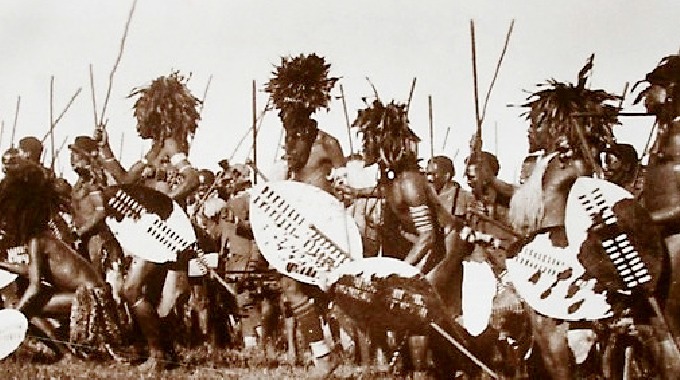
Mzala Tom
This thread gives another angle on the split between Kings Mzilikazi and Shaka. In the previous thread we addressed the pro-Shaka version and today we give the pro-Mzilikazi perspective.
Mzilikazi was a Khumalo and the Khumalo originated from Khumalo kaMntungwa, who settled around the Mkhuze river in Northern KwaZulu-Natal. Mzilikazi was born of Matshobane kaMangethe who is also called “Matshobane kaZikode”.
The Khumalos were caught in the power struggle between the then Zulu chief, Shaka (Sgidi kaSenzangakhona) and the Ndwandwe chief, Zwide who was Mzilikazi’s maternal grandfather. Zwide got Mzilikazi’s father killed. As a result Mzilikazi became the chief of amaKhumalo.

King Shaka initially loved and trusted Mzilikazi and brought him under his wings. In future, he was to become unsettled by the growing fame and renown of Mzilikazi who he perceived as a threat to his throne. According to Shaka, Mzilikazi was subtle in his quest for more power.
Mzilikazi had forged an alliance with Shaka for his protection and the Khumalo clan. Shaka was a rising star at that time, building his Zulu empire through raids, subjugation and assimilation of
smaller ethnic groups. Mzilikazi however became too powerful for ilembe!
Shaka then resolved with his advisors that the best way to deal with the Mzilikazi threat was to eliminate him. However, since Mzilikazi was popular in the military circles, Shaka had to devise a strategy to silently eliminate Mzilikazi. He sent him on a suicide mission!
Shaka ordered a raid on the Sothos under Ranisi. However, to ensure that Mzilikazi died in battle he sent him with a regiment of old men who were weak and unsophisticated in battle. Mzilikazi realised the strategy and co-ordinated a strategic fight against Ranisi, which worked!
Shaka was astonished by Mzilikazi’s victory! More praises were heaped on Mzilikazi as a mighty general. At this point Mzilikazi knew that he had no future under Shaka. A stalemate followed as none of them contacted each other. Mzilikazi never went to report his victory!
Mzilikazi took the beautiful cattle to his kraal and remained stone silent. The silence became too loud until King Shaka sent his emissaries and envoys to enquire why the cattle were not being surrendered to him and to urge Mzilikazi to correct his mistake.
The envoys were senior dignitaries from the capital who came dressed in their full battle uniform. They marched into Mzilikazi’s kraal with their shields and assegais, with the long black feathers of the widow bird, isakabuli, adorning their head-rings.
Mzilikazi had the party arrested, and he cut the shiny black feathers from their head-rings and they returned to the capital heavily embarrassed. This incident marked the emergence of new Mzilikazi, the king and founder of a new nation.
Mzilikazi vowed that there would be no cattle to be handed over to Shaka, unless he personally wanted to come and take them in battle. As they went back, the noblemen were astonished! One of their members pleaded with Mzilikazi to do the noble thing and obey Shaka’s laws.
Knowing that war was coming, Mzilikazi moved his few people and herds of cattle to Entubeni. King Shaka deployed two regiments but they failed to overcome Mzilikazi. Mzilikazi and his growing kingdom thereafter, successfully crossed the Drakensburg mountains.
King Shaka died in 1828 before settling his score with Mzilikazi. By this time Mzilikazi’s nation had grown bigger and his capital Emhlahlandlela was established near modern day Hammanskral.
Mzilikazi built his kingdom in modern day South Africa and stayed there for some years before further migrating his people north of the Limpopo River for other reasons other than his dispute with ilembe. Shaka was already dead by the 1830s.