Chronicle Editor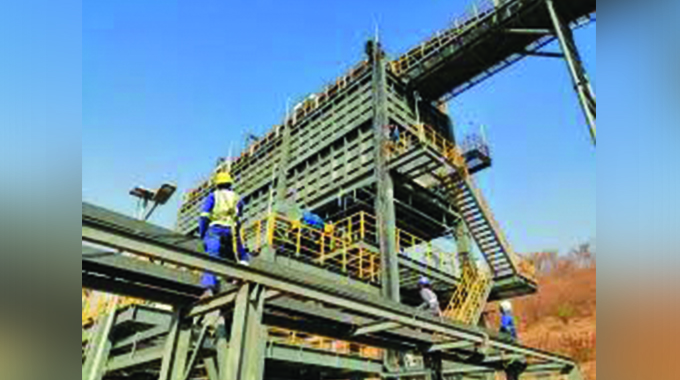
Business Reporter
Chinese investor Yahua Group, which is mining lithium in the Kamativi community of Hwange District, Matabeleland North province, has revitalised this remote area that had been dormant for over 30 years.
To date, the firm has channelled more than US$2 million towards various community development projects, positively impacting the lives of ordinary people.

President Mnangagwa officially commissioned the re-purposed Kamativi Mining Company (KMC)’s Phase One Lithium Processing Plant, while construction of a second plant is underway. The company is now boosting production levels to reach 2.3 million tonnes of raw ore and 300,000 tonnes of lithium concentrate annually.
In a statement, KMC highlighted its commitment to Community Social Responsibility.
“With the restart of mining in September 2022, KMC has revitalised this community that had been inactive for nearly 30 years. By creating over 300 direct jobs and more than 1,000 indirect jobs through contractors, KMC has significantly contributed to local economic development.
“The company has actively engaged in social responsibility, investing approximately US$2.2 million to improve community infrastructure, including roads, water and electricity supply and the repair of schools, hospitals, churches, bus stops, streetlights and other public facilities.
“These investments have not only enhanced residents’ quality of life but also laid a solid foundation for the community’s long-term development,” the statement reads.
KMC’s investment has excited traditional leaders and local community members, who are already feeling its impact.

KMC began operations in 2019, with construction for Phase One starting in March 2023, focusing on lithium exploration, mining and processing in Kamativi, a former tin mine that closed in 1994 when international tin prices fell to unsustainable levels. At that time, the mine employed over 3,000 people and still had a 40-year lifespan.
In the long run, KMC expects to invest a total of US$249 million, with US$100 million already injected into the first phase.
For three decades, Kamativi became a ghost town, with infrastructure such as roads, buildings and water and power facilities vandalised.
During the plant commissioning, Mr. Meng Yan, president of Yahua Group, remarked that the revival of Kamativi Mine is a historic moment for communities that had been isolated for nearly 30 years. He noted significant resources invested in community projects and substantial tax contributions.
“We take corporate social responsibility seriously, having invested US$2 million in various community projects, including the rehabilitation of roads and the resuscitation of electricity and water supplies, as well as support for local schools and clinics,” said Mr. Yan.
“KMC has contributed significantly to Zimbabwe’s fiscus, paying over US$8 million in taxes. After the completion of Phase Two, this project will create more jobs and increase tax contributions.”
Mr. Yan emphasised that the company’s CSR efforts aim to instill confidence and foster community buy-in, ensuring that residents share the company’s vision.
KMC currently employs 300 people directly, with approximately 1,000 others indirectly through subcontracting.
Mr. Yan noted that during the development of Kamativi Mine, there has been remarkable collaboration among stakeholders from China and Zimbabwe, overcoming numerous challenges. He expressed gratitude for the support that enabled the company to complete and commission the project.
Yahua Group prioritises sustainable development, taking environmental conservation seriously and employing efficient water-saving technologies.
KMC is a joint venture operated by Sichuan PD Technology Group, a subsidiary of Yahua Group, in partnership with Defold Mine (Private) Limited.
Having closed in 1994, Kamativi had become a ghost town for three decades. Mr. Yan highlighted the enduring cordial relations between China and Zimbabwe, rooted in principles of consultation, collaboration, construction, shared prosperity and win-win co-operation.
Consequently, Mr Yan stated that his investment group is committed to contributing more to Zimbabwe’s socio-economic development to help the government achieve Vision 2030, aimed at establishing an empowered upper-middle-income economy. He believes that confidence in the Zimbabwean economy will attract additional investors.


 Online Reporter