Online Reporter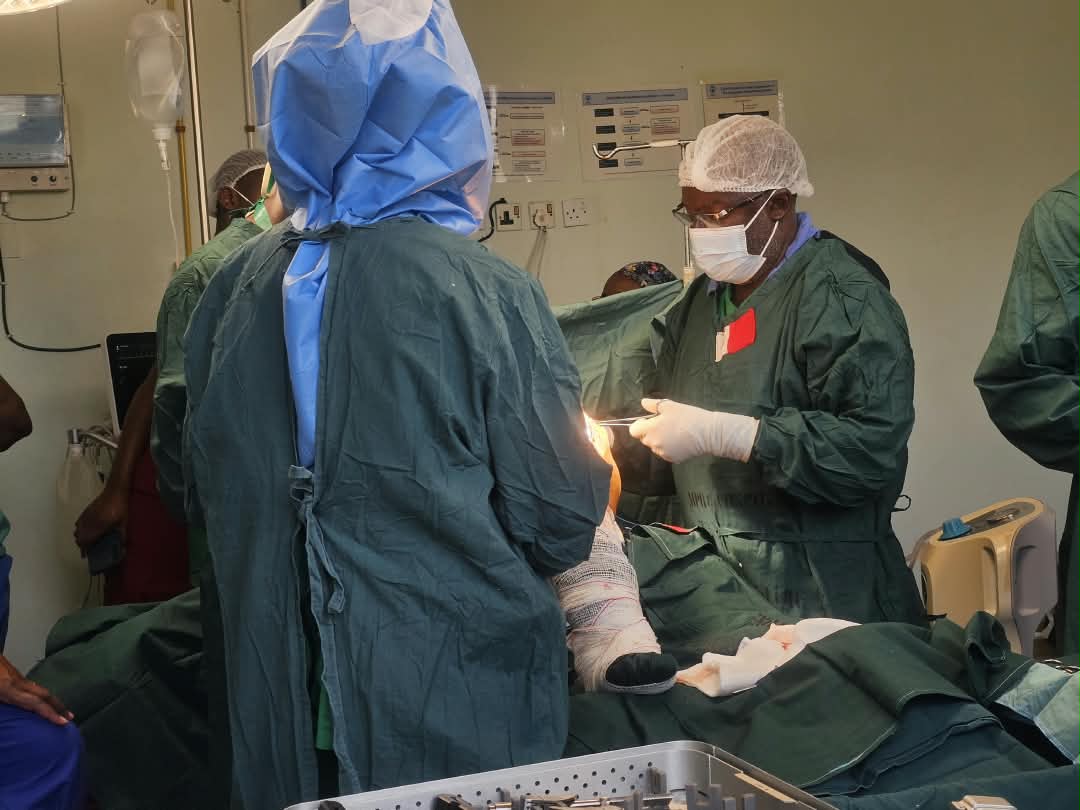
Robin Muchetu Health and Gender Editor
MPILO Central Hospital has become the first public institution in Bulawayo to introduce complex knee surgeries and total hip replacements following the successful training of local orthopaedic surgeons by a visiting expert from Italy and Scotland.
Brain drain saw specialists who used to perform these in public sector hospitals, leaving the country decades ago, creating a gap in services that were being offered in this area.
The visiting expert Professor Alessandro Lelli from director of the Orthopaedic Department at Villa Regina Hospital in Bologna, Italy, who has been a knee surgeon for 50 years acknowledged that knee surgery is very difficult and the training was an opportunity to share his expertise.
“Knee surgery is very difficult and it is important for surgeons to specialise in that. We are doing a surgical marathon that started in Zimbabwe and we are headed for Zambia after this then in November we are training in Namibia.
The future of orthopaedics in Zimbabwe is good. We had a day for surgery and the last day is for interaction and learning with the surgeons,” he said.
He said he hopes to return to Zimbabwe again and offer his services once more and impart knowledge to local surgeons.
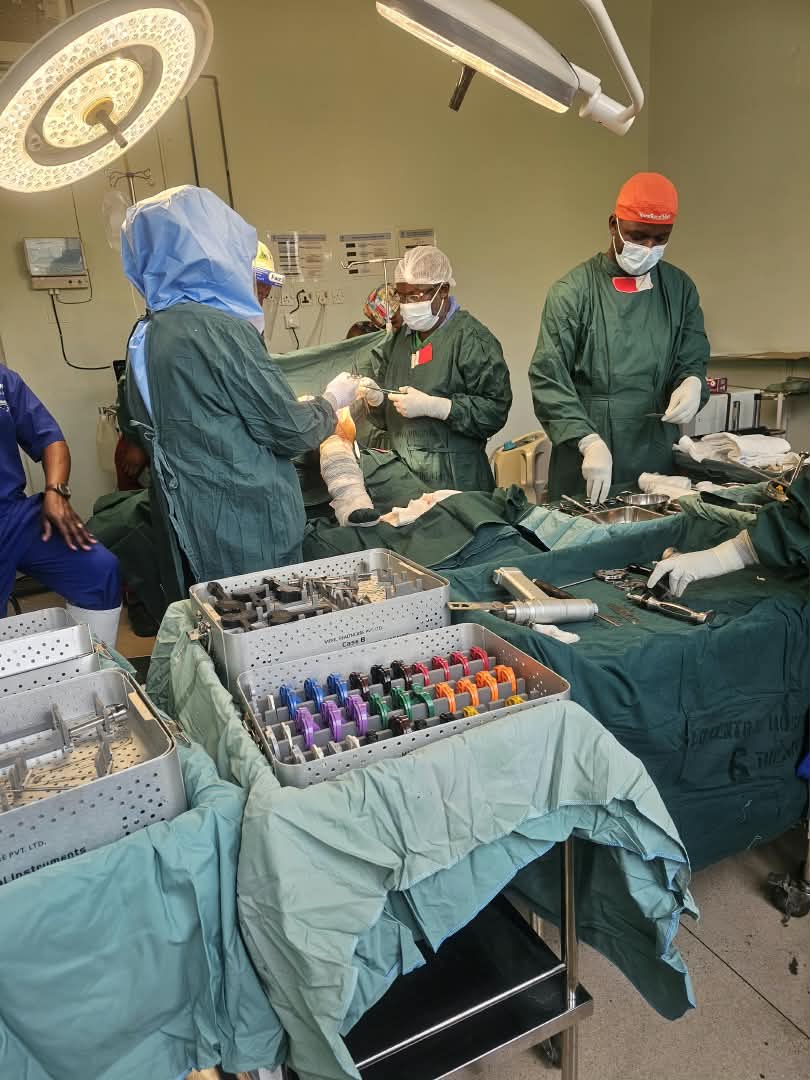
The visit by Dr Lelli was part of the Africa Marathon, an academic initiative facilitated by Meril Healthcare Pvt Ltd.
Dr Lelli, carried out live surgical sessions, clinical discussions and a scientific symposium, providing a platform for local specialists to exchange experiences and perspectives on contemporary knee arthroplasty (surgical joint replacement or repair).
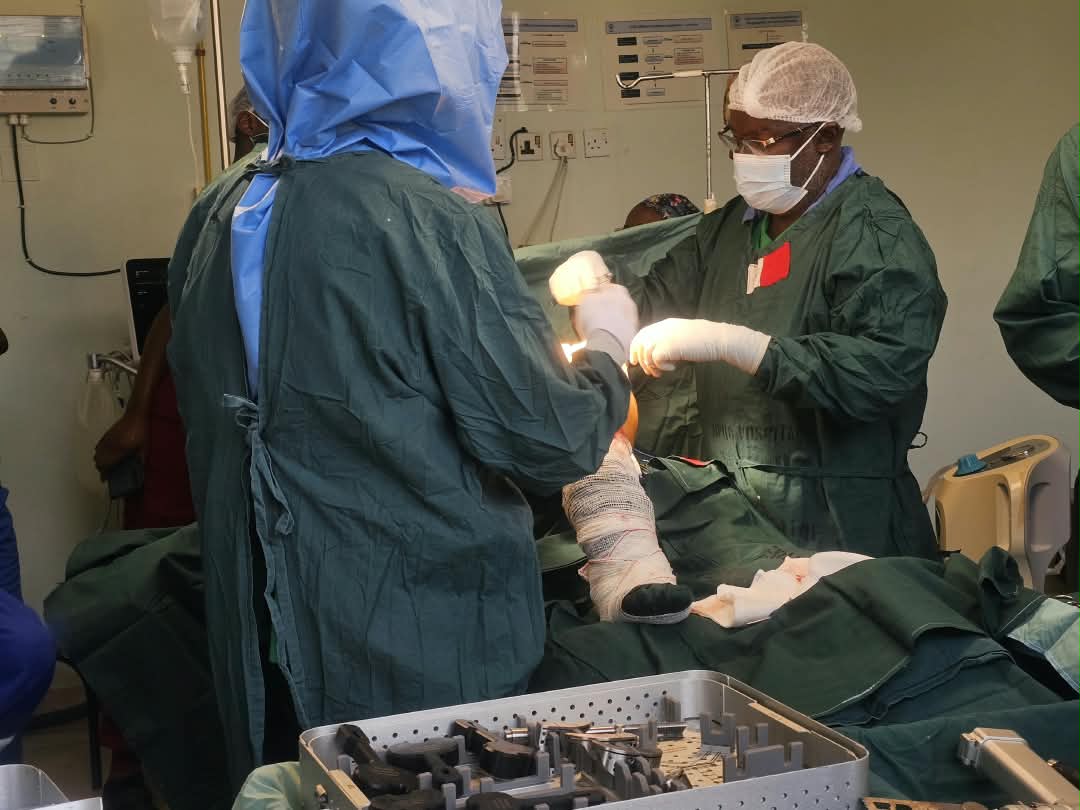
The Sunday News witnessed the knee replacement surgery taking place at Mpilo where the surgeons had the chance to look and learn as the expert carried out the life transforming operation.
The surgery took just under two hours with a large team carrying out various tasks from ensuring the 84-year-old patient’s vitals were in check, the equipment was within reach and handed to the surgeons when they needed it and that the learning surgeons were observing and helping Prof Lelli.
Prof Lelli explained step by step what he was doing during the surgery and the surgeons also interacted with him asking questions and getting the feedback they needed. They watched as he opened the knee, reached for the bone and corrected the area which was damaged including shaving off excess bone to fit in the implant on the knee.
Bone cement was used to stick the implant to the bone and was allowed to dry before the patient was stitched back to complete the surgery.
Prior to stitching back the patient, an important part of the procedure was witnessed, counting all tools used during the operation. This included counting of needles, swabs, implants and all tools that were taken when the procedure started. This was to ensure that the surgeons do not leave any foreign bodies inside the patient which leads to further complications.
“Sometimes you hear of patients who had scissors or swabs left inside the stomach after a surgery.
Those causes not only pain but infections that are dangerous, so it is vital that we count each instrument when we start off with and make sure it’s the exact same number when we finish the procedure,” said one matron.
While modern ways of carrying out such surgeries through robots are now available, Prof Lelli said it is important to master the manual way of surgery first.
“I am afraid of robotics, if I use robotics, our young surgeons will not learn much, they need to see us doing it manually first, they need that experience and then they also learn to do it using robotics which is the future,” he added.
Dr Prince Gwetu an Orthopaedic surgeon from Mpilo Central Hospital who was part of those being trained said the hospital conducted two total hip replacement surgeries on Thursday last week and two complex knee surgeries on Friday last week.
“The benefit of these surgeries is that the patients will be able to return to their day routines following the surgeries and are able to lead an independent life. This is an important camp as our population is aging and the problem of joint pain, osteoarthritis which is debilitating, is mostly common in the elderly, retired population who largely reside in the rural areas. They will benefit from these surgeries as they will be available in our local hospitals,” he said.
He said the surgeons on the other hand benefitted immensely from the skills transfer programme.
“We thank the Government for facilitating this programme, we have been given in-depth knowledge on how to perform knee surgeries and we value that. We were also shown how to use newer implants that they came with so we are now able to do more than we could before,” he added.
He said as orthopaedics, they have had to build the specialty from the bottom.
“Following the migration of our specialists years ago, these operations were abandoned, no one was doing them in the public sector. So now we have had to build once again, looking for equipment, training of orthopaedic nurses, doctors, anaesthetists and so on. For a long time, our people have been going to India to seek these services, but now they can be done locally once more at a fraction of the price,” he added.
The Minister of Health and Child Care Dr Douglas Mombeshora said the move by Mpilo is well received as it is transforming the health sector and is now offering a service that ordinarily costs tens of thousands of dollars abroad.
“I first witnessed a knee replacement operation in Canada in 1988. But total hip replacements were being done at Parirenyatwa when we were still students, that far back. So, these are not new, but it’s sad to say that we have not spread these to all our central hospitals.
We would want to see all our central hospitals doing high-tech operations. We have specialists who can do that. What we need is really to publicise works that can be done locally,” he said.
While doctors have been prohibited from advertising their services, Dr Mombeshora said that legislation is being changed in a bid to inform the public on specialist services like this, being available locally.
— @NyembeziMu