admin
admin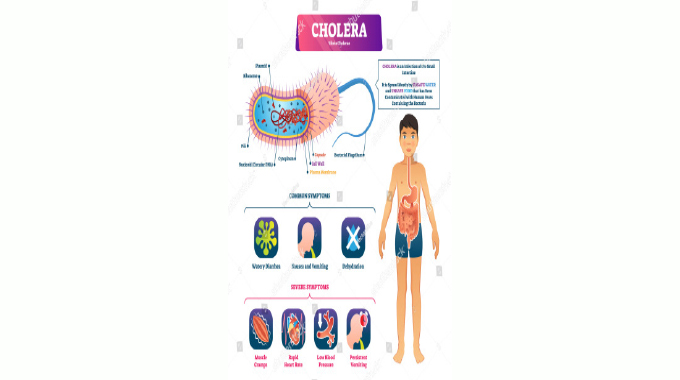
Rejoice Baradzi-Health Matters
Cholera is an acute diarrheal illness caused by infection of the intestines with Vibrio Cholerae bacteria.
The infection is usually mild without symptoms but can sometimes be severe and life threatening. Vibrio Cholarae can survive on a variety of food stuffs for up to 5 days at ambient temperature and up to 10 days at 5-10 degrees Celsius.
The organism can also survive freezing. Most people infected with Vibrio Cholarae do not develop symptoms although the bacteria are present in their faeces for 1-10 days after infection and are shed back into the environment, potentially infecting others.
Cholera affect all ages and in endemic areas children are more affected. It also affects both sexes and mainly affect those of lower socio-economic status and poor hygiene.
MODE OF TRANSMISSION
Mostly is faecally contaminated water.
Disease may spread through food contaminated by handlers and flies.
Fruits and vegetables washed with contaminated water may transmit the infection.
Person to person contact particularly in overcrowded settings without sanitary facilities.
CLINICAL FEATURES
Severity of Cholera is dependent on the rapidity and duration of fluid loss. A typical case of Cholera shows 3 stages.
1 Evacuation stage
2 Collapse stage
3 recovery stage
EVACUATION STAGE
Abrupt onset with profuse painless watery (rice water) diarrhea followed by vomiting.
COLLAPSE STAGE
-Patient collapses due to dehydration.
-Sunken eyes, hollow cheeks, absent pulse, un-recordable blood pressure, loss of skin elasticity, shallow and quick respiration.
-Urine output decreases and may ultimately cease.
-Restless, cramps in legs and abdomen and complaints of intense thirst.
-At this stage, death may occur due to dehydration and acidosis resulting from diarrhea.
RECOVERY STAGE
-If death does not occur, the patient begins to show signs of clinical improvement.
-The blood pressure begins to rise, temperature returns to normal and urine output is re- established.
– Mild cases recover in 1-3 days.
MANAGEMENT
Quick restoration of body fluids and electrolytes with appropriate and adequate fluids.
The volume of replacement depends on the degree of dehydration and the rate of fluid loss.
Antibiotics are often required in the month of severe cases.
PREVENTION AND CONTROL
Improvement of environmental sanitation.
Immunization
Drink water from a safe source or water that has been boiled or chlorinated.
Cook food thoroughly and eat it whilst hot.
Boil milk before drinking.
Avoid ice cream from unreliable sources.
Avoid uncooked food unless it can be peeled or shelled.
Wash your hands after any contact with excreta and before preparing or eating food.
Dispose off human excreta appropriately.
REMEMBER
With proper treatment cholera is not fatal.
Take patients with suspected cholera immediately to a health facility for treatment.
Give increased quantities



 Online Reporter