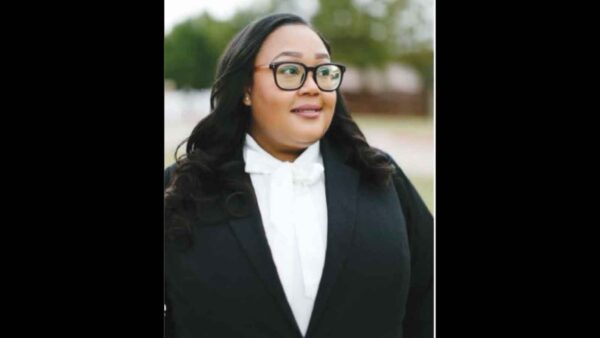
Laina Makuzha-LOVE by DESIGN
While trying to understand how the seasons seem to be changing — and how some of them now seem to overlap — I thought about how fickle the weather can be.
I have seen moments of intense heat, such as we are experiencing right now, but also moments of erratic rain, or seemingly sudden clouds.
I thought about how, day to day, we do not give up on our goals just because we do not like the weather. I have seen people adjust to the weather in order to function. It reminded me of one of my favourite approaches to life, which I like to call “rolling with the punches.”
Life has seasons. And when we know these seasons and are able to recognise them, I believe it helps us map out how to adjust and maximise each season, rather than fold and shrink away. And so it is with marriage — it has its seasons that need to be identified and understood, to help couples manoeuvre through the maze of love.
I wondered: how many seasons does a marriage actually have? Is it two? Is it three? Is it four, like nature’s cycle? In my research, I came across a book by author and international speaker on marriage, Gary Chapman.
So this week, I thought I would share my findings with new and seasoned couples alike.
Every marriage, much like life itself, is still in a process of “becoming.” Every individual, I have learnt over the years, is still a work in progress. That process, if misunderstood, can be the undoing of some people.
Knowing the season we are in can prevent hasty decisions, and help a couple apply the right tools for the right season. A solution that worked during the honeymoon phase, for instance, would not necessarily work during a tougher season of the marriage.
In Gary Chapman’s book “The Four Seasons of Marriage”, the four seasons are a recurring, non-linear cycle that describes the emotional climate, attitudes, and behaviours of a couple — rather than a permanent state.
I found a summary that puts it in a way even a busy couple can use as a quick check of what season they may be in. It is not cast in stone, of course. As I have observed over decades, every relationship and marriage has its own merits and sometimes unique circumstances. So this is not a one-size-fits-all, but rather a guide in which one might find something relatable and helpful.
Spring
The Vibe: Excitement, hope, new beginnings, and anticipation.
Key Characteristics: This is where most marriages begin — or where couples restart. Partners feel animated, optimistic, trusting, and deeply grateful for each other. Communication flows easily, and differences are viewed with curiosity and excitement.
Summer
The Vibe: Stability, deep satisfaction, warmth, and ease. Key Characteristics: The seeds planted in spring bear fruit. Couples experience emotional security, open communication, and a strong sense of partnership. Both spouses comfortably accept each other’s unique traits and enjoy routine and shared life.
Autumn (Fall)
The Vibe: Uncertainty, drifting apart, and growing neglect. Key Characteristics: Life changes, stress, or taking each other for granted cause distance to grow. Conversations become transactional or scarce, and subtle fears or resentments start to take root. Partners feel less certain about the future of the relationship.
Winter
The Vibe: Coldness, bitterness, isolation, and discouragement. Key Characteristics: Marked by emotional distance, harsh words, or painful silence. Unresolved conflicts and rigidity — an unwillingness to see the other person’s side — lead to loneliness, anger, and blame. Chapman notes that winter is not the end; it serves as a wake-up call to seek help, practise forgiveness, and shift.
In his book, Chapman says:
“My experience, both in my own marriage and in counselling couples for more than thirty years, suggests that marriages are perpetually in a state of transition, continually moving from one season to another — perhaps not annually, as in nature, but just as certainly and consistently. The cycle repeats itself many times throughout the life of a marriage.”
“No one has the perfect marriage,” he says, but “the good news is that you can have a better marriage than you do now.”
In his decades of counselling marriages, Chapman found that “all couples face difficulties, and all couples have differences.” He believes the real challenge arises when couples “fail to negotiate these differences.” He explains that the manner in which couples respond to the difficulties of life can plunge them into a winter season.
The book provides practical and Bible-based strategies, including empathetic listening, addressing past failures, and using love languages — to move a relationship back toward spring and summer.
Chapman, widely known for his “Five Love Languages,” also shares seven strategies for enhancing marriage. In one of the strategies, he calls for a husband and wife to “maximise” their differences, saying they should take steps to recognise that “God designed our differences to be assets, not liabilities.” He states, “There is always a positive side to our uniqueness.”
I won’t be able to share all that I picked from this book, but I do hope what I have shared can help a couple somewhere this week. Let us keep the conversation going. Please feel free to share your insights, observations or experience. You never know how helpful it may be to someone.
Feedback: Connect on Facebook: Naledi Laina Makuzha, or WhatsApp/SMS: +263719102572