

 admin
admin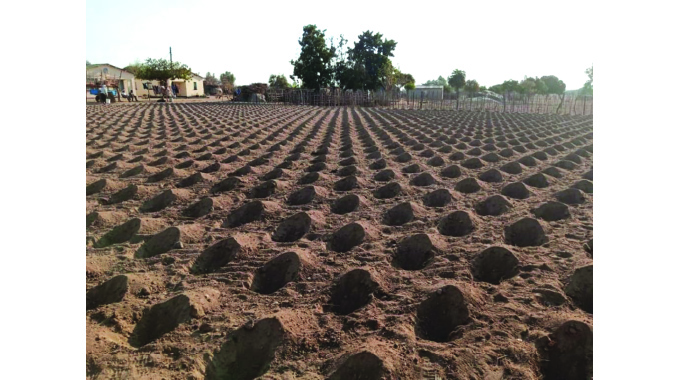
Obert Chifamba-Agri-Insight
THE Food and Agriculture Organisation (FAO) recently became the harbinger of depressing news for the agriculture industry when it revealed the global information and early warning systems’ (GIEWS) forecast of a possible return of the El Niño oceanographic phenomenon this forthcoming season after three years of La Niña.
The statement indicated that dry weather conditions were expected in key cropping areas of Central America, Southern Africa and Far East Asia, while excessive rainfall and possible flooding were foreseen in Near East Asia and East Africa.
The El Niño oceanographic phenomenon is a key driver of extreme weather events that pose high risks to global food security.
It is usually associated with below normal rainfall accompanied by high temperatures leading to reduced crop yields, cattle deaths, low dam levels due to less inflows with the worst affected sectors including food security, livelihoods, agriculture, livestock, nutrition, health and water, sanitation and hygiene.
The opposite of El Niño is La Niña.
The two are the ‘warm’ and ‘cold’ phases respectively of a greater weather cycle known as the El Niño-Southern Oscillation (ENSO). ENSO is a term used to examine the connection between ocean temperatures and atmosphere that has an influence on weather patterns worldwide.
El Niño and La Niña episodes typically last nine to 12 months, but some prolonged events may last for years.
While their frequency can be quite irregular, El Niño and La Niña events occur on average every two to seven years. Typically, El Niño occurs more frequently than La Niña.
It is, however, disquieting to note that smallholder farmers who produce around 80 percent of the food consumed in Africa and Asia, are the most vulnerable to both phenomena.
They are more exposed to the effects of drought and higher temperatures, as they often do not have technologies (such as greenhouses or irrigation systems) that can mitigate the climate changes
On the one hand, they also have limited financial reserves or insurance to cushion them from the resultant dry weather compared to their large-scale counterparts.
In this case, drought becomes the biggest threat to food production, especially for the smallholder category that relies on natural water sources to water their crops, which can severely affect food security for both the farmers’ families and the nation as a whole.
However, logic dictates that one does not observe a stone that is about to strike them — instead they either duck or block it. On the part of our farmers, this must not be very difficult to deal with, as the majority is already familiar with farming methods that can help mitigate the harsh effects of the projected dry weather should it come to pass.
The current Pfumvudza/Intwasa programme has already laid the foundation for most of the farmers to begin the defence of their crops from a better footing.
They will need to maintain their zero-tillage practice accompanied by mulching while following a properly drawn crop rotation schedule.
Those with the capacity can even do drip irrigation if they have water sources nearby. Drip irrigation ensures that the little water that might be available goes directly to the intended beneficiary — the plant.
They will also need to shift from water-intensive crops to water-efficient crops such as vegetables or traditional grains when it comes to starches.
Traditional grains have since proved their mettle in withstanding hostile weather conditions and can fare better than crops like maize.
Government is leading the push on this one with farmers being encouraged to secure crop varieties ideal for the various agro-ecological zones in which they are situated.
This allows farmers to choose more robust crops that can survive hotter or drier conditions so that they will salvage some yields and not record total crop losses.
It will also be crucial for farmers to work closely with their extension officers so that they make informed decisions to save their crops wherever possible.
They will need to do regular checks of weather forecasts and plan their seasons around them while investing in protected cultivation technologies (where possible).
Farmers also need to appreciate the fact that it is not crops alone that they have to try and save from the projected disaster —their livestock is also at risk here.
There will obviously be food shortages for cattle that form the commonest livestock class for most smallholder farmers. It is important for farmers to start stocking feed now. At the moment there is a lot of biomass lying around so farmers must not leave it to be used as fuel by the rampant veld fires that normally characterise this time of the year.
It is not too late for farmers to collect grass hay, as well as crop residues and store it somewhere safe from moisture and unrestricted access for relief feeding later.
It is obvious some may even be forced to sell the less productive animals and secure feeds for the productive group’s use later.
Culling of unproductive stock and selling it when it still has high value will make a lot of business sense.
Some farmers can also buy or bale grass from areas that have excess and stock for future use while those that can book pastures for relief grazing later should do so to make sure they will make a smooth transition and take their animals for survival grazing when the difficult moments arrive.
It may also be necessary for farmers to ensure they have a mixture of breeds so that those with resilience in the face of challenges will be their trump cards in the event of the projected calamity chancing to materialise.
There are also chances of both weather phenomena triggering heavy rains or even floods in some cases, which requires farmers to also have some fall-back position for their animals but most importantly, their families.
Although very wet conditions are normally conducive for agricultural production, excessive rainfall amounts raise the risk of flooding with potentially negative repercussions for the agriculture sector through damage and losses of crops. Excessively humid conditions are known to increase the possibilities of an increased prevalence of crop pests and weeds, as well as outbreaks of crop and animal diseases.
This makes it vital for farmers to work hand-in-hand with their veterinary extension officers so that they get advice on possible diseases to look out for and to secure the necessary drugs for their containment in advance.
Farmers will need to be armed with knowledge on anticipatory actions they can implement to minimise the potential impacts of either droughts or floods on their activities.
It is good to note that Government has been very proactive and has since been distributing seeds of drought-tolerant crop varieties well in advance of planting seasons, as well as train farmers on good agronomic practices that put them on the safe side in the event of such challenges.
It has also initiated hay and fodder programmes to boost livestock nutrition on the backdrop of a robust animal health support, with particular emphasis on chemicals to ensure a regular dipping regime and appropriate vaccination of livestock.
Rehabilitation of dip tanks is on-going while on the cropping side dam construction programmes and irrigation development are taking place.
This all amounts to an enhancement of farmers’ capacity to do water-harvesting before using it effectively for irrigation.



 Online Reporter