Online Reporter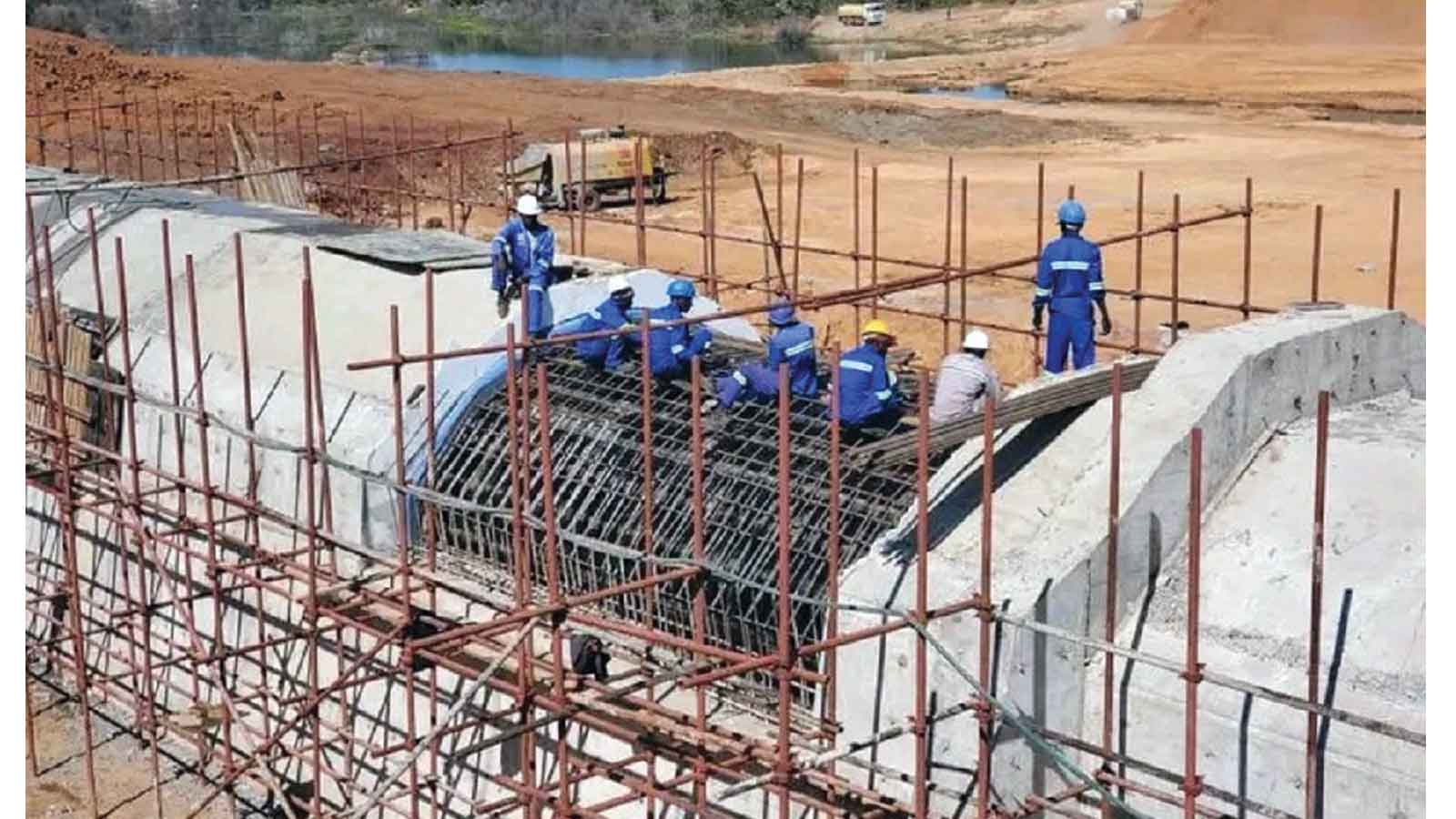
Victor Maphosa
Mashonaland East Bureau
AS Zimbabwe braces for a potentially El Niño-affected summer cropping season, development of Kunzvi Dam is emerging as a major weapon in the Government’s drive to climate-proof agriculture while transforming the economies of Goromonzi and Murewa.
The 158 million cubic metre reservoir, whose construction is now 75 percent complete, is set to do far more than augment water supplies to Harare, with irrigation, fisheries, tourism and new businesses expected to grow around it.
The dam is poised to open a new economic corridor in Mashonaland East province, giving farmers access to reliable water beyond the traditional rainy season while creating opportunities for agro-processing, employment and investment.
The authorities say the project could fundamentally change how communities in Goromonzi and Murewa access water, produce food and conduct business.
Once completed, the dam will provide a major boost to water supplies for eastern Harare, while also supplying water to communities and growth points in Goromonzi and Murewa.
Impact
But its biggest impact will be felt beyond the taps.
The Government plans to establish irrigation schemes that will initially benefit about 500 farmers, with 250 from Goromonzi and an equal number from Murewa.
The authorities say priority will be given to families who were relocated to make way for the dam, allowing them to benefit directly from the economic opportunities created by the project.
The availability of reliable water throughout the year will allow farmers to produce crops beyond the traditional rainy season, improving food security while creating opportunities for increased household incomes, agro-processing and employment.
For a province whose economy is largely driven by agriculture, this could be a major economic shift.
Mashonaland East Minister of State for Provincial Affairs and Devolution Advocate Itayi Ndudzo said development of Kunzvi Dam was a major step towards climate-proofing agriculture and creating new economic opportunities in the province.
“The construction of Kunzvi Dam is a perfect demonstration of the determination of the Second Republic to ensure that, firstly, we have climate-proofed our agriculture,” he said.
“As you know, we now have climate change that is affecting weather patterns, and with excellent agronomy knowledge in our personnel, the missing link has been adequate water bodies to ensure that we are able to grow crops at any time of the year without worrying when the rains do not come.”
The irrigation component is expected to go beyond the initial 500 beneficiaries, with other farmers able to access water through their own irrigation infrastructure.
“Of the beneficiaries, 250 will be from Goromonzi and 250 will be from Murewa. This is over and above those who will be able to extract water through their own means, which means over 1 000 people would be able to access water,” said Adv Ndudzo.
Potential
The economic potential of the dam, however, extends well beyond agriculture.
The Government’s planning for Kunzvi includes fisheries, tourism and recreational activities, with the reservoir expected to become a centre of economic activity in its own right.
“Secondly, Kunzvi Dam pursues the principle enunciated by President Mnangagwa that a dam is an economy,” Adv Ndudzo said.
“So, Kunzvi Dam is more than just a water body . . . the planning around Kunzvi incorporates irrigation, tourism and reticulation of water from Kunzvi for use in Murewa, Goromonzi and in the national capital — Harare.”
The development of fisheries and tourism could open opportunities for businesses ranging from fish production and processing to accommodation, restaurants, boating and other recreational activities.
Such activities would create additional sources of income for communities while attracting visitors and investment into the area.
The dam is also expected to change the infrastructure landscape around Goromonzi and Murewa.
The Government will construct a road of more than 14km linking Kunzvi Dam to the Harare-Nyamapanda highway.
It is envisaged that this will improve access to markets for communities along the route, making it easier for businesses and tourists to reach the new economic hub.
The road, Adv Ndudzo said, would also support the development of eco-tourism around the dam.
“A road of more than 14km which links Kunzvi Dam and the Harare-Nyamapanda highway is going to be constructed, so it means people along that road will benefit through improved access to markets,” he said.
“Even those who want to establish eco-tourism will have access to that good road.”
Relocation
The benefits of the project are already being felt by communities that were relocated to make way for the reservoir.
Adv Ndudzo said the Government has sought to ensure that relocation does not leave affected families disconnected from the economic opportunities that will emerge around the dam.
Houses have been constructed for the relocated families, with solar power and borehole water among the amenities provided.
“Most of them are saying they are better off now,” he said.
“We did not move them far away from the dam; they still have access to the dam and will be able to partake in the broader economic activities that will take place in and around the dam.”
For young people in the surrounding communities, the arrival of reliable water could open opportunities that were previously constrained by the lack of irrigation infrastructure.
Tawanda Rochiti, a youth from Goromonzi, said access to water would allow young people to turn agriculture into a more reliable source of income.
Boost
The dam is also expected to provide a major boost to business centres in the surrounding areas, where growing populations have increased demand for reliable water supplies.
Goromonzi businessman Kudzai Majuru said businesses had long been affected by unreliable water supplies.
“We are always facing water challenges and at times we rely on rationed water supply,” he said.
“As you can see, Goromonzi business centre is expanding and the population is increasing, which means there is a high demand for water. So, once Kunzvi Dam construction is complete, that challenge will be history.”
At Mwanza business centre, Tendai Mukacha said reliable water would improve both business operations and public hygiene.
“A lot of people visit this business centre for economic activities and, as you know, where a lot of people visit, they use ablution facilities as well,” she said.
“So, once we have enough water, then our well-being in terms of hygiene will be guaranteed.”
The project’s impact will also stretch to surrounding growth points, with a treatment plant being constructed near the dam and another planned near Harare.
Water from Kunzvi will be conveyed through a pipeline to Harare, while reticulation systems will also supply communities in Goromonzi and Murewa.
Murewa West legislator Farai Jere said the project would have a wide-ranging impact on communities in his constituency and beyond.
“This project, the Kunzvi Dam construction, will have a huge impact on the people of Murewa and Goromonzi, especially the people of Murewa West constituency, which I represent,” he said.
“Water from this dam will be used for irrigation purposes where the people of Goromonzi and Murewa will be benefitting.”
He said the water infrastructure would also support communities around Musami, Mwanza and Juru.
“A treatment plant is being constructed here, which will ensure the people of Musami, Mwanza, Juru and other growth points have potable water,” he said.
The scale of the investment means Kunzvi could ultimately change the economic fortunes of the two districts.
With agriculture, fisheries, tourism, transport and commercial activity all expected to grow around the reservoir, the economic benefits will not be confined to those directly receiving irrigation water.
Adv Ndudzo said the expectation was that increased economic activity would lift the contribution of both districts to the provincial economy.
The project is part of a broader expansion of water infrastructure in Mashonaland East, which has also seen the development of other dams, including Muchekeranwa and Chivhu, while work on Musami Dam is getting under way. Together, the projects are increasing the province’s capacity to harness water for agriculture, domestic use and economic development.
With construction expected to be completed and the dam commissioned before the end of 2026, Kunzvi is steadily moving from a construction project into a platform for economic transformation. For locals who have lived with water constraints for years, the promise is no longer simply of a new dam.
It is the prospect of an economy built around water.