admin
admin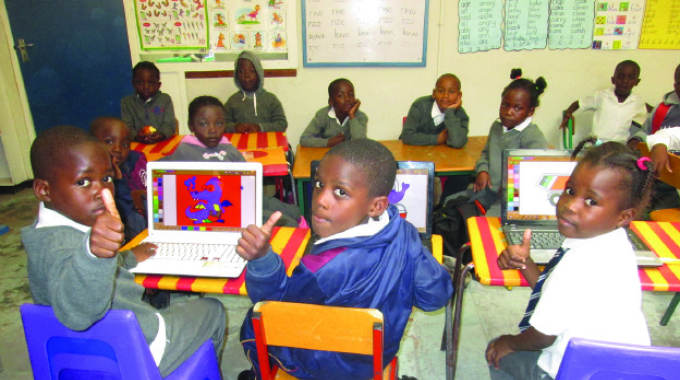
Shepherd Chimururi Youth Interactive Correspondent
Lack of grassroots infant computer education and lack of skills to navigate online are the reason why concerted efforts by various home grown e-learning players have not been bearing much anticipated fruits.
This is so because most of the e-learning service providers have focused on provision of e-learning resources not development of base digital skills of students. In short, this is the reason why there is low uptake of the e-learning services, some which were launched with pomp and fun fare.
Ruzivo, E-solutions, Dzidzo Inhaka, Mukutronix, are some of the leading e-learning service providers.
No matter how useful and loaded the e-learning platforms are, the first skill that needs to be imparted to students is computer literacy. Without computer literacy students are hamstrung by ignorance. In their wisdom or lack of it, the service providers assume the business of teaching learners how to operate digital gadgets is for teachers.
It is very critical for e-learning service providers to understand the correct philosophical background of computer education in the context of the global education system and the digitalised life people are living. Giving someone who does not know how to operate a phone unlimited data and call minutes will make the gadget a white elephant.
Both e-learning services providers and education authorities must understand that failure to equip students with computer operating skills means open denial to access to learning opportunities for the computer illiterate kids.
Actually computer education is an essential instrument for aiding quality education while reducing poverty, exclusion and inequality. Children who lack access to comprehensive computer education and knowledge will later on struggle to be global citizens.
If learners are not digitally empowered at a tender age they will have enormous challenges in online learning, educational research, applying for scholarships and jobs, passports, etc. Computer education can help infant learners to cultivate skills that they can carry with them through junior, senior, college life through to adults in the working world. Education is revolving at an alarming pace inspired by Covid19
Computer proficiency combined with advanced literary and numeracy skills means a learner can have unhindered access to unlimited learning opportunities beyond what is written in textbooks.
The learner can surf the web, download educational tutorials by other teachers, videos and books of his own. Learners with digital skills can also make use of offline educational softwares like Microsoft Encarta, Wikipedia, Britannia encyclopaedia, Encarta, Word web, Linux, which can operate without internet connection.
The computer knowledge that infant learners acquire during their early schooling years is very important as they will use it in their daily lives and educational journey through primary, high school and tertiary as long as they have access to the gadget. In fact computer education is now the carrier of the modern education system
The infants themselves if they are not digitally empowered will have enormous challenges in online learning, educational research, and applying scholarships. This is the reason why UN SDG4 emphasises on provision of ICT in learning so as to produce quality education.
It is suicidal to wait until children are playing catch up on computer skills in primary school or secondary school. Let them develop computer skills while they are young. They will need to master computer skills to get into college and find good jobs later in life. However, most children are growing up without having access to real computers both at home and school and some only have access when they go to tertiary colleges or workplaces that require ICT skills. This will put these children at a disadvantage.
Every facet of life is being digitised and industries automated under the wave of the 4th industrial revolution (4IR). As a matter of fact, technology is entwined in almost every part of children’s lives.
It now affects how they learn, play, socialise, connect, network and most importantly later develop professionally. Computer education must start at a tender age to ensure that infant learners are equipped with skills fit for true global citizens. Infant computer education, if properly implemented, has a far reaching impact in the life of a learner as he / she can utilise those skills during the educational journey into professional life and adulthood.
Computer education has become an absolute necessity in the lives of children today. Major institutions that deal with children’s rights and quality of life like UNESCO and major players’ children curriculum developers all now equate the importance of computer education to children at the same level with reading and writing. Not knowing how to operate a computer is now a significant liability.
Daily computer use is essential as it helps young learners understand various software tools. In the widely technologically driven future, children who acquire digital skills at a tender age will fit in easily in the global village.
Family, business, work are all now. Although the softwares they use at infant level differs with what they use in adulthood, they would have gained the basic understanding of how various classes of computer tools work.



 Online Reporter