admin
admin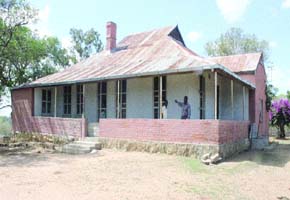
These are the words of Mr Tafara Chidakwa (52) of Ward 21 in Insiza North.
He said health institutions in resettlement areas were very far from the people.
He said what made the situation worse was that there is no public transport which meant people had to walk the long distances to seek health services.
“We are in danger because if someone is bitten by a snake, he or she might die before reaching the clinic”, said Mr Chidakwa
Most resettlement areas are yet to have facilities such as clinics and schools.
Mrs Anna Mavima (28) from Mpalawani said life in the resettlement areas is very difficult because of lack of basic facilities such as clinics, schools and at times shops.
She said lack of clinics affected especially expectant mothers who had to walk long distances to seek antenatal care services or to deliver.
“There are two clinics that we depend on. These are Mapanzure and Dorset. For expectant mothers it is a living hell as they have to walk long distances to the nearest clinic,” said Mrs Mavhima.
She said expectant mothers were supposed to visit the clinics regularly for antenatal care services.
“Nurses are now advising expectant mothers to visit the clinics for checkups after every two weeks. This is very difficult for the pregnant women given the distances involved,” she said.
Mrs Mavhima said traditional midwives were playing a critical role as many women were giving birth at home.
She however said the major concern was that some women developed complications while giving birth and such cases required doctors and nurses.
Mrs Mavima urged the Government to move in quickly to provide basic facilities such as clinics in resettlement areas.
Most resettlement areas are at times serviced by mobile clinics but these only visit the areas when there is a national programme such as vaccination of children.
The councillor for Ward 21 Mr Mavorera Moyo said the lack of basic facilities such as clinics was adversely affecting resettled families.
He said his ward had 1 462 families but did not have a clinic so the people had to walk long distances to seek health services.
“Some people go to Mapanzure in Zvishavane while others go to Dorset in Shurugwi to seek medical treatment but both places are very far away,” said Clr Moyo.
He said the community was working on plans to convert a farm house into a clinic.
“Our member of parliament Cde Andrew Langa gave us paint and some funds to refurbish this farm house,” said Clr Moyo.
A teacher at Mthwakazi Secondary School which is in ward 20 also said the ward had no clinic.
She said villagers had to travel to Mapanzure clinic in Zvishavane which was more than 20 kilometers away or Dorset which was almost the same distance.
She said because of lack of basic facilities such as clinics, teachers were reluctant to work in the area.
“It is not good for a school and the community at large to walk such distances to seek health services,” said the teacher who preferred anonymity.
The village secretary for Ward 21, Mr Mutemo Chemhere said the Government and the local authority should urgently address the issue of lack of basic facilities.
“We only have mobile clinics when there is a major national programme such as vaccination of children,” he said.
Mr Chimhere said Cde Langa was doing his best but there was still a lot that needed to be done.
Besides lack of health institutions in the constituency, schools have poor infrastructure and pupils are still walking long distances to the nearest school
Mrs Sibongile Moyo from Ward 20 said the education standards in rural areas were still low because of poor infrastructure.
“Some children are walking a distance of about 17 km to get to school. The situation is not good because when it is raining some do not attend classes,” she said.
Most roads in Insiza district are in a poor state hence people are facing a shortage of public transport.
The other problem faced by the Insiza north communities is shortage of water.
Boreholes are not enough to serve the all communities.


 Online Reporter