admin
admin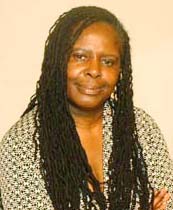
If you stop mourning and sit down to strategise for a better life, you get your share from the universe.
Here is a story of a woman who did not allow anything to come in her way from getting her share of a good life from the heavens.
It started as a thorny highway, but she removed all the thorny bushes and concentrated on success all the way.
When her father wanted to marry her off to an old man so that he could find money to pay for her brother’s lobola, Ernestina Chigango (Munzara), refused to be part of the arranged marriage.
Her father was unhappy that she had disobeyed his orders to marry a rich man who had lots of cows, which would enable her brother to marry a wife.
Ernestina knew that she was destined for greater things in life than to be in a polygamous marriage.
Her vision saw her heading to the then Salisbury (Harare) in the early 1940’s.
Her mother — who was against the arranged marriage — gave her bus fare to go to Harare and prayed that it all goes well for her.
She did not know anyone in Harare.
She had no family, no relative, and no friends.
She was to spend most of the first year sleeping in toilets at the Market Square.
“Baba vangu vaiti murume wacho ane mombe manhingi, tiwane mombe dzekurooresa hanzvadzi yako, ha-a, ndakaramba kuroorwa nemurume uyu. Vakaita zvekundidzinga pamusha kani, ndobva ndangobva, ndakauya muno muHarare ndisina wandinoziva kana one. (My father wanted to marry me off to an old man who had his wives, but I refused and he was not happy, so he chased me away from his home, and I came to Harare. I did not know anyone and I used to sleep in toilets at the Market Square, as it was the only place I knew in Harare).”
When I asked her whether she was not afraid of thieves or of being raped in a public toilet, she said in the 1940’s there were not many people in Harare and it was safe to sleep in the toilet.
With time she made friends with a woman who worked as a housemaid and lived in the servants’ quarters.
She would sneak her in when her bosses had gone to sleep.
“Kune mumwe musikana pandakasvika ndichibva ndangoitawo hushamwari naye ndobva angonditi aiwa huya ndikuchengete. Dzimwe nguva aiti ‘Nhasi panapa murungu wangu haasi kuda kuona munhu’,ndobuda ndoenda kunorara ndakamira mutoilet.”
Ernestina later got a job in a café, which was run by a Chinese family.
As time went on, she got a job as a maid and got a place to stay.
She worked hard and saved every extra penny that she got.
When she had saved some money enough, she sent the money to her father so that he could give it to her brother to marry.
The money was enough for her two brothers to marry their wives.
Her father also bought himself cows with the money.
While visiting her parents in Murehwa, she met a man who was working in Harare and fell in love.
Little did she know that he was married.
It did not work out, but she was happy to have her only child Gilbert (who is late).
Ernestina then met Chigango who was later to be her husband.
The servants’ quarters were becoming small for the family of three and with her husband they decided to look for a house in Mbare and they got one in 1952.
She would cycle to work daily.
It was during this time that she saw business opportunities unfolding in the township of Mbare.
There was a businessman who owned a hotel and she asked to rent one of his kitchens.
She would cook food for sale.
The business went on for a while but when one day thieves decided to help themselves to the food that she had cooked and her pots, she decided not to continue with the venture.
As a woman who was looking for business opportunities, she started collecting laundry (washeni) from white people’s houses, and graduated to hotels.
Her business grew and she had to employ a number of people and ended up buying a car, which she would use to collect laundry.
Police raided her home several times, as she was not allowed to carryout her business, which they felt was a waste of water.
When ironing the laundry, she would cover her windows with blankets so that people could not see what was inside.
But one day the police stormed her house and collected all the laundry she was ironing and took it to the police station. The next day the case was heard in court.
“Ndapinda mubhokisi manje zvikanzi ‘Ya-a, iwe une mvumo here yekuitira washeni muno murukesheni?’
“Ndikati saka zvino murikuda kuti ndiitire kupi? Zvikanzi ‘Hatibvumire.’ Zvinoka-card rangu remba vanga vandibvutira.”
“Zvikanzi ‘Manje imba iri kuvharwa, kuzoti manje murungu anga achitonga zvikanzi,’ Hapana zviri kuvharwa, haana kuuraya munhu muregei aende.’
“Ndokubva ati, ‘uya kumba, kuyadhi kwangu uzotora yangu washeni panumber yakati-yakati.’ ndobva ndatoseka ndikati aah munhu ari kutonga arikuda kuti ndiuye kuzotora washeni.
“Majoni nemapurisa vakanyara hapana akazotsika pamba pangu futi, nekuti ndakanga ndakutowacha mbatya dzaJudge (In court I was asked why I was carrying out this laundry business in the location, and I asked them were else was I supposed to work? They had taken my house card and threatened to close my house. The judge said that they could not do so. He then gave me his address so that I could collect his laundry. The policemen could not believe it. Since that day they never came to my place, because I was now collecting the judge’s laundry)”.
It was not only the police who gave her a hard time.
There were some in the neighbourhood who did not understand how Amai Chigango made so much money and they started giving her all sorts of names.
She invited one of the women to put up at her house.
She woke up at 4 am, to put on the fire to cook food that she was going to sell (by then she had gone back to cooking food and delivering it to schools for teachers, in Mbare and Highfield.)
The woman saw for herself how Amai Chigango worked hard to make money.
Always with her family and extended family at heart, Amai Chigango helped raise her sisters and brothers’ children and some of them are doing well in their chosen fields and careers.
They say too much work and no play makes one dull.
When Amai Chigango was invited by friends to join the Stodart Hall Choral choir which was directed by Bezel Chidyamatamba, she saw it as a way to relax from her hectic schedule.
The choir won many awards at choral competitions and she attributes the achievements to Chidyamatamba whom she remembers as a person who was gifted and had a vision for the choral group.
The choir was invited to sing at some hotels in Johannesburg and Cape Town, which shows how good they were, as South Africa is known to have some of the best choral groups in the region.
She also travelled to South Africa with women’s clubs.
In 1980 when black people were now allowed to buy houses in the former white suburbs, Amai Chigango bought herself one in Hatfield.
Before that, she owned other properties in Highfield and Chitungwiza.
While in Hatfield, she realised that there was no adequate transport for people in the area and she bought a Peugeot 404, which she used as a piate taxi.
When the Peugeot was phased out to make way for bigger commuter taxis she was not to be left behind.
Amai Chigango has since retired and taking it easy.
She looks back at the work she did and is proud of her achievements which came through hard work and having focus.



 Online Reporter