Online Reporter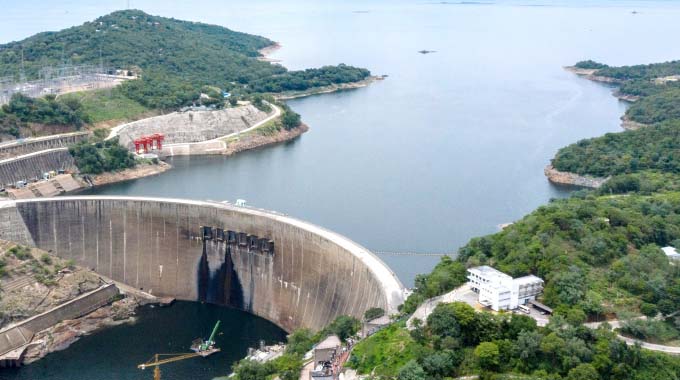
Rutendo Nyeve, Victoria Falls Reporter
THE Zambezi River Authority (ZRA) has announced that, despite a steady decline in water levels at Lake Kariba — a typical seasonal occurrence — there is optimism for sustained power generation, as the reservoir holds more favourable volumes compared to the same period last year.
As of Monday, 18 August, the lake level stood at 478,57 metres, representing a usable live storage volume of 13,88 billion cubic metres (BCM), or 21,43 percent of capacity for power generation, according to the authority.
This marks a significant improvement from the same date in 2024, when the lake level was considerably lower, with a storage of just 6,21 BCM, or 9,60 percent of usable live storage.
“The Kariba Lake is designed to operate between levels 475,50m and 488,50m (with a 0,70m freeboard) for hydropower generation,” reads the ZRA update.
This places the current water level well within the operational band, the authority confirmed.
The improved hydrological situation is attributed to better rainfall during the preceding season. In 2024, low water levels led to Zambia and Zimbabwe being allocated only 27 BCM for power generation at Kariba — a decision made by ZRA in September 2024 following consultations with Zesco Limited and the Zimbabwe Power Company (ZPC).
This allocation was a notable improvement from the previous year’s crisis, which saw generation capacity drastically reduced due to limited water availability. The benefits of the current higher water levels are now being realised at the power stations.
Statistics from ZPC for Monday, 18 August 2025, show that the Kariba South Hydro Power Station was generating 424 megawatts (MW).
This consistent output, averaging around 400MW, provides a crucial and stable base for the national grid — a stark contrast to the generation constraints experienced throughout much of 2024.
This output is sustainably drawn from the healthier water reserve, offering hope that load-shedding can be minimised in the coming months.
The ZRA relies on a sophisticated monitoring system to manage this vital resource.
“The hydrometric network used for the control and day-to-day operations of the Kariba reservoir comprises 13 stations where water levels are monitored daily.
“Flow measurements are carried out at eight of these stations, including Victoria Falls, one of the key stations on the Zambezi River,” the update stated.
The authority also provided historical context, noting that the maximum flow recorded at Victoria Falls occurred during the early construction phase of the Kariba Dam in March 1958, at 10 000 cubic metres per second. The lowest flows were recorded during the 1995/96 season.
While the lake level is expected to continue declining until the onset of the next rainy season, the current buffer offers a much-needed reprieve for Zimbabwe’s energy sector.