Online Reporter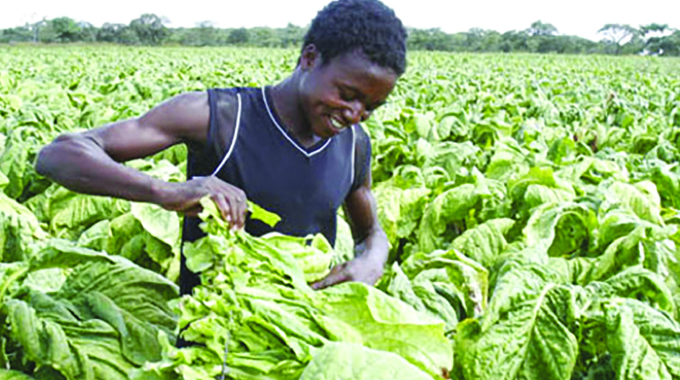
Gibson Nyikadzino and Newman Tekwa in Uppsala, Sweden
ZIMBABWE’s 2000 land reform is now a closed chapter. At multilateral institutional level like the United Nations, there is consensus that Zimbabwe is the first country in the 21st century to use land reform as a transformative social policy aimed at addressing social inequalities created by colonialism.
The land reform led to the restructuring of land ownership patterns transforming the national economy and enabling the democratic participation of indigenous people in contributing to the development of their own country.
Inevitably, the collapse of white-dominated commercial agriculture led in the first years to the decline in crop production, which contributed to socioeconomic instability. However, through state support, the country’s agricultural sector had long bounced back with real gross domestic product (GDP) estimated to have grown by 5,5 percent in 2023 after a 6,6 percent growth in 2022.
In the tobacco sector, previously monopolised by a few commercial farmers, the Tobacco Industry and Marketing Board (TIMB) reported a total of 148 527 registered tobacco farmers in 2023, with a substantial portion being small-scale growers.
Surpassing the tobacco production level of 236 million kg in the 2018/19 agricultural season, the 2024/25 marketing season generated a record revenue of approximately US$1,17 billion to US$1,2 billion that flowed into smallholder households with a total of over 352 million kilogrammes of tobacco sold.
In the sugarcane farming areas of Chiredzi, sugarcane plots averaging 20 hectares each were distributed to over 870 land reform beneficiaries. A greater portion of the expected US$385 million sugarcane revenues for the 2024/25 season will flow into land reform beneficiary households who have been integrated into the lucrative sugarcane value chains as private out growers.
This is up from US$366 million realised in the previous 2023/24 farming season. The household welfare outcomes of the Government’s land reform programme as a social policy instrument need no further emphasis. However, the Government needs to continuously intervene to redistribute incomes to abate rising inequalities in the land reform and non-land reform areas.
Not so often highlighted and discussed together with the land reform are Governments policy intervention towards democratisation of access to productive water. This was important since the beneficiaries of land reform were not included in the water allocations that existed before the land reform.
To ensure equitable access to water for irrigation the Government changed the riparian-based water rights system to a water permit system allowing access to water for the new land reform beneficiaries. In the drier regions of Chiredzi, the democratisation of access to water particularly along the Manjirenji canal has transformed the once dry region into a green belt with private companies moving into the areas integrating small holder farmers into chili value chains under contract farming.
Government water sector reforms have enabled female farmers to engage in export-oriented production of various produce under contract farming, robustly contributing to personal and household welfare outcomes. Previously, access to agriculture water was a preserve of the minority white community.
Aligned to the agrarian pact for Zimbabwe to counter the effects of climate change, the Government’s Pfumvudza/Intwasa Programme is an exemplary eco-social contract. The programme is a Government’s model of agriculture that brings the concern for nature and humans together through environmental preservation and sustainability.
It has improved rural households’ resilience to food insecurity whilst at the same time preserving the environment. The old constitution of Zimbabwe amended in 2000 did not have a specific clause to provide for the protection of the environment.
At present, in partnership with the private sector and other development partners, at least 1,6 million vulnerable households are being supported through the provision of agricultural inputs, contributing to household food security and increasing the country’s strategic grain reserve. Of the collective total, female-headed households are the majority of beneficiaries as they are often vulnerable and lack access to productive resources.
From using the land productively, some female farmers have earned extra incomes they have used to purchase livestock, including cattle, a form of wealth that was historically a preserve of men. Additionally, these agricultural incomes are also being used to invest in urban residential properties and the purchasing of farming implements, thus treating farming as a business.
However, on the gender front and for gender justice there could have been a marked improvement on Government’s allocation of resettlement to women. Government statistics indicate that only 18 percent and 12 percent of redistributed land was allocated to women in the A1 small-scale and A2 medium-scale sectors.
This falls short of Government’s gender-equitable access to productive resources that has not been fully addressed. Improving gender equality within this new agrarian framework also requires Government to have a multifaceted approach, which embraces an inclusive policy development process, actively ensuring that women’s perspectives and needs are incorporated in the formulation of agrarian policies.
This is in addition to gender-responsive legislation that specifically addresses the rights of women in land ownership, access and control. Also, Government should continue broaden the implementation of its policy to give land access to the youth and younger generations.
For an agrarian eco-social contract in the Global South, Zimbabwe’s smallholder farming model offers a plausible path towards a more just, resilient and ecologically sound agricultural system. Its experience brings land and agrarian reform back onto the international development agenda, particularly now when faced with an ecological crisis.
* Gibson Nyikadzino and Newman Tekwa are awardees of the 2025 Nordic Africa Institute African Scholarship Programme based at Uppsala University, Sweden. Newman is also a post-doctoral researcher at the South African Research Chair in Social Policy, University of South Africa.