

 admin
admin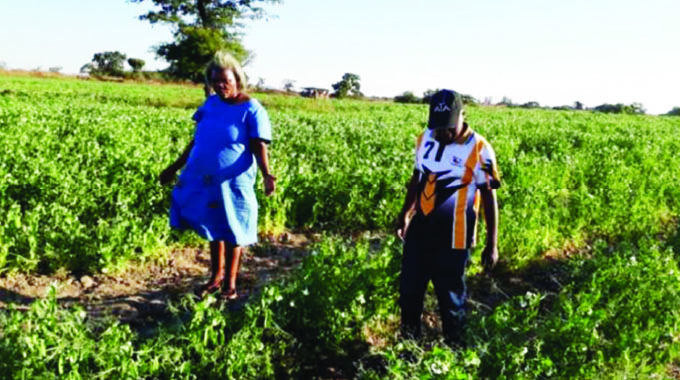
Mukachana Hanyani
When Zimbabwe embarked on the land reform programme during the turn of the 21st century, many economic observers viewed the move as a catastrophic adventure.
Some regarded land reform as an uninformed decision, as white commercial farmers lost the land to new farmers (indigenous farmers) through the land redistribution programme.
White commercial farmers used to own three quarters of arable land in the country, while the majority of Zimbabweans were using the remainder, yet in population it was vice versa.
The population of indigenous people was more than that of white commercial farmers in the country by far, with nearly 4 000 white farmers owning all the arable land in a population of nearly 15 million.
Government took the decision to correct such land imbalances created by the colonial era.
This article is looking at how Zimbabweans are making the land reform viable as the exercise is now bearing positive fruits.
Consecutive droughts due to climate change affected agricultural production in the country to the extent that Zimbabwe, which was then a breadbasket before the land reform, became a grain importer.
This saw Government intervening with irrigation facilities; reviving schemes and providing equipment to farmers.
Now, irrigation schemes around the country have made it possible for farmers to harvest enough grain for the local consumption.
Information from the Ministry of Lands, Agriculture, Fisheries, Water and Rural Development is that Zimbabwe for the first time since wheat was first grown in the country in 1966, is expected to harvest 380 000 tonnes of wheat which will surpass the local requirements.
The country requires 360 000 tonnes of wheat per year, and this means there will be a surplus of 20 000 tonnes this year, which will help boost stocks in the coming season.
This harvest will make Zimbabwe save its hard sought after foreign currency, which has always been used in the importation of wheat from traditional suppliers like Ukraine, Latvia, Canada, Poland and South Africa.
Zimbabwe has been using about US$100 million annually to import wheat for local consumption.
So, with the wheat harvest enough to cater for the country throughout the year, US$100 million will be saved and channelled to other needy sectors of the economy.
It is not the wheat story alone which is testimony to the success of the land reform, individual farmers have also prospered as a result of farming.
For instance, a Gweru farmer who is also a beneficiary of land reform has ventured into peas production in that province and exporting the fresh produce.
Mrs Matilda Manambo of Gweru boasts that her produce has a ready market in European countries like the Netherlands where she exports around 18 tonnes of peas every year.
“I export to the Netherlands,” said Mrs Manambo in an interview with Chronicle.
“This year I have 18 tonnes of peas and I intend to export more. From one hectare of peas, the minimum is six tonnes, hence I am still to export more.”
The farmer employs 21 workers, making it another success story for the land reform as the move to redistribute land has also resulted in the creation of employment.
Those with pieces of land are making it to stardom as they spend their time utilising that land for the production of various crops to sustain their livelihoods.
Another resettled farmer, Mrs Enneth Hlungwani at Muhlanguleni area of Chiredzi South, is into pepper and chilli production.
The farmer and others in her area rely on a solar powered irrigation system and has been producing at her two-hectare plot for the past two years.
Their produce has a ready market and the farmers supply to a local company, Kacholo.
Since the land reform, farming has now become a great employer, as many people are venturing into that sector.
“I want to thank President Mnangagwa for allowing companies like Kacholo to come here and introduce us to chilli farming,” said Mrs Hlungwani, who revealed that her life has changed because of chilli farming.
“I am now a proud owner of a maize shelling machine and a motorcycle. Kacholo has helped me to electrify my home using solar and I also have piped water here.”
She told this writer that a lot of people were now beginning to venture into chilli farming.
Mrs Hlungwani further said Kacholo was now overwhelmed by the increasing number of those who want to venture into that sector.
For those chilli farmers in Chiredzi, it is now business throughout the year as the crop can be produced all year round as long as there is availability of water.
This has been made possible through the use of the solar-powered boreholes which have also improved the viability of the enterprise.
All those farming and agricultural initiatives have come to fruition because of the land reform.
So, those out there still finding it impossible in life should rush to the powers-that-be and apply for land ownership.
Once you get a piece of land, life will never be the same again as you would be enjoying the fruits of land ownership.



 Online Reporter