Online Reporter
Rutendo Nyeve
Victoria Falls Reporter
PRESIDENT Mnangagwa’s Land Tenure Implementation Committee has registered major progress in spearheading a transformative programme that is turning land from a dead asset into a vibrant economic engine, that is set to generate up to US$16 billion over the next 20 years while empowering over 360 000 farmers with bankable title deeds.
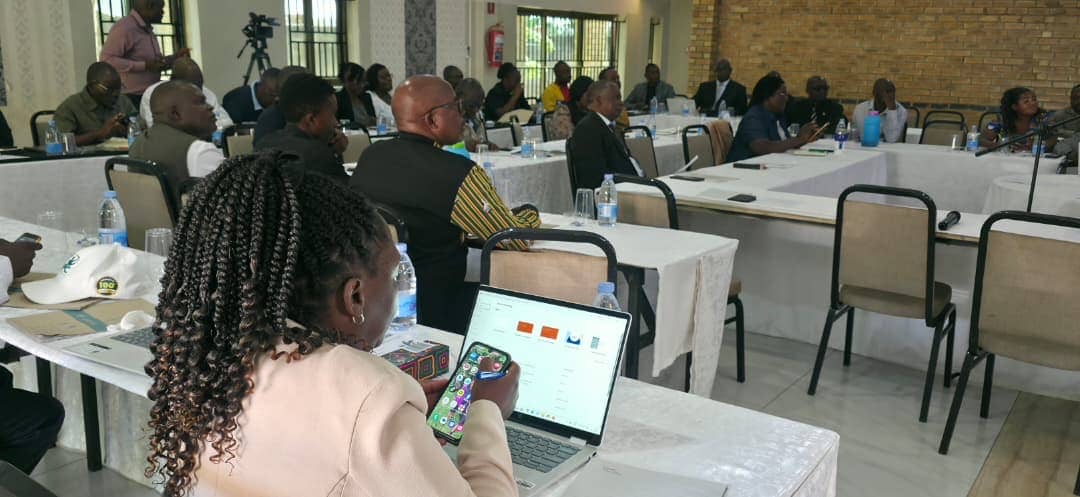
Speaking at the Zim CEOs Policy Roundtable in Victoria Falls recently, the chairman of the committee, Mr Kudakwashe Tagwirei, said the committee was already implementing the Second Republic’s comprehensive strategy to unlock the full value of land acquired under the Land Reform Programme.
“The President, in his wisdom, realised all these challenges that we are facing. He said, what is the best solution? Let us just give these people a title to solve this problem,” Mr Tagwirei said.
He said for years, farmers holding offer letters and permits could not access finance because they lacked security of tenure. Furthermore, the Minister of Agriculture could, with the stroke of a pen, take that land away.
This uncertainty stifled investment and left war veterans and their families vulnerable when it came to inheritance.
The committee, which comprises youth, women, war veterans, bankers and business leaders, was established to assist Government structures in implementing a modern land tenure system.
Its mandate includes legal compliance, valuation, digitisation and stakeholder engagement.
Mr Tagwirei was accompanied by war veteran Cde Happison Muchechetere, a former provincial commander during the liberation struggle, and renowned land expert Professor Mandivamba Rukuni.
“The real essence of the war was to reclaim the land,” said Mr Tagwirei.
Central to the initiative is the conversion of offer letters and permits into full title deeds, allowing farmers to use their land as collateral.
Mr Tagwirei said President Mnangagwa has introduced a 60 percent discount on land valuations to create room for farmers to borrow for infrastructure development.
“Instead of going to borrow using your house in Borrowdale, you are actually going to use that farm. When you do a valuation of that farm, there will be room and you can have a second mortgage to put on that farm,” he said.
Special discounts have also been extended to war veterans, who receive 15 percent off the value of their land, with the first six hectares priced at only US$10 per hectare.
Long-serving Government employees qualify for additional discounts ranging from 2,5 percent to 5 percent.
The economic impact is projected to be substantial.
Government expects to realise nearly US$16 billion from the land over the next two decades and these funds will be channelled through an escrow account and distributed to support key national priorities, of which 22,5 percent will go towards compensation for former commercial farmers while the remainder will be applied to sovereign debt reduction, infrastructure upgrades, agriculture loans, and support for war veterans and traditional leaders.
“Government cannot give land for free,” Mr Tagwirei said, citing Chapter 16 of the Constitution, which mandates that land be alienated for value.
“The money that those farmers pay must go and assist the other 16 million people whom the very war veterans fought for.”
He said to ensure farmers succeed, the committee is rolling out a booster kit facility for A1 farmers, providing boreholes, irrigation for two to four hectares, starter inputs and infrastructure, all financed over seven to ten years.
Farmers will also receive drought and fire insurance, allowing them to focus on production.
“What we want from you only is your body and your mind to wake up at four and five o’clock in the morning and make sure that this happens,” Mr Tagwirei said.
“If there is a drought, we have a drought insurance policy for you. If your field is burnt, we have insurance for that. All we want is for you to go and farm.”
The committee has already drawn up illustrative models showing how farmers in Mashonaland and Manicaland can cultivate high-value crops such as tomatoes, potatoes, cabbages, onions, maize and wheat, achieving yields and margins.
Looking ahead, the programme envisions 360 000 hectares of A1 land under irrigation within the next decade.
National GDP projections, driven by optimal utilisation of the 10,8 million hectares acquired by Government, will lead to an economy worth US$258 billion by 2050.
“We want to solve the problem and not just project the problem. We want to solve it for the betterment of the country. That’s what we are here about,” said Mr Tagwirei.
The Land Tenure Implementation Committee is expected to continue engaging stakeholders across the country, with the next outreach scheduled for the sugar cane-growing region of Chiredzi in June.