Theseus Mauruki Shambare in KADOMA
The MINISTRY of Lands and Rural Development’s top leadership is set to sign performance contracts committing them to measurable targets as Government moves to strengthen accountability and accelerate the implementation of its rural transformation agenda in 2027.
Lands and Rural Development Minister Vangelis Haritatos, Deputy Minister Cde Titsi Zhou and Permanent Secretary Professor Prosper Matondi will each sign individual performance contracts developed during the ministry’s five-day strategic planning workshop held in Kadoma, Mashonaland West Province.
The contracts are expected to provide a framework for measuring the performance of the ministry’s leadership against agreed targets and ensuring that its mandate translates into tangible results.
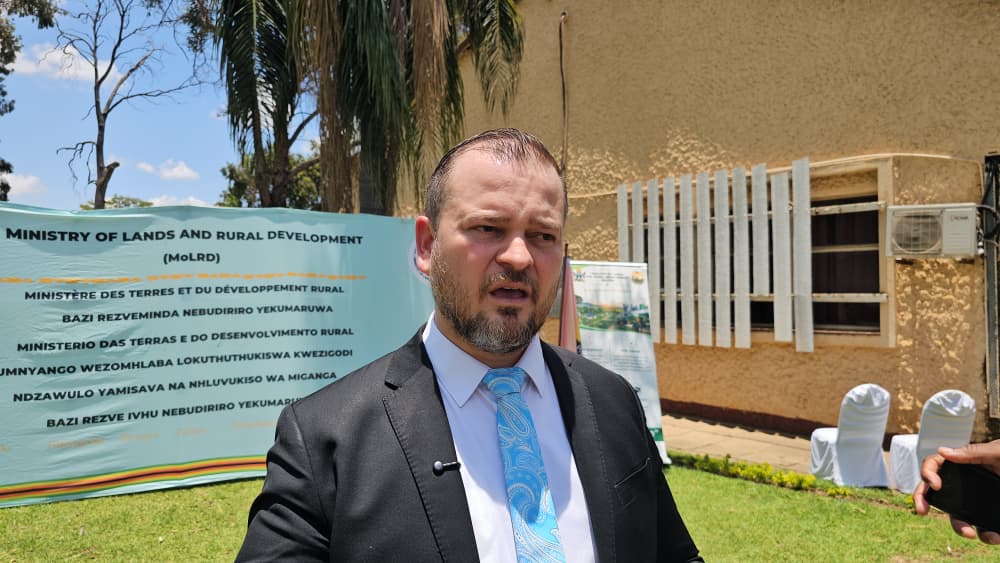
Speaking soon after the five-day Strategic Planning Workshop in Kadoma this afternoon, Minister Haritatos said the contracts were fundamental in entrenching accountability within the newly established ministry.\
“These are fundamental when it comes to bringing in accountability into our ministry. We must be gauged by something that we can commit to,” he said.
Minister Haritatos said the leadership would be accountable to the people of Zimbabwe and the appointing authority, adding that the performance framework would enable the ministry to identify areas where targets were not being achieved and take corrective action.
He said the ministry had developed ambitious but attainable targets for 2027, anchored on improving land administration, digitalisation, rural development and industrialisation.
“Our targets are optimistic, but very much attainable for 2027. We need to do better as a ministry,” he said.
The Minister said the ministry’s broader responsibility was to transform rural livelihoods through coordinated development interventions, industrialisation and improved land governance.
Among its priorities is the establishment of a single central land registry linked to the e-Cadastre system to modernise land administration and strengthen the management of land records.
The ministry is also expected to play a central coordinating role in Government’s rural development framework, working with 10 line ministries to harmonise programmes and improve service delivery.
Haritatos said the approach would ensure that Government institutions understood their respective responsibilities and worked together to achieve common development objectives.
“The ministry intends to redefine the concept of a rural village and establish a clearer understanding of service delivery requirements in rural communities,” he said.
The strategic planning workshop also produced the ministry’s 2027–2030 strategic plan and annual plan, providing an institutional framework for implementing its mandate.
“The success of the process would ultimately be measured by improvements in people’s livelihoods rather than the quality of planning documents,” he said.
The ministry’s leadership is expected to translate the agreed priorities into measurable interventions as Government pursues its Vision 2030 goal of attaining an upper-middle-income economy.