Online Reporter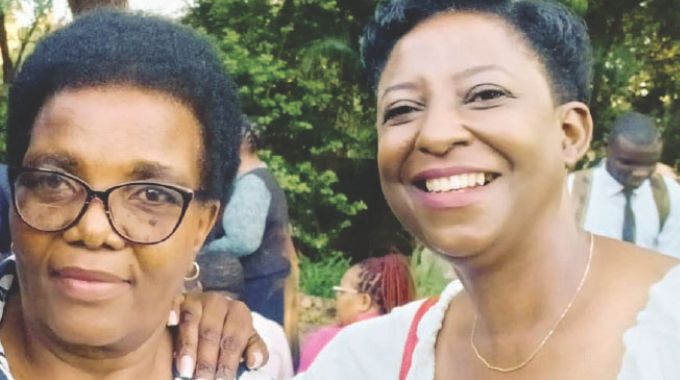
Mthokozisi Ncube, [email protected]
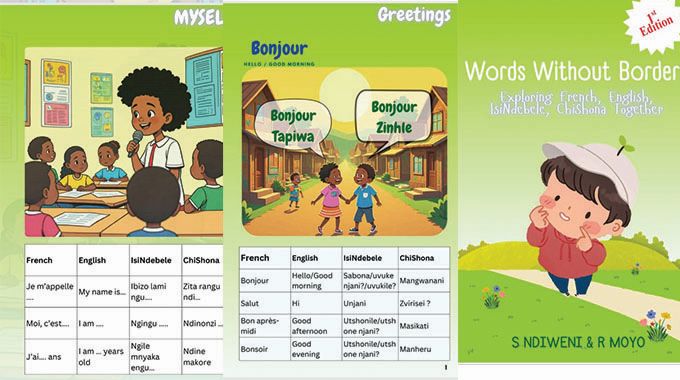
Imagine a child opening a single book and discovering how to greet someone, identify everyday objects or express simple ideas in French, English, IsiNdebele and ChiShona – all on the same page.
That is the vision behind Words Without Borders: Exploring French, English, IsiNdebele and ChiShona Together, a new multilingual educational book that is helping bridge language barriers while celebrating Zimbabwe’s rich linguistic diversity.
Co-authored by Sindiswa Ndiweni and Rosely Moyo, the beginner-friendly publication introduces common words and everyday phrases through simple comparison tables, making it easy for children to learn four languages side by side.
Designed primarily for primary school learners, the book is also proving to be a valuable resource for parents, teachers and anyone eager to explore new languages while gaining a deeper appreciation of Zimbabwe’s multicultural identity.
Lead author Ndiweni said the project was inspired by the growing number of Zimbabwean primary schools introducing French into their curriculum, despite a shortage of learning materials tailored to young pupils.
“This multilingual word book was designed specifically for primary school children. French was introduced into primary schools recently and many schools have embraced it, but there’s a shortage of resources suitable for learners of that age.
“We wanted to provide a book that is written within the context of the learners and addresses that gap,” Ndiweni said.
For Ndiweni, a Foreign Language Instructor at Lupane State University, the choice of French, English, IsiNdebele and ChiShona reflects the linguistic reality of everyday life in Zimbabwe.
“Most Zimbabwean children are already navigating two or three languages every day. At home they may speak IsiNdebele, ChiShona or another indigenous language, while at school they use English and, increasingly, French. By placing these languages side by side, we are validating the code-switching that children already do naturally.”
She believes giving indigenous languages equal prominence alongside English and French sends an important message to young learners.
“English is often the language of examinations and official communication. By giving IsiNdebele and ChiShona equal space alongside English and French, we’re telling learners that their mother tongue also belongs in academic spaces.
It builds confidence, identity and pride.”
The authors also recognised another challenge: many parents wanted to support their children’s learning, but lacked any knowledge of French.
“We realised that parents were being left out of the learning process. Learning involves the learner, the teacher and the parent. Parents often assist with homework, but when it comes to French, many of them cannot help because they don’t know the language. This book allows them to learn alongside their children.”

Creating the book was no small task. The authors spent around 10 months researching, compiling and refining the publication, carefully selecting vocabulary that would be both age-appropriate and easy for young learners to understand.
“We had to carefully select content that was age-appropriate while making sure every translation reflected the correct meaning and context for children,” Ndiweni said.
Beyond teaching vocabulary, the book encourages children to embrace different cultures and appreciate the power of communication.
Ndiweni said the title Words Without Borders reflects the publication’s deeper purpose.
“Words cross cultural and geographical borders. Language brings people together regardless of their background. We want children to understand from an early age that learning another language helps them make friends across cultures, appreciate different traditions and become respectful and tolerant global citizens.”
She dedicated the book to what she describes as “the young explorers of languages” – children who will one day build friendships and understanding through kindness, respect and communication.
The response from educators has been overwhelmingly encouraging.
“Most French teachers who’ve seen the book are excited because it provides a valuable classroom resource. Parents who’ve bought copies are grateful because they finally have something practical to use when helping their children with homework. What has stood out most is the relevance of the book.”
The publication is only the beginning of Ndiweni’s broader vision.
“I’m already working on more multilingual educational resources, and I hope to release them in the near future.”
Ndiweni, who previously lectured French and Portuguese at Hillside Teachers College for 14 years before joining
Lupane State University, believes the collaboration with Moyo has produced more than just another educational publication.
Together, the two educators hope Words Without Borders will become a bridge that connects cultures, nurtures multilingualism and inspires a new generation of confident, curious learners ready to engage with the world beyond Zimbabwe’s borders.
Co-author Rosely Moyo, an accomplished educator and author of IsiNdebele educational textbooks, shares that vision. With extensive experience in indigenous language curriculum development, she believes preserving Zimbabwe’s local languages while exposing learners to international ones is essential in preparing children for an increasingly connected world.