admin
admin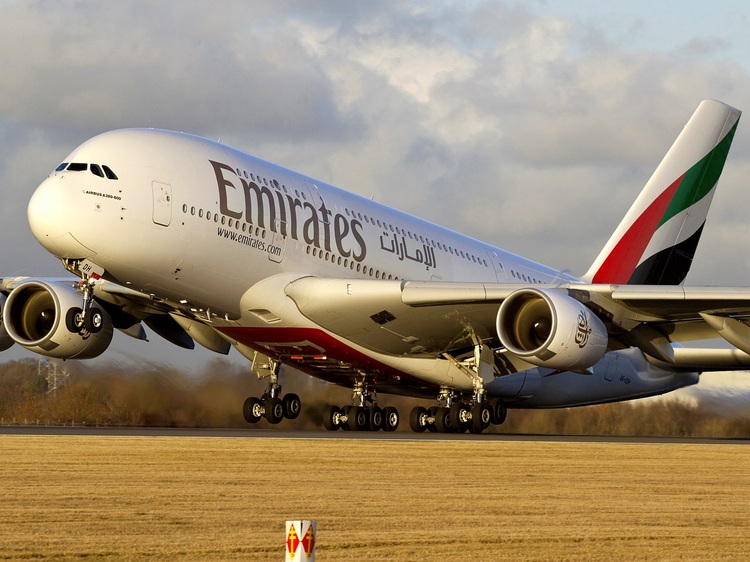
Business Reporter
DUBAI-based Emirates will replace the Airbus A340-300 aircraft that has been plying the Zimbabwe-Zambia route with a larger Boeing 777-300ER.
The new carrier that will offer an additional 97 Economy Class seats per flight will start plying the route from February 1 as the airline seeks to cater for expanding human traffic.
The aircraft will have eight private suites in First Class, 42 lie-flat seats in Business Class and 310 “spacious” seats in Economy Class.
Emirates’ First Class private suites have electrically operated doors to ensure privacy, a flat bed, a mini-bar and a work desk while Business Class features sleeperettes.
“As Emirates we are constantly seeking ways to enhance our services, and the upgauge to the Boeing 777-300ER on the Lusaka-Harare route is part of our commitment to offer Zambian and Zimbabwean travellers even more comfort and entertainment on our daily service,” said Orhan Abbas, Emirates Senior Vice President, Commercial Operations, Latin America, Central and Southern Africa.
“In addition to the enhanced on-board product, we are also able to offer more seats, ensuring capacity to meet growing demand on the route, not just outbound from Zimbabwe and Zambia, but also inbound from the United States, UK and Australia, as we continue to build and strengthen trade and tourism links between Zimbabwe and Zambia with markets in the rest of Emirates’ extensive global network, through seamless and convenient connections via our Dubai hub,” he said.
It is believed that popular destinations for both Zambian and Zimbabwean travellers include Dubai, London, Beijing, New York, Hong Kong, Manchester and Delhi.
With 155 Boeing 777s in service and a further 190 on order, the aircraft is considered as the backbone of the Emirates fleet.
The deployment of the aircraft on the Lusaka and Harare route also makes Emirates’ southern Africa network an all Boeing 777 operation, with flights to Durban, Cape Town and Johannesburg in South Africa, and Luanda in Angola, highlighting the importance of the region with a growing and vibrant tourism and business sector.
Businesses and traders will benefit from the aircraft’s larger belly-hold to carry cargo as it offers 23 tonnes of capacity per flight to support the two countries’ vegetables and flowers’ exports as well as imports ranging from pharmaceuticals to mining equipment.



 Online Reporter