
Herald Reporter
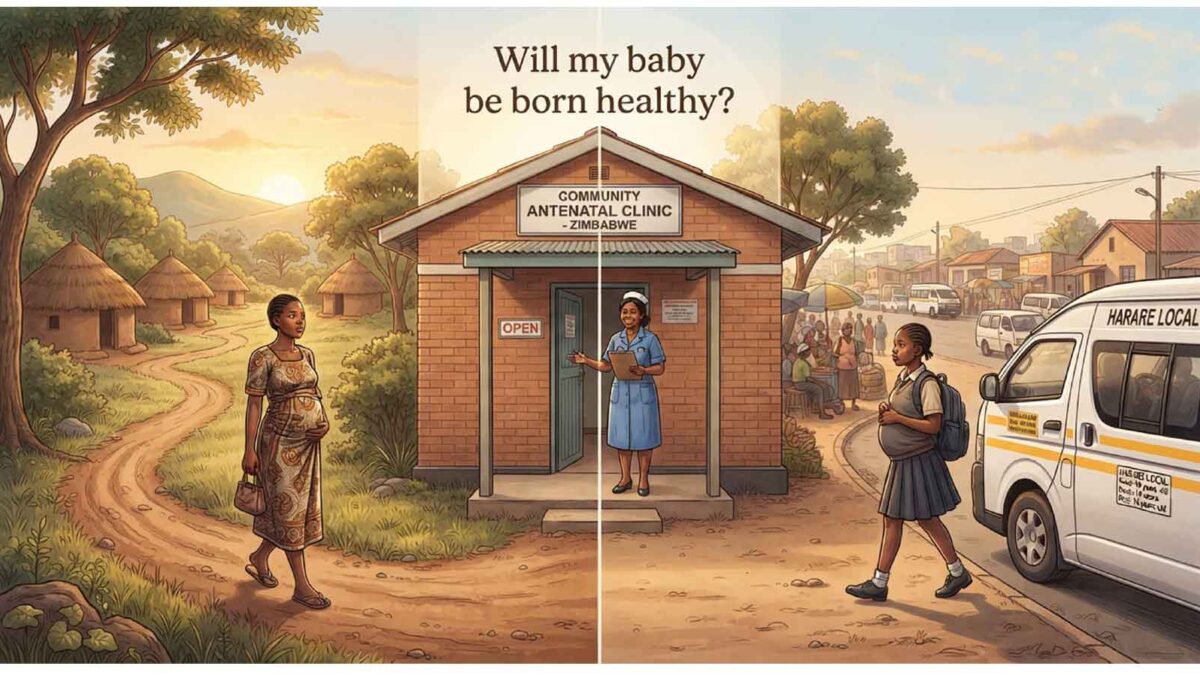
Every morning, somewhere in Zimbabwe, a young mother walks into a clinic for her antenatal booking. She may be 19, or she may be 14. She may have walked two hours from a rural village, or she may have taken a kombi from a crowded suburb. She carries with her the weight of a question no pregnant woman should have to ask: Will my baby be born healthy?
For thousands of Zimbabwean women, that question now has a more hopeful answer than it did a decade ago. But as health officials, development partners and community workers gathered in Harare this week for the fourth National Validation Committee meeting, the message was clear: the finish line is in sight, but the last mile is the hardest.
Zimbabwe is intensifying its drive to eliminate mother-to-child transmission of three preventable infections — HIV, syphilis and Hepatitis B — under a WHO-backed “Triple Elimination” programme.
The country is preparing for validation, a rigorous process that would certify that it has met global thresholds for protecting newborns from these diseases.
Health and Child Care Minister Dr Douglas Mombeshora opened the meeting with a note of both pride and urgency.
“Convening like this is a milestone moment, and a huge testament to our collective commitment to safeguarding the health and future of our mothers and children in Zimbabwe,” he said.
The numbers tell a story of real progress. Antenatal care coverage rose from 84 percent in 2025 to 90 percent in the first half of 2026. Syphilis testing, once near-universal at 95 percent, has slipped to 86 percent due to disruptions in the supply of dual HIV/syphilis test kits. Hepatitis B screening, meanwhile, remains critically low — just 20 percent of pregnant women, against a national target of 90 percent.
But beneath the aggregate figures lies a more troubling reality. Between January and June 2026, 704 antenatal bookings were recorded among girls aged 10 to 14.
Nearly half of all pregnancies during the period were among adolescent girls and young women.
The minister did not mince words. The data, he said, “highlights the urgent need to strengthen adolescent-friendly health services, community engagement, comprehensive sexuality education, and multi-sectoral interventions aimed at protecting vulnerable girls and preventing new HIV infections.”
For a 13-year-old girl in rural Zimbabwe, the barriers are not just medical. They are social, economic and cultural. A clinic that is not youth-friendly, a community that stigmatises teenage pregnancy, a school that excludes pregnant learners — these are the real frontiers of the elimination agenda.
Perhaps the most sobering statistic presented at the meeting came from UNICEF Country Representative Ms Etona Ekole.
An estimated 61 000 children aged 0 to 14 were living with HIV in Zimbabwe in 2025. Only about 33 000 — 54 percent — were receiving antiretroviral treatment.
“Every one of these numbers is a child,” Ms Ekole said. “A child who may not know their HIV status. A child not yet on treatment. A child at risk of illness and death that we know how to prevent.”
Zimbabwe has achieved 92 percent antiretroviral treatment coverage among pregnant women living with HIV — a remarkable feat. But the mother-to-child transmission rate remains around 6.5 percent, above the elimination threshold of less than five percent.
“We must support pregnant and breastfeeding mothers to stay on treatment and remain virally suppressed, strengthen follow-up throughout breastfeeding and close every gap across the mother-baby continuum of care,” Ms Ekole urged.
While HIV and syphilis programmes have seen significant gains, Hepatitis B remains the weak link in the triple elimination strategy. WHO Officer-in-Charge Dr Najibullah Safi acknowledged the gap.
“While significant gains have been made in the prevention of HIV and syphilis, progress on Hepatitis B continues to lag despite the availability of highly effective interventions,” he said.
The Government is pushing to expand Hepatitis B screening in antenatal care and introduce birth-dose vaccination. With UNICEF support, 45 healthcare workers in Masvingo Province were recently trained in Hepatitis B testing and management.
The National AIDS Council has procured Tenofovir Disoproxil Fumarate (TDF) for managing Hepatitis B-positive, HIV-negative pregnant women.
But funding constraints have limited the pace of roll-out. Pre-validation assessments have been conducted in only four provinces — Mashonaland Central, Mashonaland West, Midlands and Bulawayo Metropolitan — since the previous committee meeting in July.
What emerged most clearly from the meeting is that elimination cannot be achieved by health facilities alone. It requires communities to own the agenda.
“The achievement of EMTCT targets cannot be realised by relying only on our healthcare workers in facilities; it requires active community participation, ownership and engagement,” Dr Mombeshora said.
The National AIDS Council, represented by communications director Mr Trust Govere on behalf of CEO Dr Bernard Madzima, pledged to continue supporting young mentor mothers, male mobilisers, community health workers and peer support structures. These are the people who walk alongside pregnant women, reminding them to book early, to stay on treatment, to bring their babies for follow-up.
“Reliable evidence remains indispensable for validating progress and identifying populations and geographic areas requiring additional support,” Dr Madzima said. For UNAIDS Country Representative Mr Trouble Chikoko, validation is not a final destination but a check-point on a longer journey.
“Validation is not the finish line. It is an opportunity to strengthen integration, close remaining gaps, reach the last mile, and ensure that every mother and every child can access essential services, regardless of where they live,” he said.
That “regardless of where they live” is the crux of the challenge. Between the 90 percent who attend ante-natal care and the 10 percent who do not, between the 92 percent of mothers on treatment and the 54 per-cent of children on it, between the 90 percent screening target for Hepatitis B and the 20 percent reality — there are lives, stories, futures.
Zimbabwe’s journey toward triple elimination is, at its heart, a story about the distance between a policy and a person. It is measured not only in percentages and targets, but in the health of a newborn in Binga, the future of a teenage mother in Mutare, the life of a child in Gokwe who may never know they were born with a virus that could have been prevented.
The committee will meet again. The validation process will continue. And somewhere, a mother will walk into a clinic, hoping for the best. The work of ensuring that hope is not misplaced — that her child is born free — is the work that lies ahead.