Online Reporter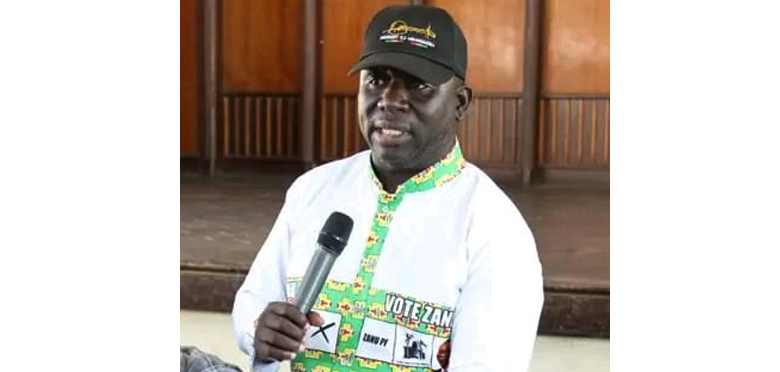
AT one point in 2013, he was expelled from the party for alleged indiscipline and spent four years in the wilderness.
He made a comeback courtesy of Operation Restore Legacy in 2017, resuming his previous position as ZANU PF Manicaland provincial Youth League chairman, and led the league until mid-2022, when the age cap made way for him to transition to mainstream politics.
He contested the provincial elections, which propelled him to the vice chairmanship of the provincial executive main wing.
When his predecessor, Cde Mike Madiro, sought to graduate to the Central Committee in the same year, Cde Tawanda Mukodza was thrusted into the leadership role in an acting capacity. Faced with initial doubts and pessimism, he defied expectations and achieved unexpected success. He inherited a deeply divided province, and with the crucial 2023 harmonised elections lingering in the horizon, he introduced an open-door and all-embracing policy that helped to promote unity within the party ranks. The strategy propelled the party to a resounding victory in the 2023 elections, with the party winning 22 out of 26 constituencies. President Mnangagwa won an additional 50 000 votes in Manicaland, a first in the province’s history.
Following this impressive performance, Cde Mukodza was voted as the substantive Manicaland provincial chairman. Since then, he has driven the party from one success story to another. Under his leadership, the party was elected to host this year’s ZANU PF 22nd National People’s Conference, which started on Monday, and regarded as one of the best and most seamlessly organised.
The Manica Post News Editor (SK) Samuel Kadungure caught up with Cde Mukodza (TM) in a wide-ranging interview on Wednesday.
Below are excerpts from the interview:
SK: Welcome, chairman. How are you?
TM: I am well, my brother. I am really happy about our successful hosting of the 22nd National People’s Conference in Mutare. I would also like to acknowledge the positive support from the Zimpapers stable, particularly The Manica Post.
SK: Can you share with our readers and delegates at this conference – who is Tawanda Mukodza?
TM: I am a young man born in March 1978 at Sakubva District Hospital to war veteran parents. I did my primary education at Mutanda Primary School and secondary education at St Joseph’s Secondary School in Sakubva, Mutare.
I did my A-Levels at St Dominic’s High, after which I completed a Diploma in Education at Mutare Teachers’ College. However, I never pursued a teaching career. Instead, I joined Mutare City Council in 1998 as a metre reader in the accounts department.
SK: When did your political journey start, and what triggered you to join politics in the first place?
TM: I started my involvement in politics at high school in 1993, after being recruited by Cdes Chikwanha and Moses Mvenge in Sakubva, A Jongwe Ririkurira District. I began at branch level and by 1995, I had risen to become the party’s district chairman. From there, in 1996, when Cde Mike Madiro was reassigned to Manicaland as part of an interim executive to run the province’s affairs, I started working closely with him. During that time, there were some issues between the late Cdes Shadreck Beta and Kumbirai Kangai.
When an opportunity arose in the provincial youth executive, I was co-opted alongside Cdes Mubuso Chinguno and Felistas Dumba – I was the deputy secretary for legal affairs. In 2004, I rose through the ranks to become the deputy secretary for administration, working under Cde Tapiwa Zengeya for five years. In 2008, the party implemented the youth age limit policy.
In the executive, the only actual youths were Cdes Chinguno, Dumba, and myself. I later contested for the provincial youth chairmanship and won. I served as chairperson until 2012, when I was expelled from the party for alleged indiscipline. The charges were unfounded, but the real issue stemmed from a rift with Cdes Didymus Mutasa and Kudzi Chipanga. I was given a task I refused to execute, which led to my expulsion. I was labelled a dissident and referred to as a chipfukuto by Cde Mutasa. A conference was held in Gweru, where youths were allegedly bribed to pass a vote of no confidence against me. I resisted, but it did not change the outcome. I remained out of favour from 2013 to 2017, effectively a nobody, although I remained active in politics.
Fast forward to 2017, Operation Restore Legacy came. I made a Press statement after being told the structure would remain as it was from 2013. I took charge, becoming very active before former President, Cde Robert Mugabe handed over power. I led the youth league, taking over from Cde Kelvin Manyengavana, who had succeeded Cde Mubuso Chinguno. I had previously served in this role from 2013, and the party directed me to resume my position. I ran the youth league until 2022, when I was elected vice-chairman of the main wing due to my experience and growth within the system. When my predecessor (Cde Madiro) moved to the Central Committee, I acted as provincial chairman for about a year.
After working tirelessly to ensure the President’s victory in the 2023 harmonised elections, and gained an extra 50 000 votes, I was elected as the substantive chairman of the party in November 2023, a position I hold to date.
SK: What are some of the key achievements you have championed or advocated for throughout your political career?
TM: As youths, we championed the indigenisation and empowerment policy, which greatly benefited many young people. We advocated for youth empowerment, quota system allocation of farmland, and increased representation of youths in positions of authority. I am proud to say we made significant strides in this area. During my time, we saw young people being elected as MPs, councillors, and assuming influential roles in the party.
The party’s future is indeed invested in the Youth League. Our leadership, under President Mnangagwa, trusts young people. This is evident in the youthful composition of provincial chairpersons. Most are under 50, indicating a bright future for the party. Youths are assuming pivotal positions, and with the age limit in place, they will increasingly take on more prominent roles in mainstream politics. This will undoubtedly lead to competition, but it is essential to balance ambition with discipline and respect for the party leadership.
SK: After your expulsion from the party during Cde Mutasa’s time, you spent several years in the political wilderness. What key lessons did you learn during that challenging period, and how did they influence your growth as a leader?
TM: To be honest, being outside ZANU PF was a harsh experience. It taught me that party loyalty is paramount. Although I had established small businesses, I could not afford to ignore party activities.
The experience toughened me, and I learnt the importance of discipline. I realised that even if I disagreed with a decision, I had to respect the leadership’s authority. After being advised to sit back, relax, and attend party programmes, I did so, awaiting the suspension period to end. That period taught me valuable lessons about loyalty, discipline, and perseverance.
SK: How would you assess the current state of the party at the provincial level since taking over, and how does it compare to when you first assumed leadership?
TM: Personally, I believe we have made significant progress in organising the party and fostering unity. The province was previously divided, but we have brought together diverse perspectives and created a cohesive team. We have established tangible grassroots structures that can be verified by the party at any time. Additionally, we have made strides in developing a new party office on a site identified by the leadership. Spearheading the construction of the party new offices, and eventually achieving this will be a dream come true, and a notable highlight of my tenure as provincial chairman.
SK: Looking ahead, what direction do you envision for ZANU PF in Manicaland, and what steps will you take to get there?
TM: Moving forward, I envision the party modernising and rejuvenating itself by empowering young and competitive individuals to take on positions of authority, particularly within our level. We need to give young turks opportunities to learn and grow, allowing them to gain valuable experience under the tutelage of the old guard. As the saying goes – a herd without a young one perishes. Also by decentralising ideological teachings to each administrative district and providing regular training, we can strengthen the party’s foundation and ensure its longevity. This approach will enable us to build a robust and sustainable future for the party.
Regarding constituencies currently held by the opposition, I plan to reclaim them by adopting a tailored approach. In urban areas, past campaigns have been ineffective due to lack of understanding urban dynamics. To succeed, we need to modernise our approach, focusing on issues that resonate with urbanites and utilising strategies that work for them. This requires a different template and significant resources. We need to campaign aggressively, targeting voters during non-traditional hours, such as overnight, and mobilising dedicated activists who can work around the clock. By adjusting our strategy and allocating the necessary resources, I am confident we can overcome the challenges and reclaim these seats.
SK: Can you highlight some of the notable projects that have been successfully implemented in Manicaland under your leadership, and what upcoming projects are you looking forward to?
TM: We have had several projects implemented by the Government that we raised during our party platforms, and we are pleased with the progress.
We requested the President to facilitate the rehabilitation of key roads in Manicaland, such as the Chipinge-Mt Selinda Road and the Birchenough-Murambinda Road, which have seen over 20km of work completed. Additionally, the Binya Road in Nyanga and the Odzi-Marange Road leading to the Johane Marange Shrine are currently under construction. In Chimanimani, most roads damaged by Cyclone Idai have been rehabilitated, improving the economic outlook and facilitating trade and movement for local communities.
The President has also empowered war veterans, women, and youth leagues with tractors, enhancing food security and economic stability. Furthermore, our people are benefiting from the mining sector, generating income and improving their livelihoods. These achievements demonstrate the party’s commitment to empowering citizens and driving economic growth.
SK: As the host of the 22nd National People’s Conference, can you share your thoughts on the significance of this event, and the preparations that have gone into making it a success? What challenges did you face, and how did you overcome them to ensure a smooth and productive conference?
TM: Hosting the 22nd National People’s Conference has been a hectic and challenging experience, but we are humbled by the achievement as a province. We feel honoured to have had the opportunity to host this event, and we learnt valuable lessons in the process. High-level events like this require meticulous organisation to meet expected standards, as well as unity among the executive, party, and Government. Compared to previous conferences, I believe this one stands out in terms of organisational structures and infrastructure development. The Mutare Polytechnic Pavilion grounds, for instance, have been transformed with permanent developments that will benefit Mutare and Manicaland. We have ensured that our hosting leaves a lasting legacy, with improvements including electricity, water, security fencing, compacted grounds, WiFi, boreholes, solar power, and tarred roads, making future plans more feasible.
SK: What are your thoughts on Resolution Number One, which seeks to extend the Presidential term to beyond 2030, and how do you see it impacting Zimbabwe’s political landscape?
TM: Resolution Number One is a reflection of the party’s grassroots sentiments. We gathered resolutions from various districts across the province, and the people overwhelmingly supported extending the President’s term of office to 2030 and beyond. Many were following up on a similar resolution passed last year, and wondered why it had not been implemented yet. They questioned the delay in implementing their resolution.
As a mere messenger, I am simply conveying the people’s sentiments. Manicaland structures have endorsed Resolution Number One, and are demanding its immediate implementation. Some detractors claim I am imposing my will, but they are merely opposition elements and enemies of the party. The resolutions came from the grassroots, and in ZANU PF, the majority rules. As for my relationships with other leaders, I believe in dynamic and diverse leadership, where we learn every day, and consult with those above and below us. A good leader must listen to everyone and adapt. In politics, one must be able to navigate complex situations.
SK: How do you plan to influence the implementation of the resolutions passed by the Manicaland structures and grassroots, particularly on extending the Presidential term beyond 2030?
TM: That is where the party leadership comes in, my brother.
The leadership at various levels will ensure the people’s voice is heard, and as the President often says – The voice of the people is the voice of God. I am confident the party leadership will implement this resolution, as it is their mandate to do so.