
Rutendo Gwatidzo
Changing Perspectives
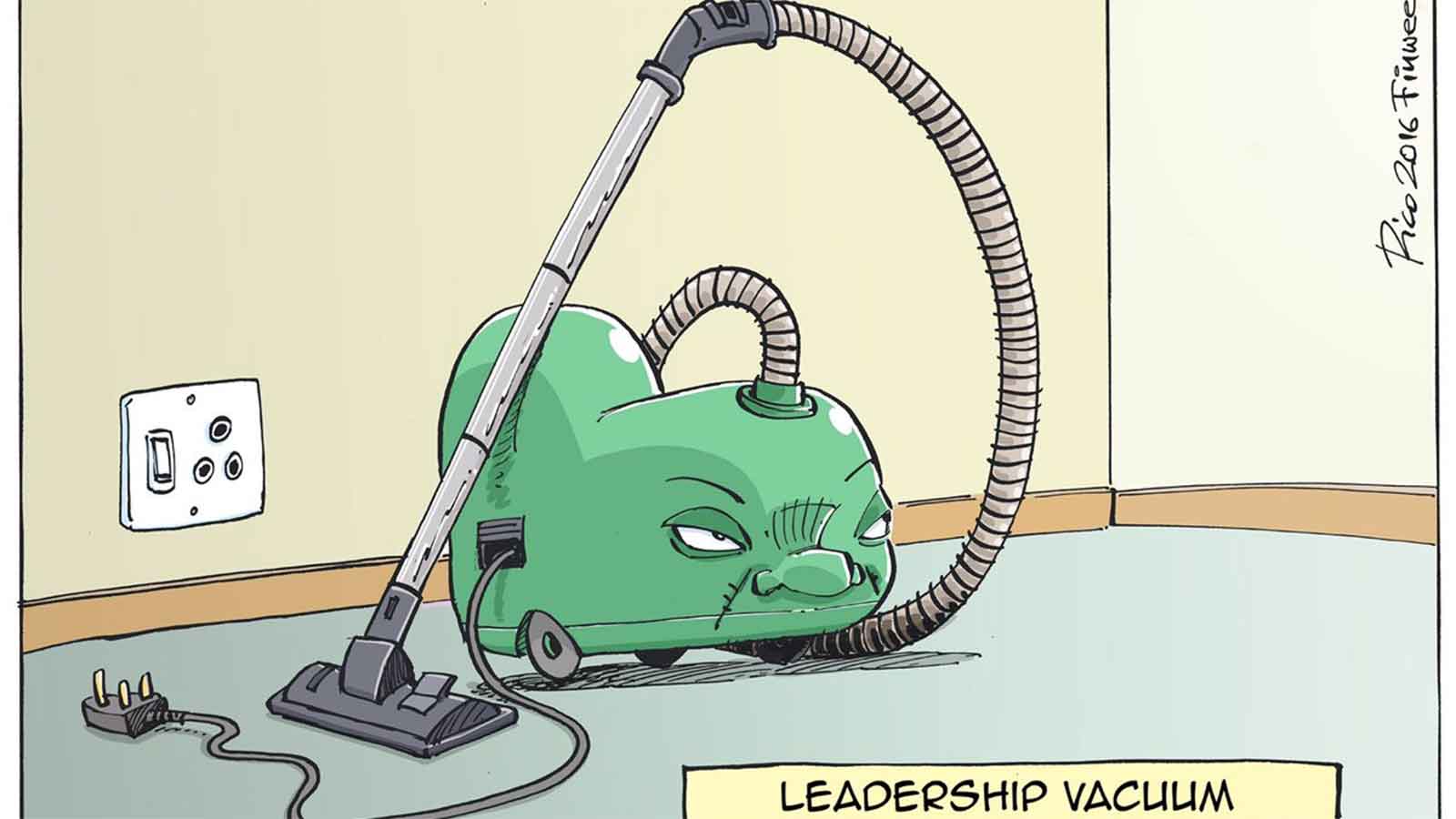
“The greatest danger to an organisation is not the absence of people. It is the absence of people willing to lead.” The leadership vacuum comes when everyone waits for someone else.
It was a Monday morning. The meeting had been scheduled for 9am. By 9:30am, the boardroom was full. Departmental heads sat around the table discussing the same problem they had discussed for months. Sales were declining. Customer complaints were increasing. Staff morale was falling. Everyone agreed something had to be done.
For two hours, ideas filled the room. People identified problems, analysed reports and debated possible solutions. As the meeting drew to a close, the managing director asked a simple question: “Who will take ownership of this?” The room fell silent.
Moments earlier, everyone had an opinion. Now, nobody wanted responsibility. One manager looked at another. Another suggested waiting for head office. Someone proposed forming another committee. Another recommended bringing in consultants. Eventually, the meeting ended exactly where it had begun. Nothing changed.
As employees left the room, one elderly administrator quietly whispered, “The problem is not that we don’t know what to do. The problem is that everyone is waiting for someone else to do it.”
That statement captures one of the greatest dangers facing organisations today — the leadership vacuum.
The School That Waited Too Long
A rural school had one broken classroom roof. During the rainy season, teachers moved learners from one room to another to avoid the leaks. Everyone agreed the roof needed urgent attention. The headmaster assumed the district office would provide funds. The district office assumed the school development committee would mobilise resources.
The committee believed the parents should take the initiative. Parents expected Government intervention. Months became years. The roof deteriorated until an entire classroom became unusable. The tragedy was not the broken roof. The tragedy was that everyone was waiting for someone else to act.
Leadership vacuums rarely begin with bad intentions. They begin when responsibility becomes everybody’s job and, consequently, nobody’s responsibility.
The Young Graduate Who Refused to Wait
A young graduate joined a large organisation as an intern. He noticed that customer files were poorly organised, making it difficult for employees to retrieve important information quickly. He had no authority to change the system, but instead of complaining, he created a simple filing index during his spare time and shared the idea with his supervisor. The supervisor adopted it and other departments copied it.
Within months, customer service had improved significantly. Years later, when the young man was promoted into senior leadership, the chief executive officer reminded everyone of that simple initiative. “He started leading long before he received a leadership title.” That is the difference between position and leadership. Leadership is not something you receive, it is something you demonstrate.
Leadership Begins Before the Title
One of the greatest misconceptions in the workplace is that leadership belongs only to people with impressive job titles. Yet, leadership begins the moment someone chooses responsibility over excuses. It begins when an employee solves a problem without being asked. It begins when a supervisor develops a struggling team member instead of criticising them. It begins when someone has the courage to speak up respectfully because the organisation deserves better.
John C Maxwell writes in The 21 Irrefutable Laws of Leadership; “Leadership is influence, nothing more, nothing less.” Influence is not determined by position but, it is earned through action.
When accountability weakens, mediocrity becomes normal. When courageous decisions are delayed, problems grow larger. Leadership vacuums are dangerous because they rarely remain empty for long. Someone or something will always fill the space. The question is whether it will be purpose or politics, courage or fear, accountability or excuses.
Great Leaders Create More Leaders
Perhaps the greatest responsibility of leadership is ensuring that leadership never depends on one person. Organisations become resilient when people at every level are empowered to think, contribute and solve problems.
In his book Leaders Eat Last, Simon Sinek reminds us that great leaders create environments where people feel safe to step forward, take responsibility and support one another. That, is how organisations continue thriving long after individual leaders have moved on.
As the African proverb wisely says, “When the roots are deep, there is no reason to fear the wind.” Organisations with strong leadership at every level remain steady even during uncertainty.
Food for thought
Every workplace faces moments when someone must take the first step.
Someone must make the difficult phone call, resolve the conflict, challenge the outdated process, encourage the discouraged colleague. Someone must choose action over endless discussion. The question is simple. Why shouldn’t that someone be you? Leadership belongs to people who refuse to stand by while opportunities are lost and problems grow. Because history is rarely changed by people who waited for someone else. It is changed by ordinary men and women who looked at a leadership vacuum and quietly said, “If no one else will lead, I will.”
Rutendo Gwatidzo is a human capital executive and managing consultant at The HUB HR Consultancy. She is a multi-Award winning leader, transformational speaker and coach. She is also the author of Born to Fight and Breaking the Silence books. Contact details – 0714575805/ [email protected] / Rutendo Gwatidzo_Official FB public page.