admin
adminchallenge for Zimbabwe.
After all we had attained independence in 1980, with such an enlightened leadership across the board, from politics, business, and academia to religion and sport.
The conventional thinking was that we had learned great lessons from the experiences and challenges faced by our northern neighbours who had attained independence earlier; that we would not make the same mistakes? Alas! It would appear we have not learned much?
Recent events, from the Prime Minister’s sex-escapades, business and corporate indiscipline, malfeasance and graft, to stymied business and economic activity, with an apparent lack of administrative and management inertia to move the nation forward, have brought to the fore, serious and deep-rooted questions over the country’s future.
With all the vexatious challenges that the nation is facing, what promise do we find in the new emerging generation of leaders in Zimbabwe? In times like this, I truly miss my hero, Simon Vengesai Muzenda, the late Vice President and national hero of Zimbabwe.
To many of us, the late Simon Muzenda, truly encapsulated the “Soul of the Nation” as he modelled a unique and yet true brand of servant leadership. Affable, unassuming, accessible, humble, quick-to-listen and slow-to-anger, decisive, principled and yet visionary, oh you can go on and on.
To be sure we have enjoyed peace and stability, that when compared to most states in Africa has resulted in significant economic and social development, thanks to the principle-centred, inspired, courageous and visionary leadership of President Mugabe.
The concern, however, is what happens now and in the future as this crop of our nationalist leaders who had as their guiding principles, vision, dedication and commitment, courage, integrity, initiative and creativity pass on the baton to the new generation of leaders?
It is apparent to me that these essential attributes of good leadership, not least honesty and personal integrity, have become too elusive to the young people aspiring to positions of leadership, in politics as in business. This is quite a worrisome development indeed.
Examples abound of lack of vision, initiative, creativity and innovation, commitment and dedication across the whole gamut of public affairs in Zimbabwe, that we are caught in a cauldron of near paralysis, in terms of policy initiative and administrative efficiency.
An example, from my vantage point as an industrialist, in view of the humongous challenges facing the manufacturing sector, is the lack of creative thinking and policy initiative from relevant institutions, in the face of wholesale erosion of price-competitiveness on locally manufactured goods due to an invasion of cheap imports.
Most affected examples include the textile industries (clothing), shoe manufacturers, food and beverages that have struggled to compete with cheap imports. In the face of unfair competition from outside, local manufacturers have cut production and shed jobs.
Price, it is agreed, is not the only equation. But I am at a loss as to what leadership, in terms of policy initiatives and innovation, the Ministry of Industry and Trade, has offered in the face of such an onslaught. The Ministry of Finance too! And how about all the representative and professional bodies of commerce and industry who ought to be concerned with matters of good corporate governance?
The question then arises; what are we doing to make it less difficult for business, industry in particular, to operate in Zimbabwe?
I know only too well, that in politics as in business, there is dishonesty and deception. But as a nation we appear to be going beyond the limits. At some point we all ought to accept responsibility and blame even. The core fundamental principles of leadership, vision, fairness, justice, honesty, trust, integrity and ethical conduct have become elusive. The character issue has come so much into question. The emerging crop of leaders make true the words of Erich Fromm, who in his study of the personality ethic observed the tendency in people today, and unfortunately leaders, “whose meaningless chatter has replaced communicative speech, whose synthetic smile has replaced genuine laughter, whose dull despair has taken the place of genuine pain . . .”
I worked on No. 4 Blast Furnace Ziscosteel when I was employed by an English company Dorman Long Ltd. Personally, I have come to know that in life there are sequential stages of growth, with every step as important. There are no shortcuts. You cannot skip any step. When I got into business, that is when I started Trinity Engineering in Kwekwe in 1975, I had only one welding machine and oxy-acetylene gas bottles.
My initial contracts were within ZiscoSteel working on New Rod Mill, The White House or New Conty Cast New Mill. Today, Trinity Engineering boasts of an ultra-modern workshop with perhaps the biggest press-brake in the whole region of Southern Africa. To me therefore, as many others in Redcliff, Kwekwe and Gweru, whose lives evolved around ZiscoSteel, the steelworks are as crucial to Zimbabwe as the waters of the Zambezi River. It is a national asset over which we cannot afford to blink.
Anyway, back to leadership issues, to the late Vice President Muzenda. In the early eighties, I won a huge tender to do work for the national army.
However, certain powerful and important people in the army were not convinced that I had the capacity to acquit. I should not have been granted the tender therefore. They went as far as asking the Prime Minister “The President” to cancel the tender but he refused.
The late Vice President Muzenda was a man of integrity, a man of his word. What he promised he delivered. When he took a decision he stood by it. He would not say one thing and mean the other. Way back in the early eighties, I was caught up in a complex situation where two big companies who were my suppliers, sought to attach one of Trinity Engineering’s most valued pieces of equipment, the Hatebur 250 ton press brake. This was after a client had defaulted on payment for a huge order of trailers that we had manufactured for them.
Faced with such a dilemma, where the client was not paying while suppliers were baying for my equipment, I approached the late Vice President Muzenda for Government assistance in the face of what I felt was a ploy to dispossess me of the Hatebur press brake, the only one of its type in the country, which I had only just imported from Switzerland.
All I needed was time to pay. I, however, met him at a time when he was due to go somewhere. He advised that I seek audience with the then Prime Minister, the Honourable Robert Mugabe. If this failed he would attend to my case on his return.
I went to see the Prime Minister, I pleaded with his then Principal Private Secretary who was very reluctant for me to see The Prime Minister. In the end he asked me to wait and after a while I was allowed in. When the Prime Minister received me at his office at his Munhumutapa office, it was with such disarming humility, grace and empathy.
He patiently listened to my case. Also present at that meeting were the late national hero Maurice Nyagumbo and Enos Nkala who was Minister of Finance then.
I explained my case for some time and when I stopped, I was asked a few questions and after the questions I was told to wait at some place, but I did see the Minister of Industry Cde Kumbirai Kangai was called in and the late Minister of Trade and Commerce was also called in.
After they had discussed among themselves, I was told to go to Minister Kangai’s office. When Minister Kangai got back to his office, all he said to me was, “here is my hot-line number, go back to your office and if you have any problem, phone”. I said, “but” — He said, “No Buts, just go”. When I got back to my workshop in Auckland Road, I found three Managing Directors of the companies waiting for me. They all pleaded, “we will give you time and if you cannot pay, we will cancel the debt”. I said, “No, I will pay what I owe you, just give me time”.
The kind of leadership we yearn for, young people and others in leadership please note, is visionary, responsive, proactive, innovative, sensitive, results-oriented, committed, dedicated and principled. No less. In any case, if you lack these attributes, particularly the character issue, then you will not be successful, an effective and successful leader, more so if you cannot articulate your vision and ideas.
When the great Renaissance diplomat Niccolo Machiavelli wrote that “Any man who tries to be good all the time is bound to come to ruin among the great number who are not good,” he certainly did not have Zimbabwe in mind. But how true this statement rings of our society today?
Trinity Engineering has obviously been as affected by the current economic condition as most others in the manufacturing sector with the negative effects of European Union and United States economic sanctions compounding the exogenous challenges prevailing. When one of our creditors closed in on us recently, I was shocked to see the kind of people that had formed a long queue to take over. These are people one would have naively hoped would be sympathetic and would assist with a bail out. Not so!
I am engaged in an unprecedented and costly legal action against the EU sanctions on Zimbabwe. True, it is my personal initiative out of a personal conviction that the sanctions are a set of misplaced tough measures that have negatively impacted on the entire socio-economic fabric of this nation leading to immense social distress. I have never sought anyone’s approval of my actions as I believe that my challenge to the EU is right.
But surely I would have hoped for moral support from across the board, not least the corporates, who are finding the current economic condition extremely vexatious. Unfortunately it has not been so! Most of the political and business leadership have shied away from open support of my case to the extent some have gone so far as to label me “delusional” for pursuing what they dismiss as a futile action.
But true of a principled leader, only the state President, His Excellency President Mugabe, has supported me in pursuing my case against the EU, even though, belatedly, the Office of the Attorney General has found it necessary to contest the EU sanctions.
The point I am making is that we have become like a nation of vultures, where the work ethic has been discarded. We are looking for the easy life where we prey on the hard work of others, without any scruples or sense of shame.
Near primitive consumption has become the order of the day. People aspire to leadership now only so they can feather their own nests. The greater national good is now of no meaning.
Some public officials, including those leading parastatals and other quasi-government institutions, are carrying around bloated egos, without even the simple courtesy to respond to or return telephone calls. Such ivory tower aloofness, pride and arrogance in public service do not bode well for effective, results-oriented and pro-active leadership.
Will we ever see the rise of such great patriots of the likes of Herbert Chitepo, who even though he had great power of intellect, and who as an eloquent and gifted as great lawyer, he purposed to serve the greater good, and died for it, where he would have pursued a highly lucrative and personally rewarding career path? Only time will tell!
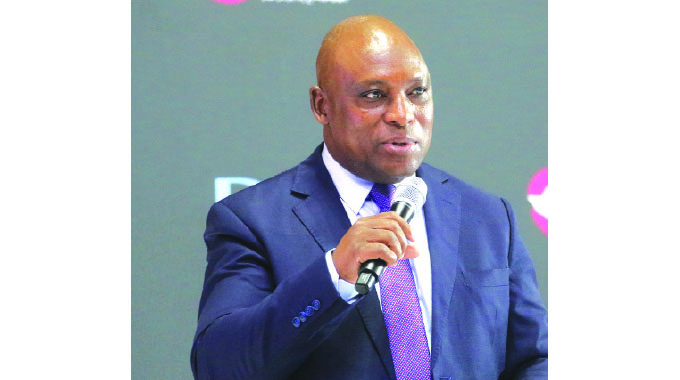
Senator Aguy C Georgias is an established industrialist, non-constituency senator and Deputy Minister of Public Works.


 Online Reporter