Chronicle Editor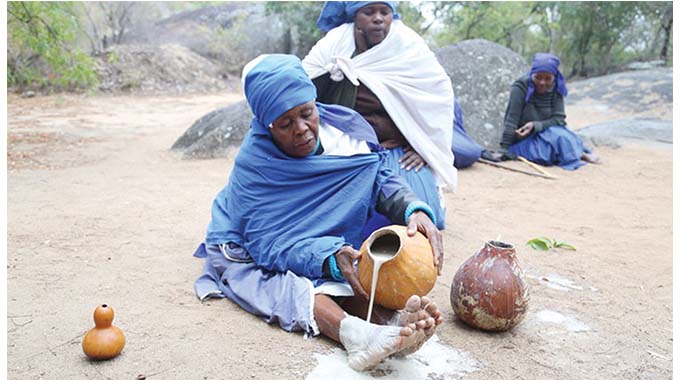
Pathisa Nyathi
Guerilla training in military camps provided for broad aspects which were not cast in stone.
It was imperative for guerillas, once they got to the operational field to innovate and adapt to concrete situations. Military instructors could not have foreseen certain peculiarities which trainees were going to grapple with on the ground. Their survival depended very much on their ability to apply what they were taught and go beyond that to attend to specific demands of the context. Situational analysis was of the essence in crafting and designing strategies and combat tactics.
In this article we refer more specifically to ZPRA guerrillas who operated in Siabuwa in Binga and also in Gokwe within the Northern Front’s Region 2. It is not being suggested here that what is being given applied in other areas where ZPRA operated. There we see some guerrilla strategies and combat tactics that blended with natural rhythms.
When guerillas infiltrated Rhodesia, they had new military fatigue, ammunition and medical supplies with which they were supplied before embarking upon their journey to operational areas. The curriculum in military training camps had no room for African spirituality, for example.
Some of the countries that provided liberation movements with training facilities and logistics did not subscribe to spirituality. Instead, they held the view that religion is the opium of the people and irrational.
Similarly, when it came to health issues, medics were schooled in Eastern or Western methodologies. They brought along anti-malaria tablets which, where deemed necessary, were supplied to the civilian population for treatment.
That way guerillas endeared themselves to peasants whose support they sorely needed in the prosecution of the armed struggle. They carried pain killers and various other medications to deal with headaches, stomachaches and other medical conditions. Hardly were they ever taught about African medical and health remedies.
It was a different story though when cadres got to operational areas. Medical supplies that they had been provided with ran low, and eventually ran out. That was the time when they remembered that there were indigenous alternatives. Within the communities there were people that were endowed with knowledge to cure various ailments, including treatment of wounds.
Cases abound when wounded guerillas sought medication from villagers. At Siabuwa, for example, a wounded guerilla was treated for his wounds by the locals. The medic who had run out of medication confined his role to cleaning and dressing the wound he had sustained when they attacked a trophy hunter’s premises on the water front of the Zambezi River.
Another case is one involving December who was shot through his leg during a contact. His comrades abandoned him thinking he had died. He was attended to by a villager who treated his wound till he was fully recovered and rejoined his colleagues.
African spirituality may be regarded as a primitive religious expression. No wonder it was not embraced during guerilla training. Many Africans feel embarrassed to publicly acknowledge the potency and efficacy of African spirituality.
A case is told when a reconnaissance team was to be launched into Rhodesia. ZAPU leaders in exile suggested that the services of a spiritual man be solicited. That was vehemently rejected by members of the team that was going to the front as advance and reconnoitering team ahead of the joint MK and ZPRA Luthuli Detachment of 1967.
It is outside the scope of this article to deal with the issue of spirituality and the role it played in African communities, save to indicate that it was part of measures that ensured preservation of life by forewarning impending dangers and calamitous situations.
In Gokwe, specifically in the Chief Jahana area there was one Mthunzi, a guerilla who was a section leader. He was a spiritual guerilla whose spirituality not only saved him but also his comrades.
As a researcher into ZPRA history, I have come across several instances when spirituality came into play during guerrilla operations. Cde Mthunzi carried in his kitbag some snuff, flywhisk, beads and various pieces of coloured cloth. All these are pieces of spiritual paraphernalia.
Cde Mthunzi would sit down, lean against a tree and instantly fall asleep. In that transient state he would get some revelation relating to impending danger. When he got up he would tell his comrades and they would immediately move away only to get news later that enemy forces arrived soon after they left.
At one time, he warned two comrades against going to villages to spend a nice time with village girls. Indeed, one day the two doubting Thomases went to do exactly what they had been advised against. The two were involved in a shootout with a unit of Rhodesian Security Forces and one of them was shot through the leg.
Nature communicates with nature. Nature knows what nature is doing or is about to do. This is something that Africa knew and recognised. When a man embarked on a journey, he was on the lookout for omens which are signals of what might be lying ahead.
For example, when a duiker crossed his path he knew that not all was well with the journey. Nature has the capacity to forewarn about impending danger.
Andrew Ndlovu, an ex-ZPRA guerilla, writes in his autobiography about communication that they received from nature regarding the presence of enemy forces. Interestingly, he made reference to birds and those same birds happen to have been communicators for ZPRA guerillas in Binga and Gokwe.
Topping the list are eagles which, singly, or in twos or threes, would make calls and fly in a particular direction. Guerillas got to know how to decipher avian language. It was some kind of decoding the codes being communicated by eagles. Sometimes they flew high with their legs folded. At other times their legs would be dangling.
A combination of manner of flying, the type of call, the position of legs combined to tell a story, either a story signifying that the coast was clear or the enemy was lingering in a particular direction.
Appropriate self-preserving moves were taken. In the case where given codes were not appropriately decoded, guerillas were at least on the lookout for possible danger.
Eagles were not the only bird species that sent danger warnings to guerillas. In his autobiography Ndlovu mentions the Go way bird (grey laurie, umguwe) and the honey guide (insedlu).
Each had its own peculiar way of giving messages and the content of those messages. Once again calls and manner of flight told the message.
Lived experiences by earlier generations had led people to know what the birds were communicating and acted upon those for their own good and the communities within which the birds communicated.
Guerillas in Gokwe and Binga also cited the same bird species as complementing eagles in communicating messages. Some guerillas were coming from cultural backgrounds that embraced spirituality. Being closer to nature, by living in the bush, teaches people to read natural messages. In the bush they interact with birds and animals and get to know how various natural species behave.
In Matabeleland South the main shrines are Njelele, Dula, Manyangwa and Zhilo (Zhame). I have not, as yet, done research into their role during the liberation struggle. Be that as it may, ZPRA guerillas in Gokwe consulted Nevana in Chief Njelele’s area.
On one occasion guerillas went there and met a man, the spirit medium of Nevana, who was dressed in black, from head to toe. Guerillas who went there were asked to leave their weapons at the entrance to the homestead.
They obliged to the injunction, as they were told there was nothing to fear and they believed the word of Nevana. They were even taken to a cemetery where there were numerous graves one of which was said to be that of King Lobengula’s relative. Nevana asked the ancestors to protect and guide the children who were seeking to liberate their country.
Apparently, Bishop Abel Muzorewa’s Pfumo Revanhu (Auxiliary Forces) got to know that ZPRA guerillas had been to Nevana’s home. They too decided to get there. When told to leave their weapons at the entrance, they declined.
Nevana did not take them to the graves, nor did he ask for blessings on their behalf. Later, when the Auxiliary Forces got to some well, some of them accidentally shot each other.
In the next article we shall look at how strategies and combat tactics were adapted to seasonal changes.



 Online Reporter